Etymology The word rucksack is borrowed from German Rucksack, where Ruck means “back” and Sack means “bag.” It entered English in the 19th century, reflecting its origins in outdoor and military gear. Pronunciation IPA: /ˈɹʌkˌsæk/ (UK: primary stress on the first syllable, with a short “u” sound like in “luck”); /ˈɹʊkˌsæk/ (US variant, with “u” as in “book”). The stress falls heavily on “ruck,” making it sound like “RUCK-sack.” Meaning A rucksack is a sturdy bag designed to be carried on the back, secured by two shoulder straps. It’s ideal for carrying heavy loads during travel, hiking, or school. Unlike a handbag, it’s built for practicality and weight distribution. Morphology and Grammar Rucksack is a compound noun formed from “ruck” (referring to the back or a hump) and “sack” (a large bag). It’s a countable noun, so use “a rucksack” or “rucksacks” in plural form. No irregular forms; it follows standard English pluralization. Verb forms are rare, but it can be used as “to rucksack” informally for carrying one. Synonyms, Antonyms, and Word Combinations Synonyms: backpack, knapsack, packsack, haversack. Antonyms: None directly, but contrast with front-carried items like briefcases or handbags. Common combinations: hiking rucksack, school rucksack, lightweight rucksack, army rucksack. Examples Simple: I packed my rucksack for the trip. Medium: The hiker adjusted the straps on her rucksack before climbing the hill. Complex: Equipped with a durable rucksack filled with water, snacks, and a map, the group ventured deep into the forest, unaware of the challenges ahead. Interesting Facts Rucksacks trace back to ancient times, with early versions used by Roman soldiers. In modern times, they became essential for mountaineers like those on Everest expeditions. Interestingly, the term “ruck” also relates to rugby scrums, evoking a “packed back” image. Cultural and Contextual Features More common in British English, where “rucksack” implies a rugged, outdoor bag, while Americans prefer “backpack” for casual use. In Europe, especially Germany and Switzerland, rucksacks are cultural staples for alpine trekking and student life. They’re eco-friendly symbols in “leave no trace” hiking ethics. Tips for Learning To remember rucksack, visualize a sack on your “ruck” (back) while hiking—link it to the German roots for better recall. Practice by listing items you’d pack in one: tent, water bottle, map. Compare it to “backpack” to note regional differences, and say the IPA aloud to nail the stress. Mini-Tasks Make a sentence: Describe what you’d put in your rucksack for a weekend getaway. Find a synonym: List three alternatives and use one in a hiking context. Explore: Research a famous explorer who used a rucksack and share one fact.
Meaning and pronunciation of the word ‘backpack’
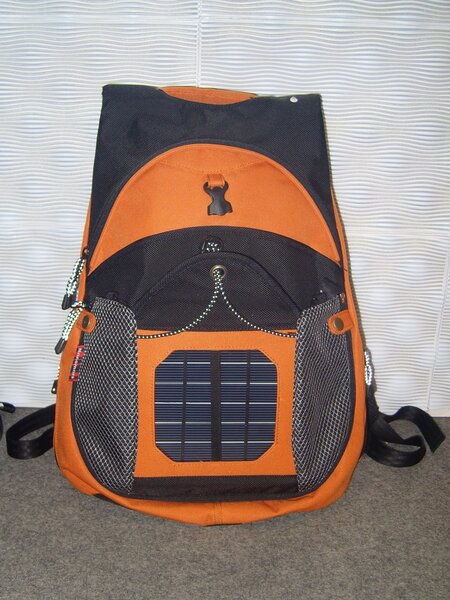
English: Backpack Etymology The word “backpack” is a compound formed from “back” + “pack,” referring to a pack carried on the back. It emerged in the early 20th century, evolving from earlier terms like knapsack. Pronunciation IPA: /ˈbæk.pæk/ (American English) The primary stress is on the first syllable: BACK-pack. To practice, emphasize the “back” part while saying it quickly, like “back” followed by “pack.” Morphology and Grammar Notes “Backpack” is a compound noun (back + pack) and can function as a verb. As a noun, it is countable (e.g., one backpack, many backpacks). When used as a verb, it is primarily intransitive but can be transitive in rare cases. No irregular forms; standard plural is “backpacks.” Noun: Backpack (plural: backpacks) Meanings 1. A knapsack, often with straps, worn on the back to carry items, especially for hiking or schoolbooks. 2. A bag containing a parachute or life-support gear, worn on the back. Synonyms Haversack, knapsack (US), packsack, rucksack, bookbag. Antonyms Briefcase (for formal carrying), handbag (hand-carried alternative). Common Word Combinations Backpack camping, hiking backpack, school backpack, lightweight backpack, jetpack (futuristic variant). Cultural and Contextual Features Backpacks are iconic in modern culture, symbolizing adventure for hikers, practicality for students, and minimalism for travelers. Originating from military use in the 1920s (e.g., Lloyd Nelson’s Trapper Nelson pack), they became popular post-WWII. In urban settings, “backpacking” refers to budget travel, often across Europe or Asia, promoting eco-friendly exploration. Short Interesting Fact The world’s largest backpack, recognized by Guinness, measures over 3 meters tall and was built in Australia to promote outdoor education—imagine carrying that on a hike! Sentence Examples – Simple: I put my books in the backpack. – Medium: She wore a heavy backpack during the long mountain hike. – Complex: After packing her tent and snacks into the sturdy backpack, Emily set off on a solo adventure through the national park, eager to discover hidden trails. Verb: To Backpack (backpacks, backpacking, backpacked) Meanings 1. (Intransitive) To hike and camp overnight in remote areas with gear in a backpack. 2. (Intransitive) To travel cheaply, often in cities, with minimal luggage. 3. (Transitive, rare) To carry items in a backpack. Sentence Examples – Simple: We backpack through the woods. – Medium: He plans to backpack across Europe next summer. – Complex: While backpacking in Southeast Asia, she learned to navigate bustling markets and serene temples, all while keeping her belongings light. Tips to Learn “Backpack” Easier Visualize a student rushing to class or a hiker on a trail—associate the word with everyday scenes. Practice by listing items you’d pack in one (e.g., water bottle, map). Use mnemonics: “Back” for the position, “pack” for the contents. Listen to audio pronunciations on apps like Forvo to mimic the stress. Mini-Tasks for Practice Make a sentence: Describe your ideal backpack for a trip. Find a synonym: Replace “backpack” in “I carried a backpack” with another word. Word combo: Create a phrase using “backpack” and “adventure.” Antonym challenge: What opposite carrying method might you use for a business meeting?
Meaning and pronunciation of the word ‘hammock’
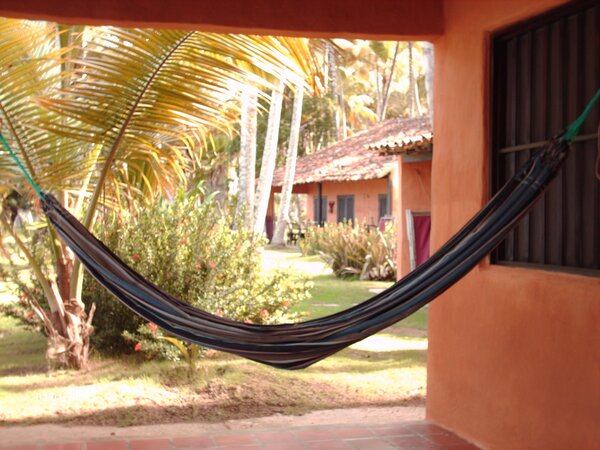
Etymology The word “hammock” comes from Spanish hamaca, borrowed from the Taíno language spoken by indigenous peoples of the Caribbean. The Taíno term *hamaka* referred to a net-like bed. Christopher Columbus encountered it during his first voyage in 1492, describing in his journal how the natives used “hamacas” for sleeping and bartering. This etymology highlights the word’s roots in Native American culture, entering English around the early 16th century. Pronunciation The standard pronunciation is /ˈhæmək/ in British and American English, with primary stress on the first syllable (HAM-ək). In General Australian English, it may vary slightly to /ˈhæmək/ or /ˈhæmɪk/. Rhymes with words like “shamrock” or “barrack.” Meaning A hammock is a swinging bed or couch, typically made of netting, canvas, or fabric, suspended by cords or ropes from two points, such as trees or posts. It measures about 6 feet (1.8 meters) wide and is used for resting or sleeping outdoors. In American English dialects (archaic), it can also mean a densely wooded, vine-covered piece of land. Morphology and Grammar Notes “Hammock” functions primarily as a countable noun (e.g., one hammock, many hammocks). As a verb, it is intransitive (to lie in a hammock) or transitive (to suspend or wrap something hammock-like). Plural: hammocks. No irregular forms; it follows standard English inflection. Derived terms include “hammocking” (the act of using one) and loanwords like Swedish hammock, a direct borrowing from English. Interesting Facts Hammocks originated with the Taíno people over 1,000 years ago, providing mosquito protection and portability. Sailors adopted them in the 17th century to save space on ships and prevent seasickness. Today, they symbolize relaxation in tropical settings, from Caribbean beaches to modern gardens. Fun fact: NASA uses hammock-like sleeping systems for astronauts in zero gravity! Cultural and Contextual Features Culturally, hammocks evoke leisure in warm climates, often seen in Latin American, Southeast Asian, and island cultures. In the U.S., they’re popular for camping or backyard lounging. Contextually, they’re associated with vacations, but “hammocking” in TV scheduling means placing a weak show between hits to boost ratings. Examples Simple: I bought a new hammock for the patio. Medium: Swinging gently in the hammock, she read her book under the shade of palm trees. Complex: While exploring the rainforest, the travelers discovered an ancient hammock woven from vines, a remnant of indigenous traditions that have influenced global outdoor living for centuries. Synonyms, Antonyms, and Common Combinations Synonyms: swing bed, net cot, sling bed. Antonyms: firm bed, rigid cot (contrasting the flexible, swaying nature). Common combinations: hanging hammock, weave a hammock, hammock chair, portable hammock stand. Tips to Learn It Easier Visualize a relaxing beach scene to associate “hammock” with swaying comfort—picture yourself napping in one! Break it down: “ham” like a pig’s home (cozy) + “mock” like fake rest (but real relaxation). Practice by saying it rhythmically: HAM-mock, matching the swing’s motion. Use mnemonics: “Hang A Marvelous Mock Couch” for the structure. Mini-Tasks Make a sentence: Describe your ideal spot to use a hammock. Find a synonym: List two words similar to “hammock” and use one in a sentence. Explore context: Research how hammocks are used in one culture and share a fact.
Meaning and pronunciation of the word ‘sleeping bag’
English Word: sleeping bag (noun) Pronunciation IPA: /ˈsliːpɪŋ bæɡ/ The primary stress is on the first syllable: SLEE-ping bag. The “g” in “sleeping” may be silent or lightly pronounced before “b,” as in /ˈsliːpɪŋ bæɡ/ or /ˈsliːpɪn bæɡ/. Meaning A sleeping bag is a padded or insulated portable bag designed to enclose the entire body, providing warmth and comfort during sleep. It serves as a lightweight alternative to traditional bedding, commonly used in outdoor settings like camping or hiking. Morphology and Grammar Notes This is a compound noun formed from “sleeping” (the present participle of “sleep,” functioning as an adjective) and “bag” (a simple noun). It is a countable noun, with the plural form “sleeping bags.” No irregular forms; use articles like “a sleeping bag” or “the sleeping bag.” Synonyms, Antonyms, and Common Combinations Synonyms: bedroll, swag (Australian English for a rolled-up bedding bundle), sleeping sack. Antonyms: None direct, but contrasts with “bed” or “mattress” as indoor alternatives. Common combinations: roll out a sleeping bag, zip up the sleeping bag, lightweight sleeping bag, down-filled sleeping bag. Examples in Sentences Simple: I packed my sleeping bag for the trip. Medium: The campers unrolled their sleeping bags around the fire. Complex: Although the temperature dropped below freezing overnight, the insulated sleeping bag, equipped with a moisture-resistant liner, ensured that we stayed warm and dry until dawn. Short Interesting Facts The modern sleeping bag was patented in the 1870s by Prussian explorer Heinrich Schalander, evolving from military bedrolls used in the Napoleonic Wars. Today, specialized types like the “mummy bag” (a hyponym that tapers to save weight) are popular among mountaineers. Fun fact: In zero-gravity space missions, astronauts use bag-like sleep restraints inspired by traditional sleeping bags. Cultural or Contextual Features Sleeping bags are iconic in camping culture, symbolizing adventure and self-sufficiency in outdoor activities like backpacking, festivals, or survival training. In Australian slang, “swag” refers to both the bag and a nomadic lifestyle. They’re essential for eco-tourism, emphasizing portability and minimal environmental impact. Tips on How to Learn It Easier Visualize: Picture yourself zipping into a cozy bag by a campfire to associate the word with relaxation and nature. Mnemonic: Break it down—”sleeping” for rest, “bag” like a portable cocoon—to remember its purpose. Practice: Say the IPA aloud while mimicking the action of sleeping to link sound and meaning. Mini-Tasks for the Student Make a sentence: Write a sentence using “sleeping bag” in a travel context. Find a synonym: List two synonyms and explain when you’d use one over the other. Creative task: Describe a situation where a sleeping bag is useful but a regular bed isn’t, in 2-3 sentences. Vocabulary builder: Combine it with an adjective (e.g., “waterproof sleeping bag”) and use in a question. Further reading: Explore “sleeping bag” on Wikipedia for historical designs and modern innovations.
Meaning and pronunciation of the word ‘tent’
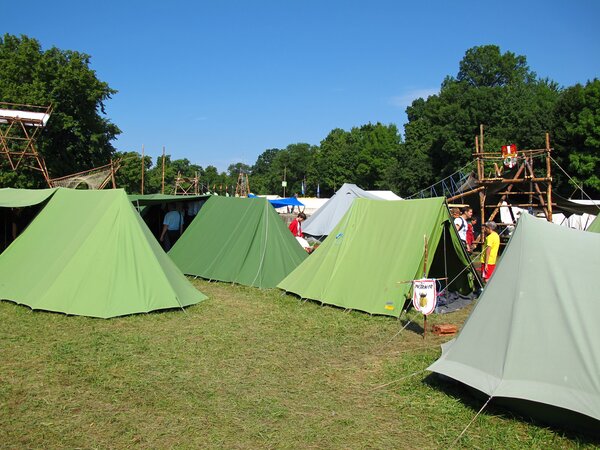
English Word: Tent Pronunciation: The word “tent” is pronounced as /tɛnt/ in standard British and American English (IPA). The stress is on the single syllable. In some American dialects with the pin-pen merger, it may sound like /tɪnt/, rhyming with “tint.” Meanings: Noun (primary meaning): A portable shelter made of canvas or similar material stretched over poles, used for camping or temporary housing. Other senses include: (archaic) a heraldic bearing resembling a tent; a portable pulpit in Scotland; or a trouser tent (informal, protruding fabric). Verb: To form a tent-like shape (e.g., propping foil over food in cooking); to go camping; or (archaic/dialect) to attend to or probe medically with a tent (a lint roll for wounds). Etymology: From Middle English “tente,” borrowed from Old French “tente,” from Latin “tentus” (stretched), related to “tendere” (to stretch). It displaced Old English “teld.” Morphology and Grammar Notes: As a noun, it’s countable (tent/tents) and uncountable in general references (e.g., “tent fabric”). Plural: tents. Verb forms: tents (3rd person), tenting (present participle), tented (past). No irregular forms. It can function as both a concrete noun and transitive/intransitive verb. Short Interesting Facts: The word “tent” comes from the idea of stretching fabric, linking it to words like “tend” (to stretch out). Historically, tents date back to ancient nomads; the Bedouin black goat-hair tents are iconic in Arabian culture. In heraldry, a “tent” symbolizes military readiness. Cultural/Contextual Features: Tents are central to camping culture worldwide, from Glastonbury Festival glamping to military use. In emergencies, like refugee camps, they provide vital shelter. In literature, tents evoke adventure (e.g., in “The Hobbit”). Synonyms and Antonyms: Synonyms (noun): shelter, pavilion, marquee, canopy. Antonyms (noun): house, building (permanent structures). Synonyms (verb): camp, pitch, erect. Common Word Combinations: camping tent, bell tent, tent peg, pitch a tent, tent city. Example Sentences: Simple: We set up our tent by the lake. Medium: During the festival, colorful tents dotted the green field. Complex: Although the storm threatened to tear down their fragile tent, the family huddled inside, sharing stories until dawn broke. Tips to Learn Easier: Associate “tent” with “tension” from stretching fabric—visualize pitching one to remember the verb. Practice by drawing a tent and labeling parts (poles, stakes). Use mnemonics: “TENT” as “Temporary ENclosure for Travelers.” Mini-Tasks for Students: Make a sentence: Describe your ideal camping tent in one sentence. Find a synonym: List two synonyms for “tent” and use each in a sentence. Word play: Create a short story (3-5 sentences) involving a magical tent that changes size. Explore: Research one cultural tent (e.g., yurt) and note a fun fact.
Meaning and pronunciation of the word ‘campground’
Definition A campground is a designated outdoor area where people can pitch tents, park recreational vehicles (RVs), or set up temporary camps for recreation, often with facilities like restrooms, fire pits, and picnic tables. It can also refer to a site used for religious or communal camp meetings, such as retreats. Etymology The word campground is a compound formed from camp, meaning a temporary shelter or group of tents, and ground, referring to the land or area. It emerged in the 19th century in American English to describe places for outdoor camping. Pronunciation In General American English, it is pronounced as /ˈkæmpˌɡɹaʊnd/, with primary stress on the first syllable (“CAMP”) and secondary stress on the second (“ground”). The “a” in “camp” sounds like the “a” in “cat,” and “ground” rhymes with “found.” Morphology Campground is a compound noun made by combining the noun camp (from Latin campus, meaning field) with ground (from Old English grund, meaning earth or soil). Compounds like this are common in English for describing specific locations, such as “playground” or “battleground.” Grammar Notes Campground is a countable noun, so it takes an article (“a campground”) in singular form and can be pluralized as “campgrounds.” It functions as a subject, object, or modifier in sentences, e.g., “The campground offers hiking trails.” Synonyms, Antonyms, and Common Combinations Synonyms: camping site, campsite, camping ground, bivouac area. Antonyms: Urban hotel, indoor resort (as opposites in setting, though not direct antonyms). Common Combinations: National park campground (e.g., in Yellowstone), RV campground, family-friendly campground, lakeside campground. These highlight types based on location or amenities. Examples in Sentences Simple: We visited a campground last weekend. Medium: The family packed their tent and headed to the nearby campground for a relaxing getaway. Complex: Although the weather forecast predicted rain, the group decided to proceed with their plans, setting up camp at the scenic campground where they had reserved a spot months in advance. Interesting Facts and Cultural Notes Campgrounds are central to American outdoor culture, popularized in the early 20th century through the National Park Service’s efforts to promote “roughing it” in nature. The term gained prominence with the rise of car camping during the Great Depression. In modern contexts, many campgrounds now include glamping options—glamorous camping with comforts like yurts or cabins—blending wilderness with convenience. Internationally, similar concepts exist, such as “campings” in Europe, but U.S. campgrounds often emphasize self-reliance and environmental stewardship. Learning Tips To learn campground easier, visualize a scene from a camping trip: picture tents on grassy ground near a lake. Break it down—camp evokes adventure and outdoors, while ground reminds you of the earth beneath. Practice by associating it with related vocabulary like “tent,” “firepit,” or “hike.” Use mnemonic devices, such as imagining a “camp” on “grounds” like a coffee estate, but outdoors! Mini-Tasks for Practice Make a sentence: Create your own simple sentence using campground and share it with a study partner. Find a synonym: List two synonyms for campground and explain when you might use one over the other. Word combination: Describe a “beach campground” in three words and why it appeals to you. Context quiz: Is a campground more likely found in a city or a forest? Why?
Meaning and pronunciation of the word ‘boardwalk’
Definition A boardwalk is a slightly elevated wooden pathway designed for pedestrians, often built over sandy, swampy, or beach areas. It provides safe access near water bodies and protects the underlying terrain. In North America, it commonly refers to a promenade along a beach or seaside. Etymology The word “boardwalk” is a compound formed from “board,” meaning a flat piece of wood, and “walk,” referring to a path or promenade. It originated in the 19th century in the United States, describing wooden paths in coastal resorts. Pronunciation In Received Pronunciation (British English), it’s pronounced as /ˈbɔːd.wɔːk/, with stress on the first syllable. In General American English, it’s /ˈbɔːrd.wɔːk/ or /ˈbɔːrd.wɑːk/ in regions with the cot-caught merger. The “board” part rhymes with “bored,” and “walk” sounds like “wok.” Practice by breaking it into two syllables: board-walk. Morphology As a compound noun, “boardwalk” combines two nouns without changes. It’s hyphenated as “board-walk” in some styles but typically written as one word. The plural is “boardwalks.” It can function as a verb, though rarely, meaning to build or install such a path. Grammar Notes Primarily a countable noun: a boardwalk or boardwalks. Use it with articles or possessives (e.g., the boardwalk’s railing). As a verb, it follows standard conjugation: I boardwalked the path, but this usage is uncommon in everyday English. Interesting Facts The most famous boardwalk is in Atlantic City, New Jersey, immortalized in the Monopoly board game as a high-value property. Boardwalks became popular in the late 1800s to keep sand off visitors’ feet at seaside resorts. Historically, they prevented erosion and allowed amusement parks to thrive along coasts. Tips to Learn It Easier Visualize a wooden path by the ocean—associate it with beach vacations. Break it down: “boards” for the wood and “walk” for strolling. Listen to audio on sites like Forvo or YouTube videos of famous boardwalks. Mnemonic: “Bored? Walk the boardwalk!” Repeat in sentences daily to build memory. Cultural or Contextual Features Boardwalks are iconic in American coastal culture, especially in the East Coast summer destinations like Coney Island or Ocean City. They host vendors, games, and fireworks, evoking nostalgia from songs like “Under the Boardwalk” by The Drifters. In ecology, modern boardwalks preserve wetlands by reducing foot traffic damage. Examples Simple: We strolled on the boardwalk. Medium: The old boardwalk creaked under our feet as waves crashed nearby. Complex: Although the boardwalk had weathered many storms over the decades, families still gathered there each summer to enjoy the salty breeze and arcade lights. Synonyms, Antonyms, and Common Combinations Synonyms: promenade, pier, esplanade (for beachside paths). Antonyms: inland road, dirt trail (less elevated or coastal). Common combinations: beach boardwalk, wooden boardwalk, stroll along the boardwalk, boardwalk empire (referring to historical coastal developments). Mini-Tasks Make a sentence: Describe a day at a boardwalk using at least three adjectives. Find a synonym: List two words similar to “boardwalk” and use one in a sentence. Practice pronunciation: Record yourself saying “boardwalk” three times, then compare to an online audio clip. Explore: Research a famous boardwalk (e.g., Atlantic City) and note one fun fact about it.
Meaning and pronunciation of the word ‘tide’
Word: Tide Meaning: “Tide” primarily refers to the regular rise and fall of the sea level caused by the gravitational pull of the moon and sun. It can also mean a powerful flow or current, either literal (like water) or figurative (like a trend or wave of events). As a verb, it means to drift with the current or to help someone through a difficult time (as in “tide over”). Pronunciation The standard pronunciation is /taɪd/, with the stress on the single syllable. In phonetic notation: tīd (rhymes with “tied”). Regional variations include a more drawn-out vowel in Southern US English as [tʰaːd] or in Australian English as [tʰɑe̯d]. Homophone: tied. Morphology and Grammar Notes As a noun, “tide” is countable (e.g., tides) and uncountable in some contexts (e.g., the tide). Plural: tides. It derives from Old English tīd, meaning “time,” showing its historical link to periods or seasons. Verb forms: tides (present), tiding (progressive, rare), tided (past). It’s regular in conjugation. No major irregular grammar; use as subject or object easily. Etymology and Interesting Facts Inherited from Middle English tyde and Old English tīd (time), from Proto-Germanic *tīdiz, ultimately from Proto-Indo-European roots related to “divide” or “time.” Interestingly, “tide” and “time” share origins, explaining phrases like “time and tide wait for no man.” In mining, it once meant a 12-hour shift. Fact: High and low tides occur twice daily in most places, influencing coastal ecosystems and navigation. Cultural and Contextual Features Tides are central to maritime cultures, like in surfing (tide charts are essential) or fishing communities. In literature, they symbolize inevitability, as in Shakespeare’s works. The phrase “turn of the tide” describes a shift in fortune, common in sports or politics. Ecologically, king tides (extreme high tides) link to climate change discussions. Synonyms, Antonyms, and Common Combinations Synonyms (noun): current, flow, surge, wave, flood. Antonyms (noun): ebb (low tide), drought (for figurative flow). Common combinations: high tide, low tide, tide pool, spring tide (strongest), neap tide (weakest), tide over (verb: sustain temporarily). Examples in Sentences Simple: The tide is coming in. Medium: Surfers wait for high tide to catch bigger waves. Complex: Although the tide had turned against them in the battle, the soldiers persisted, knowing that perseverance would eventually bring victory. Tips to Learn “Tide” Easier Associate it with beach visits: visualize waves rising and falling. Mnemonic: “Tide ties time” (links to its etymology). Practice by checking daily tide predictions online. Use in journaling: “What tide is turning in my life?” Read poems like “Sea-Fever” by John Masefield, which mentions tides, to see it in context. Mini-Tasks for Practice Make a sentence: Create one using “tide over” in a financial context. Find a synonym: List two synonyms for “tide” as a flow and use one in a sentence. Explore: Research a famous tidal phenomenon, like the Bay of Fundy, and explain why tides matter there. Quiz yourself: What’s the opposite of high tide? (Low tide or ebb.)
Meaning and pronunciation of the word ‘sunscreen’
Etymology The word “sunscreen” is a compound formed from “sun,” referring to the star that provides light and heat to Earth, and “screen,” meaning a protective barrier. It emerged in the mid-20th century as awareness of ultraviolet (UV) radiation’s dangers grew. Pronunciation IPA: /ˈsʌn.skriːn/ The primary stress is on the first syllable (“sun”), with a long “ee” sound in “screen.” Practice by breaking it into “sun” (like the celestial body) and “screen” (like a window screen), saying it rhythmically: SUN-screen. Meaning Noun: Sunscreen (countable and uncountable, plural: sunscreens) is a topical lotion, cream, or spray applied to the skin to protect it from the sun’s harmful ultraviolet (UV) rays. It contains chemical filters that absorb UV radiation or physical blockers like titanium dioxide that reflect it, preventing sunburn and reducing skin cancer risk. Verb: To sunscreen (third-person singular: sunscreens; present participle: sunscreening; past: sunscreened) means to apply sunscreen to the skin. It is transitive, requiring an object, as in protecting a body part. Morphology “Sunscreen” is a compound noun made by combining the noun “sun” with the noun “screen,” functioning as a single word. As a verb, it follows regular English conjugation patterns (-s for third person, -ing for participle, -ed for past). No irregular forms. Grammar Notes As a noun, it can be uncountable in general reference (e.g., “Wear sunscreen”) or countable for specific types (e.g., “This sunscreen is effective”). The verb is typically used in casual, modern English, often in beach or travel contexts. Avoid confusing it with “sunblock,” which is a subtype emphasizing physical reflection. Examples Simple: Put on sunscreen. Medium: She forgot her sunscreen at home and got sunburned. Complex: While vacationing in Hawaii, where the sun beats down relentlessly, tourists are advised to reapply sunscreen every two hours to safeguard their skin from damaging UV exposure. Synonyms, Antonyms, and Common Word Combinations Synonyms (noun): Sunblock, UV protector, suntan lotion (in some contexts). Antonyms: None directly, but opposites in concept include “sunburn” or “tanning oil” (which enhances sun exposure). Common combinations: Apply sunscreen, waterproof sunscreen, broad-spectrum sunscreen, chemical sunscreen, high-SPF sunscreen. Interesting Facts Sunscreen was first developed in the 1930s, but widespread use surged after the 1970s ozone layer concerns. The term “SPF” (Sun Protection Factor) measures efficacy—SPF 30 blocks about 97% of UVB rays. Fun fact: Ancient Egyptians used rice bran and jasmine to create natural sunscreens! Cultural or Contextual Features In sunny regions like Australia or the Mediterranean, sunscreen is a daily essential, tied to beach culture and health campaigns against skin cancer. In the U.S., it’s common in summer ads, symbolizing relaxation and protection. Globally, awareness has grown with climate change, making it a staple in travel kits. Tips on How to Learn It Easier Associate “sunscreen” with summer fun—visualize slathering it on before a beach day to remember its protective role. Break it down: “Sun” for the source, “screen” for the shield. Practice by labeling sunscreen bottles at home or using it in daily journaling about weather. Mnemonics like “Sun’s screen keeps skin clean” can help recall spelling and meaning. Mini-Tasks for the Student Make a sentence: Create one using “sunscreen” as a verb. Find a synonym: List two alternatives and explain when you’d use them. Word combo: Describe a situation where you’d use “broad-spectrum sunscreen.” Reflection: Why is sunscreen important in your culture or region?
Meaning and pronunciation of the word ‘sunblock’
Sunblock Etymology The word “sunblock” is a compound formed from “sun” + “block,” referring to its function of blocking the sun’s harmful rays. It emerged in the mid-20th century alongside growing awareness of skin protection. Pronunciation In American English: /ˈsʌn.blɑːk/ (SUN-blahk), with primary stress on the first syllable. In British English: /ˈsʌn.blɒk/ (SUN-blohk). The word is pronounced as two syllables, blending smoothly without a pause. Morphology “Sunblock” is a compound noun combining the noun “sun” (referring to the star) with the verb/noun “block” (to obstruct). It follows English compounding rules where the first element modifies the second, creating a single lexical unit. No inflections are needed beyond plural forms like “sunblocks.” Grammar Notes “Sunblock” functions as a noun that can be countable (e.g., specific brands: “I bought two sunblocks”) or uncountable (e.g., the substance: “Apply sunblock daily”). It is not used as a verb; for the action, say “apply sunblock.” Meaning A protective lotion or cream with a high sun protection factor (SPF) that physically blocks ultraviolet (UV) rays from the sun, preventing sunburn and skin damage. Unlike sunscreens that absorb rays, sunblocks primarily reflect them. Synonyms Sunscreen (general term) Sun cream SPF lotion Antonyms Tanning oil (promotes sun exposure) No direct antonym, but contrasts with “sun exposure” aids like baby oil Common Word Combinations Waterproof sunblock Broad-spectrum sunblock Apply sunblock Sunblock lotion Short Interesting Facts Invented in the 1930s, early sunblocks used red veterinary petrolatum to reflect light, turning skin pink. Today, mineral-based sunblocks with zinc oxide or titanium dioxide are eco-friendly alternatives to chemical versions, popular in “reef-safe” products to protect marine life. Cultural or Contextual Features Sunblock is essential in sunny cultures like Australia’s beach lifestyle or Hawaii’s surf scene, where high UV indexes demand daily use. It’s a staple in summer travel kits worldwide, symbolizing modern health consciousness against skin cancer risks. Tips on How to Learn It Easier Associate “sunblock” with its parts: visualize the sun being “blocked” by a shield. Practice by saying it in sentences while applying lotion. Use mnemonics like “Sun = hot; Block = stop the burn!” to remember spelling and meaning. Examples of Sentences Simple: I need sunblock for the beach. Medium: Don’t forget to pack waterproof sunblock on your vacation. Complex: While hiking in the mountains, where UV rays are stronger due to thinner air, applying broad-spectrum sunblock every two hours is crucial to prevent painful sunburns. Mini-Tasks for the Student Make a sentence: Create your own using “sunblock” in a travel context. Find a synonym: List two alternatives and explain when you’d use one over “sunblock.” Word combo: Write a short paragraph including “waterproof sunblock” and why it’s useful. Quiz yourself: What’s the difference between sunblock and sunscreen? (Hint: Reflection vs. absorption.)