Etymology The word suntan is a compound formed from sun + tan, referring to the browning of the skin due to sunlight exposure. Pronunciation IPA: /ˈsʌn.tæn/ (with primary stress on the first syllable). Rhymes with words like run tan. Hyphenation: sun-tan. Meaning As a noun, a suntan is the temporary darkening or bronzing of the skin caused by exposure to ultraviolet (UV) rays from the sun, tanning beds, or artificial lights. It results from increased melanin production in the skin. Morphology and Grammar Notes Suntan functions primarily as a noun but can also be used as a verb. As a noun, it is countable (e.g., “She has a nice suntan”) and uncountable (e.g., “Suntan is popular in summer”). The plural is suntans. Verb forms include: present participle suntanning, past suntanned. No irregular forms; it follows standard English conjugation. Verb Usage To suntan means to expose one’s skin to UV light intentionally to achieve a tan, or to try to get one (third-person singular: suntans; past: suntanned). Interesting Facts The term gained popularity in the 20th century with the rise of beach culture and fashion icons like Coco Chanel, who popularized tanning in the 1920s after returning from a cruise with a bronzed glow. While suntans are often seen as attractive, excessive UV exposure increases skin cancer risk, leading to modern preferences for fake tans. Learning Tips Associate it with summer activities: Visualize applying sunscreen before “suntanning” at the beach to remember the spelling (sun + tan). Practice pronunciation by breaking it into syllables: sun–tan, emphasizing the first part. Use mnemonics: “Sun’s tan” for the compound nature. Cultural and Contextual Features In Western cultures, especially during vacations, a suntan symbolizes leisure and health, though awareness of skin damage has shifted trends toward self-tanners. In tropical regions like Australia, “suntan” often comes with warnings due to high UV levels and the country’s skin cancer rates. Examples Simple: She got a suntan on vacation. Medium: After hours by the pool, his skin developed an even suntan. Complex: Although she applied sunscreen diligently, the relentless summer sun still gave her a subtle suntan that made her feel more vibrant during the family beach outing. Synonyms, Antonyms, and Common Combinations Synonyms: Tan, bronzed skin (noun); tan, bronze (verb). Antonyms: Pale, sunburn, pallor. Common combinations: Deep suntan, fake suntan, suntan lotion, even suntan, post-vacation suntan. Mini-Tasks Make a sentence: Write one using suntan as a verb. Find a synonym: List two words similar to suntan and use one in a sentence. Contextualize: Describe a situation where someone might avoid getting a suntan and why. Derived terms: Suntanned, suntanning. Anagrams: Unstan, stunna, naunts.
Meaning and pronunciation of the word ‘beach chair’
Beach Chair Noun: A portable, often folding chair designed for relaxation on sandy beaches. It typically features a reclining backrest, armrests, and sometimes a canopy for shade, providing comfort against sun, sand, and wind. Pronunciation IPA: /biːtʃ tʃɛər/ (BEETCH chair). The primary stress falls on the first syllable of “beach” (/ˈbiːtʃ/), with secondary stress on “chair.” In American English, it sounds like “beech ch-air,” with a clear /tʃ/ sound for both words. Meaning A beach chair is a lightweight, outdoor seat optimized for leisure at seaside locations. It’s commonly made from materials like aluminum, plastic, or wood to resist saltwater and sand, making it ideal for tourists and beachgoers seeking sun protection and ease of transport. Morphology and Grammar Notes This is a compound noun formed by combining “beach” (noun, referring to a sandy shore) and “chair” (noun, a seat for one person). It’s countable, so the plural is “beach chairs.” No irregular forms; it follows standard noun pluralization by adding -s. Use it with articles like “a beach chair” or possessives, e.g., “my beach chair.” Short Interesting Facts The modern beach chair evolved in the early 20th century from European deck chairs, popularized in the U.S. during the 1920s beach resort boom. Interestingly, some designs include built-in cup holders, a nod to casual American beach culture. The term “beach chair” is more common in North America, while “deck chair” is prevalent in British English. Tips on How to Learn It Easier Visualize a sunny vacation: picture yourself lounging on a beach chair with waves crashing nearby. Associate it with words like “sun,” “sand,” and “relax” to build mental links. Practice by labeling beach photos or using flashcards with images of folding chairs on the shore. Cultural or Contextual Features Beach chairs symbolize leisurely coastal lifestyles, especially in tropical destinations like Hawaii or Florida. They’re staples at resorts, where they encourage unwinding amid tourism-driven beach economies. In pop culture, they’re featured in films like Jaws, evoking summer fun and relaxation, but also cautionary tales about ocean hazards. Examples Simple: I brought a beach chair to the shore. Medium: The colorful beach chair matched her swimsuit perfectly. Complex: After applying sunscreen, she unfolded the beach chair under the palm tree, where she spent the afternoon reading and sipping iced tea while watching families build sandcastles nearby. Synonyms, Antonyms, and Common Word Combinations Synonyms: Deck chair, sun lounger, beach lounger. Antonyms: Office chair (indoor, formal use); no direct antonym, but contrasts with uncomfortable seating like a park bench. Common Combinations: Folding beach chair, reclining beach chair, adjustable beach chair, beach chair umbrella. Mini-Tasks for the Student Make a sentence: Create your own simple sentence using “beach chair” in a vacation context. Find a synonym: List two synonyms for “beach chair” and explain why one might be used in British English instead. Word association: Write three words that commonly go with “beach chair” (e.g., sand, sun) and use them in a short paragraph.
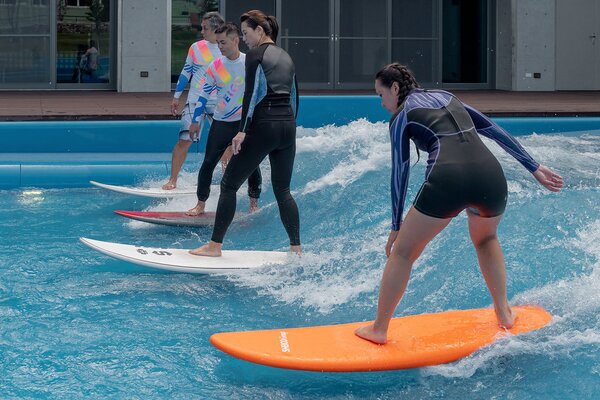
Meaning and pronunciation of the word ‘surfing’
Surfing Etymology From the verb “surf” + “-ing,” referring to the action of riding waves or browsing. Pronunciation In General American English: IPA /ˈsɝfɪŋ/ (stress on the first syllable, “SUR-fing”). It rhymes with words like “working” or “lurking.” Meanings As a noun (usually uncountable): 1. The sport or pastime of riding ocean waves on a surfboard. 2. The activity of browsing the internet casually. Morphology and Grammar Notes “Surfing” is the present participle and gerund of the verb “surf.” As a noun, it’s typically uncountable but can be pluralized as “surfings” in rare contexts (e.g., different styles). No irregular forms; follows standard English gerund rules. Use it with articles like “the surfing” for the sport or “web surfing” for online activity. Synonyms and Antonyms Synonyms: wave riding (for the sport), browsing (for internet use). Antonyms: For the sport: sinking or drowning (humorous); for internet: offline work. Common combinations: Surfing lessons, beach surfing, channel surfing (TV), couch surfing (traveling by staying with locals). Examples Simple: I like surfing on weekends. Medium: After taking lessons, she became an expert at surfing big waves. Complex: Although the ocean was rough and the wind was blowing fiercely, the experienced surfers charged into the water, eager to catch the perfect wave for an exhilarating surfing session. Interesting Facts Surfing originated in ancient Hawaii around 400 CE, where it was a royal sport called “he’e nalu.” Modern surfing gained global popularity in the 20th century thanks to figures like Duke Kahanamoku. The term “channel surfing” emerged in the 1980s with TV remotes, borrowing from wave surfing to mean flipping channels idly. Culturally, surfing embodies a laid-back, adventurous lifestyle, often linked to beach communities in Australia, California, and Brazil. Cultural and Contextual Features In English-speaking countries, surfing is iconic in places like Hawaii and Southern California, influencing fashion (e.g., board shorts) and music (surf rock). Online, “surfing the web” dates to the 1990s, evoking freedom and exploration, but now often replaced by “browsing.” Be mindful of contexts: athletic for waves, casual for digital. Tips to Learn Easier Associate “surfing” with visuals: Imagine riding waves or scrolling websites. Practice by watching surf videos or browsing safely online. Break it down: “Surf” (ride waves) + “ing” (ongoing action). Use mnemonics like “Surfing feels surging with energy.” Mini-Task 1: Make a sentence using “surfing” in the internet sense. Mini-Task 2: Find a synonym for “surfing” as a sport and use it in a sentence. Mini-Task 3: Describe a cultural aspect of surfing in your own words. Translations (Brief) Polish: surfing (m, inanimate). Romanian: surfing (n, uncountable). Spanish: surfing (m, uncountable). Swedish: surfing (c, common gender; synonym: surfning).
Meaning and pronunciation of the word ‘freediving’
English Freediving is a term used in English to describe a form of underwater diving. Etymology The word freediving originates from combining “free” (meaning without restriction or equipment) and “diving” (the act of going underwater). It emerged in the mid-20th century as recreational scuba diving became popular, highlighting the contrast with breath-held submersion. Pronunciation The standard pronunciation is /ˈfriːˌdaɪvɪŋ/, with primary stress on the first syllable (“free”). It sounds like “FREE-dye-ving.” For learners, emphasize the long “ee” in “free” and the soft “v” sound in “dive.” Meaning Freediving refers to the practice of diving underwater on a single breath hold, without the use of breathing apparatus like scuba tanks. It emphasizes relaxation, breath control, and natural swimming techniques to explore depths safely. Morphology and Grammar Notes Morphologically, freediving is a compound noun formed by “free-” (adjective prefix indicating liberty) + “diving” (gerund from the verb “dive”). As a noun, it is uncountable and typically hyphenated as “free-diving” in formal writing, though the solid form freediving is common in modern usage. It also functions as a verb’s present participle and gerund, e.g., “She is freediving right now.” No irregular forms; it follows standard English verb conjugation from the base “freedive.” Examples Simple: I love freediving in the ocean. Medium: Freediving helps improve lung capacity and mental focus. Complex: While many people associate underwater exploration with bulky equipment, freediving allows adventurers to connect more intimately with marine life, relying solely on their breath and body to reach impressive depths. Synonyms, Antonyms, and Common Word Combinations Synonyms: Apnea diving, breath-hold diving, snorkeling (in shallow contexts). Antonyms: Scuba diving, technical diving. Common combinations: Freediving course, freediving gear (like fins and masks), freediving competition, deep freediving, recreational freediving. Short Interesting Facts Freediving dates back thousands of years, with ancient cultures like the Japanese ama divers harvesting seafood on breath holds. In modern times, it’s an extreme sport with world records exceeding 200 meters, such as the men’s constant weight dive. Interestingly, freediving can trigger the mammalian dive reflex, slowing heart rate to conserve oxygen— a survival trait shared with seals and whales. Cultural or Contextual Features Freediving holds cultural significance in coastal communities worldwide. In Okinawa, Japan, it’s tied to the tradition of female pearl divers called ama, symbolizing resilience and harmony with the sea. Today, it’s popular in tropical destinations like the Mediterranean and Great Barrier Reef, often featured in documentaries like The Big Blue, which romanticizes the thrill and philosophy of the sport. Tips on How to Learn It Easier Associate it with opposites: Unlike “scuba” (self-contained underwater breathing apparatus), freediving is “free” from gear—visualize someone diving like a fish on one breath. Practice saying it with the stress: Repeat “FREE-dye-ving” while mimicking a dive motion to build muscle memory. Watch short videos of freedivers to see contexts, reinforcing the word through visuals rather than rote memorization. Mini-Tasks for the Student Make a sentence: Create your own simple sentence using freediving in a vacation context. Find a synonym: List two synonyms for freediving and explain why one might be used over the other. Word combo practice: Combine freediving with two adjectives (e.g., extreme freediving) and use each in a short phrase. Reflection: Why do you think freediving appeals to some people more than scuba diving? Write a brief note.
Meaning and pronunciation of the word ‘scuba diving’
English: Scuba Diving Pronunciation: IPA: /ˈskuː.bə ˈdaɪ.vɪŋ/. The primary stress is on the first syllable of “scuba” (/ˈskuː.bə/), and the second syllable of “diving” (/ˈdaɪ.vɪŋ/). It sounds like “SKOO-buh DYE-ving.” Meaning: Scuba diving is the activity of swimming underwater using a self-contained underwater breathing apparatus (SCUBA), which allows divers to explore depths without surface-supplied air. It is an uncountable noun referring to the sport or practice of underwater exploration. Morphology: “Scuba diving” is a compound noun. “Scuba” is an acronym from “Self-Contained Underwater Breathing Apparatus,” coined in 1952. “Diving” is the gerund form of the verb “dive,” functioning as a noun here. It is often hyphenated as “scuba-diving” to emphasize the activity. Grammar Notes: As an uncountable noun, it does not take an indefinite article (“a” or “an”). Use “do” for questions: “Do you like scuba diving?” Plural forms are rare; instead, say “scuba dives” for multiple instances. Short Interesting Facts: The term “scuba” was invented by Christian J. Lambertsen in 1952, but popularized by Jacques Cousteau. Scuba diving enables access to over 70% of Earth’s surface— the oceans—revealing vibrant marine life. Fun fact: The deepest scuba dive recorded is over 1,000 feet, but recreational limits are usually 130 feet for safety. Tips on How to Learn It Easier: Break it down: Associate “scuba” with “cool breathing underwater” for the acronym. Visualize tropical reefs to remember the adventurous feel. Practice saying the pronunciation slowly: “Skoo-ba dye-ving,” then speed up. Use apps like Duolingo for related adventure vocab. Cultural or Contextual Features: Scuba diving is iconic in coastal cultures, especially in Australia (Great Barrier Reef) and the Caribbean. It’s a symbol of eco-tourism and conservation, with certifications from PADI promoting responsible practices. In pop culture, it’s featured in films like Finding Nemo or James Bond adventures, highlighting thrill and discovery. Examples: Simple: I love scuba diving. Medium: Scuba diving in Hawaii offers stunning coral views. Complex: Although scuba diving can be risky without proper training, it allows enthusiasts to witness the hidden wonders of ocean ecosystems, such as schools of tropical fish darting among sea fans. Synonyms: Underwater diving, free diving (without apparatus), snorkeling (shallower alternative). Antonyms: Land hiking, surface swimming. Common Word Combinations: Deep-sea scuba diving, recreational scuba diving, night scuba diving, scuba diving certification. Related Terms: Scuba diver, scuba gear, dive site. Mini-Tasks for the Student: Make a sentence: Describe your dream scuba diving location in one sentence. Find a synonym: List two words similar to “scuba diving” and explain why they fit. Practice pronunciation: Record yourself saying “scuba diving” three times and compare to an online audio clip. Explore: Research one famous scuba diving spot and note three facts about it.
Meaning and pronunciation of the word ‘snorkeling’
Snorkeling Meaning: Snorkeling is the recreational activity of swimming on or near the surface of the water while wearing a diving mask, a shaped tube called a snorkel, and typically swimfins. It allows people to observe underwater life, such as fish and coral reefs, without needing advanced equipment. As a noun, it is uncountable and refers to the act itself. Pronunciation: The word is pronounced as /ˈsnɔːr.kəl.ɪŋ/ in American English or /ˈsnɔː.kəl.ɪŋ/ in British English. The primary stress falls on the first syllable (“SNOR-kling”), with a secondary light stress on the third. To practice, say it slowly: “snor” like in “snore,” followed by “kling” rhyming with “cling.” Morphology: Snorkeling derives from the noun “snorkel,” which comes from German “Schnorchel” meaning a tube for breathing, originally a naval term for a submarine air intake during World War II. The suffix “-ing” forms the gerund or present participle, turning the verb “to snorkel” into a noun or ongoing action. Grammar Notes: As a noun, it is uncountable (e.g., “Snorkeling is fun”), but you can say “a snorkeling trip.” As a verb form, it acts as the present participle (e.g., “They are snorkeling now”) or gerund (e.g., “Snorkeling requires practice”). Alternative spelling: “snorkelling” (British English, with double ‘l’). Short Interesting Facts: The modern snorkel was popularized in the 1950s by Jacques Cousteau’s underwater films. It’s distinct from scuba diving, as it doesn’t require tanks for breathing compressed air—snorkelers must keep their head above water or clear the tube periodically. Fun fact: “Bog snorkeling” is a quirky Welsh event where competitors swim laps in a muddy ditch using snorkels! Tips to Learn It Easier: Visualize beach scenes or watch snorkeling videos on YouTube to associate the word with adventure. Break it down: “Snorkel” sounds like “snore-kel” (like snoring through a tube), and add “-ing” for the activity. Practice by labeling photos of snorkeling gear with the word. Cultural or Contextual Features: Snorkeling is hugely popular in tropical destinations like Hawaii, the Great Barrier Reef in Australia, and the Maldives, where it’s a key part of eco-tourism to promote marine conservation. It’s accessible for all ages and often combined with beach vacations, but requires sunscreen and awareness of currents for safety. Examples: Simple: We tried snorkeling on vacation. Medium: Snorkeling in clear tropical waters lets you see colorful fish up close. Complex: Although she had never snorkeled before, after a quick lesson from the guide, Maria enjoyed snorkeling among the vibrant coral reefs, discovering a hidden world beneath the waves. Synonyms, Antonyms, and Common Word Combinations: Synonyms: Skin diving, free diving (surface level), underwater swimming. Antonyms: None direct; contrast with land-based activities like hiking, or deeper pursuits like scuba diving. Common Combinations: Snorkeling gear (mask and fins), snorkeling tour, ocean snorkeling, beginner snorkeling, snorkeling spots. Mini-Tasks for Practice: Make a sentence: Create one using “snorkeling” and a beach-related word, like “sand.” Find a Synonym: List two words similar to “snorkeling” and explain why they fit. Word Association: What comes to mind first when you hear “snorkeling”? Write a short paragraph describing it. Derived terms include “bog snorkeling,” a humorous competitive sport. For translations, in Italian it’s “snorkeling” (borrowed directly), meaning the same activity.
Meaning and pronunciation of the word ‘seashore’
Etymology The word “seashore” is a compound formed from “sea” + “shore,” dating back to the 16th century. It originally appeared as “sea-shore” (archaic form) but evolved into the modern hyphenless version. Pronunciation In Received Pronunciation (British English): /ˈsiːʃɔː/, with primary stress on the first syllable (SEE-shor).In General American (US English): /ˈsiːʃɔːr/ or /ˈsiːʃoʊr/, also stressed on the first syllable (SEE-shor). The “sea” part rhymes with “see,” and “shore” with “more” or “poor” depending on regional accents. Meaning Seashore (noun): The coastal land that borders a sea or ocean, often including sandy beaches or rocky areas. It can also refer specifically to the foreshore—the narrow strip of land between the low and high tide marks, exposed to waves and tides. Morphology and Grammar Notes “Seashore” is a compound noun derived by combining “sea” (noun, meaning a large body of saltwater) and “shore” (noun, meaning the land along the edge of a body of water). It is countable: singular “seashore,” plural “seashores.” No irregular forms; use it with articles like “the seashore” or possessives, e.g., “the seashore’s waves.” Examples in Sentences Simple: We built a sandcastle on the seashore. Medium: The seashore attracts many birds during migration season. Complex: While exploring the rugged seashore at dawn, she discovered seashells washed up by the overnight storm, each one a tiny treasure from the ocean’s depths. Synonyms, Antonyms, and Common Combinations Synonyms: Coast, beach, seacoast, shoreline, littoral. Antonyms: Inland, hinterland, interior. Common combinations: Along the seashore, seashore walk, seashore resort, sandy seashore, rocky seashore. It’s often paired with nature terms like “seashore ecosystem” or vacation phrases like “vacation by the seashore.” Short Interesting Facts The term “seashore” evokes idyllic scenes in English literature, such as in Matthew Arnold’s poem “Dover Beach,” where it symbolizes human connection amid uncertainty. Ecologically, seashores are biodiversity hotspots, home to unique intertidal zones where land meets sea life. An anagram of “seashore” is “seahorse,” a marine creature often spotted near these shores! Cultural or Contextual Features In English-speaking cultures, the seashore represents relaxation and escape—think British seaside towns like Brighton or American boardwalks in California. It’s a staple in folklore, like mermaids in coastal tales, and modern media, such as songs like “Beyond the Sea.” Contextually, it’s used in environmental discussions about rising sea levels eroding seashores. Tips on How to Learn It Easier Visualize: Picture walking barefoot on a sunny beach to link “sea” + “shore.” Break it down: “Sea” for ocean, “shore” for edge. Practice by associating with personal memories, like a family beach trip. Use rhymes: It sounds like “see more” of the ocean’s beauty. Mnemonics: “Sea-shore” as in “see the shore by the sea.” Mini-Tasks for Practice Make a sentence: Write one using “seashore” and a color (e.g., golden seashore). Find a synonym: List two synonyms for “seashore” and use one in a question. Explore: Describe a real or imaginary seashore in three words—what do you see, hear, and feel?
Meaning and pronunciation of the word ‘package tour’
Package Tour Part of Speech: Noun Meaning: A package tour is a pre-arranged travel package that combines transportation, accommodation, meals, and guided excursions to multiple destinations. It offers a structured, hassle-free vacation for groups or individuals seeking convenience over independent exploration. Pronunciation: /ˈpækɪdʒ tʊr/ (PAK-ij toor). The primary stress falls on the first syllable of “package,” with a secondary light stress on “tour.” In American English, it may sound like /ˈpækɪdʒ tʊr/, while British English often uses /ˈpækɪdʒ tɔː/ for “tour.” Morphology: This is a compound noun formed by combining “package” (referring to a bundled set of services) and “tour” (a journey visiting several places). It originated in the mid-20th century as tourism became commercialized. The plural form is “package tours.” Grammar Notes: Used as a countable noun; always hyphenated or written as two words in formal contexts. It functions as a subject or object in sentences, e.g., “The package tour was fully booked.” No irregular forms—standard pluralization applies. Short Interesting Facts: The concept of package tours exploded in the 1950s with affordable air travel, popularized by companies like Thomas Cook. They democratized tourism, allowing middle-class families to visit Europe without planning every detail. Tips to Learn It Easier: Visualize it as a “boxed” adventure—like a gift package containing travel surprises. Associate it with all-inclusive resorts to remember the bundled aspect. Practice saying it aloud while imagining a bus tour to reinforce pronunciation and meaning. Cultural or Contextual Features: Package tours are staples in mass tourism, especially in Europe and Asia, where budget travelers opt for them to visit landmarks efficiently. They reflect modern convenience culture but can sometimes lead to “tourist traps,” overcrowding sites like the Eiffel Tower. In pop culture, they’re satirized in films like National Lampoon’s European Vacation for their scripted fun. Examples: Simple: We booked a package tour to Italy. Medium: The package tour visited three cities in one week, including guided walks. Complex: While the package tour provided comfortable hotels and meals, the rigid schedule left little time for spontaneous discoveries in the bustling markets of Marrakech. Synonyms: package holiday, all-inclusive trip, escorted tour. Antonyms: independent travel, solo backpacking, custom itinerary. Common Word Combinations: book a package tour, luxury package tour, budget package tour, join a package tour group. Mini-Tasks for Students: Make a sentence: Create one using “package tour” in a context of your dream vacation. Find a synonym: List two synonyms and explain why one might be better for a group trip. Practice pronunciation: Record yourself saying “package tour” three times, focusing on the stress, and compare to an online audio source. Explore context: Research a famous package tour destination (e.g., the Grand Tour of Europe) and note one cultural fact.
Meaning and pronunciation of the word ‘package holiday’
English Noun: Package Holiday Definition: A package holiday is a pre-arranged vacation where transportation, accommodation, and sometimes meals or activities are bundled and sold together by a tour operator. It offers convenience for travelers, especially in the UK, Ireland, and Commonwealth countries. Pronunciation: /ˈpækɪdʒ ˈhɒlɪdeɪ/ (UK) or /ˈpækɪdʒ ˈhɑːlədeɪ/ (US). The primary stress falls on the first syllable of “package” and the first syllable of “holiday.” Morphology: This is a compound noun formed by combining “package” (referring to a bundled deal) and “holiday” (a vacation period). The hyphenated form “package-holiday” is sometimes used for clarity, but it’s commonly written as two words: “package holiday.” Plural: package holidays. Grammar Notes: Used as a countable noun. It functions as the subject or object in sentences. No irregular forms; follows standard pluralization. Synonyms: Holiday package, package tour, package vacation, vacation package. Antonyms: Independent travel, self-catered trip, backpacking adventure. Common Word Combinations: Book a package holiday, all-inclusive package holiday, cheap package holiday to Spain, family package holiday. Examples: Simple: We went on a package holiday to Greece. Medium: The package holiday included flights, hotel stays, and guided tours of ancient ruins. Complex: Although she preferred exploring on her own, my sister chose a package holiday because it handled all the logistics, allowing her to relax without worrying about bookings or transportation. Short Interesting Facts: The concept of package holidays dates back to the 19th century, pioneered by Thomas Cook, who organized the first tour in 1841. Today, they dominate the tourism industry, especially for sun-seekers heading to Mediterranean destinations like Majorca or the Canary Islands. Cultural or Contextual Features: Package holidays are a staple of British culture, often associated with affordable escapes to sunny beaches. They’re marketed for families or couples seeking hassle-free getaways, but they’ve faced criticism for promoting mass tourism and environmental strain on popular spots. Tips on How to Learn It Easier: Think of it like a “gift package” – everything wrapped up neatly for your vacation. Visualize booking one online: flights + hotel = easy holiday. Practice by saying the word while imagining a suitcase full of bundled deals. Mini-Tasks for the Student: Make a sentence: Create your own simple sentence using “package holiday” about a dream trip. Find a synonym: List two synonyms and explain when you’d use one over the other. Word combo challenge: Write three common phrases with “package holiday” and share with a study partner. Discussion: How does a package holiday differ from backpacking in your country?
Meaning and pronunciation of the word ‘travel agency’
Etymology The term “travel agency” is a compound noun formed from “travel,” derived from Middle English travyllen (to journey), and “agency,” from Latin agere (to do or drive). It emerged in the 19th century as tourism grew with railroads and steamships. Pronunciation In American English: /ˈtræv.əl ˈeɪ.dʒən.si/ (TRAV-uhl AY-juhn-see). The primary stress is on the first syllable of each word. In British English: /ˈtræv.əl ˈeɪ.dʒən.si/, similar but with a shorter vowel in “agency.” Meaning A travel agency is a business that specializes in arranging transportation, accommodations, tours, and other travel-related services for individuals or groups, often providing personalized advice and bookings. Morphology and Grammar Notes “Travel agency” is a compound noun, combining the noun/verb “travel” (referring to movement between places) with “agency” (a place where business is conducted). It is countable, with the plural form “travel agencies.” Use it with articles like “a travel agency” or “the travel agency.” It functions as a subject or object in sentences, e.g., “The travel agency is reliable.” Short Interesting Facts The first modern travel agency, Thomas Cook & Son, was founded in 1841 by Thomas Cook in England, organizing the world’s first package tour—a train excursion for 500 people. Today, while online booking dominates, agencies handle complex itineraries like honeymoons or business trips. Tips on How to Learn It Easier Associate “travel agency” with planning a dream vacation—visualize booking a beach getaway. Break it down: “travel” for the journey, “agency” for the helper. Practice by listing services an agency offers, like flights or visas, to reinforce the meaning. Cultural or Contextual Features In tourist-heavy cultures like those in Europe or Southeast Asia, travel agencies are hubs for local insights and deals on guided tours. In the digital age, they thrive in contexts requiring expertise, such as eco-tourism or visa assistance, contrasting with DIY apps like Booking.com. Examples Simple: I need a travel agency. Medium: Our family used a travel agency to plan the summer vacation. Complex: Although online options are convenient, we chose a reputable travel agency that customized our European tour, incorporating train passes, historic hotel stays, and guided museum visits to maximize our two-week adventure. Synonyms, Antonyms, and Common Word Combinations Synonyms: Travel bureau, tour operator, booking agent. Antonyms: (No direct antonym; contrast with “self-planned trip” or “direct booking.”) Common Combinations: Full-service travel agency, local travel agency, online travel agency (e.g., Expedia), budget travel agency. Mini-Tasks for the Student Make a sentence: Write one using “travel agency” to describe booking a trip. Find a synonym: List two synonyms and explain when you’d use one over the other. Describe a scenario: Imagine you’re at a travel agency—what would you ask the agent for a trip to Japan? Quiz yourself: What’s the plural form? How does it differ from “travel agent”?