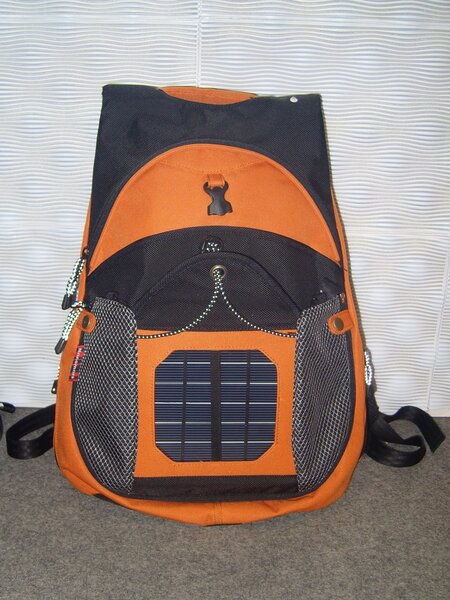
English: Backpack
Etymology
The word “backpack” is a compound formed from “back” + “pack,” referring to a pack carried on the back. It emerged in the early 20th century, evolving from earlier terms like knapsack.
Pronunciation
IPA: /ˈbæk.pæk/ (American English)
The primary stress is on the first syllable: BACK-pack. To practice, emphasize the “back” part while saying it quickly, like “back” followed by “pack.”
Morphology and Grammar Notes
“Backpack” is a compound noun (back + pack) and can function as a verb. As a noun, it is countable (e.g., one backpack, many backpacks). When used as a verb, it is primarily intransitive but can be transitive in rare cases. No irregular forms; standard plural is “backpacks.”
Noun: Backpack (plural: backpacks)
Meanings
1. A knapsack, often with straps, worn on the back to carry items, especially for hiking or schoolbooks.
2. A bag containing a parachute or life-support gear, worn on the back.
Synonyms
Haversack, knapsack (US), packsack, rucksack, bookbag.
Antonyms
Briefcase (for formal carrying), handbag (hand-carried alternative).
Common Word Combinations
Backpack camping, hiking backpack, school backpack, lightweight backpack, jetpack (futuristic variant).
Cultural and Contextual Features
Backpacks are iconic in modern culture, symbolizing adventure for hikers, practicality for students, and minimalism for travelers. Originating from military use in the 1920s (e.g., Lloyd Nelson’s Trapper Nelson pack), they became popular post-WWII. In urban settings, “backpacking” refers to budget travel, often across Europe or Asia, promoting eco-friendly exploration.
Short Interesting Fact
The world’s largest backpack, recognized by Guinness, measures over 3 meters tall and was built in Australia to promote outdoor education—imagine carrying that on a hike!
Sentence Examples
– Simple: I put my books in the backpack.
– Medium: She wore a heavy backpack during the long mountain hike.
– Complex: After packing her tent and snacks into the sturdy backpack, Emily set off on a solo adventure through the national park, eager to discover hidden trails.
Verb: To Backpack (backpacks, backpacking, backpacked)
Meanings
1. (Intransitive) To hike and camp overnight in remote areas with gear in a backpack.
2. (Intransitive) To travel cheaply, often in cities, with minimal luggage.
3. (Transitive, rare) To carry items in a backpack.
Sentence Examples
– Simple: We backpack through the woods.
– Medium: He plans to backpack across Europe next summer.
– Complex: While backpacking in Southeast Asia, she learned to navigate bustling markets and serene temples, all while keeping her belongings light.
Tips to Learn “Backpack” Easier
Visualize a student rushing to class or a hiker on a trail—associate the word with everyday scenes. Practice by listing items you’d pack in one (e.g., water bottle, map). Use mnemonics: “Back” for the position, “pack” for the contents. Listen to audio pronunciations on apps like Forvo to mimic the stress.
Mini-Tasks for Practice
- Make a sentence: Describe your ideal backpack for a trip.
- Find a synonym: Replace “backpack” in “I carried a backpack” with another word.
- Word combo: Create a phrase using “backpack” and “adventure.”
- Antonym challenge: What opposite carrying method might you use for a business meeting?