Etymology The English word hymn comes from Middle English ymne, derived from Old English ymen and reinforced by Old French ymne. It traces back to Latin hymnus, which was borrowed from Ancient Greek ὕμνος (húmnos), originally meaning a song of praise to gods or heroes. Pronunciation In English, hymn is pronounced as /hɪm/ in IPA, with stress on the single syllable (enPR: hĭm). It rhymes with words like him, swim, and dim, and is a homophone of him (the pronoun). Note the silent ‘n’ in some dialects, but the IPA reflects the standard /hɪm/ sound. Meaning As a noun, a hymn is a song of praise or worship, typically religious, often sung in churches or during ceremonies. It can also refer to a national anthem in some contexts, especially in languages like Polish where hymn means anthem. As a verb (ambitransitive), to hymn means to sing a hymn or to praise someone lavishly, as if in song. Grammar and Morphology Hymn is a countable noun in English, with plural hymns. It functions as a common noun without gender. The verb is regular: present third-person singular hymns, present participle hymning, past and past participle hymned. No irregular forms or special morphology apply. In Polish, hymn is a masculine inanimate noun (m inan), syllabified as hymn and pronounced /ˈxɘmn/. In Swedish, it’s a common-gender noun (c) meaning hymn or anthem. Examples Simple: The choir sang a hymn during the service. Medium: She began hymning her favorite praise song softly. Complex: In ancient Greece, poets would hymn the gods with verses that blended music and storytelling, much like modern religious hymns unite congregations in worship. Synonyms, Antonyms, and Common Combinations Synonyms: anthem, psalm, chant, carol (religious context); ode, paean (praise). Antonyms: dirge, lament, elegy (songs of sorrow). Common combinations: hymn book (collection of hymns), sing a hymn, national hymn (often meaning anthem, as in Polish hymn narodowy), hymn of praise. Interesting Facts Hymns have ancient roots in Greek religious festivals, evolving into Christian staples by the 4th century. Famous examples include “Amazing Grace,” written in 1772, which has been translated into dozens of languages. In Poland, hymn primarily denotes a national anthem, like “Poland Is Not Yet Lost,” reflecting its cultural significance in independence movements. Swedish hymn similarly ties to patriotic songs. Cultural and Contextual Features Hymns are central to Christian worship, fostering community through communal singing. In non-religious contexts, they inspire or celebrate, like in school assemblies. Culturally, they vary: English hymns emphasize personal faith, while Eastern European versions (e.g., Polish) often carry nationalistic tones from historical struggles. Tips to Learn Easier Remember hymn by linking it to “him” (homophone) and imagining praising “Him” (God). Practice by rhyming: hymn, him, slim. Listen to recordings of hymns to grasp the melodic flow, and associate the verb form with “singing praises” in daily journaling. Mini-Tasks Make a sentence: Write one using hymn as a verb. Find a synonym: List two synonyms and use one in a sentence. Explore: Research a famous hymn and note its origin. Compare: How does hymn differ in meaning from anthem in English vs. Polish?
Meaning and pronunciation of the word ‘hip hop’
Meaning of ‘Hip-Hop’ Hip-hop is a cultural movement and music genre that originated in the 1970s in the Bronx, New York City, among African American and Latino communities. It encompasses rapping (spoken or chanted rhyming lyrics), DJing (scratching and mixing beats), breakdancing (a style of street dance), and graffiti art. As a noun, it refers to the overall culture or specifically the music style characterized by rhythmic speech over beats. Pronunciation and Stress The standard English pronunciation is /ˈhɪp.hɒp/ (British English) or /ˈhɪp.hɑːp/ (American English). Stress is placed equally on both syllables, often said as two distinct words connected by a hyphen. Audio tip: It rhymes with “tip top,” emphasizing the bouncy rhythm that mirrors the genre’s beat. Morphology and Grammar Notes Hip-hop is a compound noun formed by reduplication (repeating a similar sound), where “hip” suggests something cool or aware, and “hop” evokes movement or jumping, like in dance. It is typically uncountable (e.g., “I listen to hip-hop”) but can be used in plural forms like “hip-hops” rarely for specific styles. As a proper noun for the genre, it is not inflected for gender or case in English. Short Interesting Facts Hip-hop’s four core elements were coined by Afrika Bambaataa in the early 1980s. The first hip-hop record, “Rapper’s Delight” by The Sugarhill Gang, was released in 1979 and became a global hit. It has influenced global fashion, with brands like Adidas and Nike drawing from its streetwear roots. Tips on How to Learn It Easier To remember hip-hop, associate it with its energetic vibe—visualize dancers “hopping” with “hip” movements. Listen to playlists on Spotify featuring pioneers like Run-D.M.C. or modern artists like Kendrick Lamar. Practice saying the word rhythmically while nodding your head to mimic the beat. Break it down: “Hip” for the stylish attitude, “hop” for the dance jumps. Cultural or Contextual Features Hip-hop is more than music; it’s a voice for urban youth, addressing social issues like inequality and identity. It has evolved globally, with subgenres like K-hip-hop in South Korea or French rap. Culturally, it promotes storytelling through lyrics, fostering community and empowerment in marginalized areas. Examples of Sentences Simple: Hip-hop is my favorite genre. Medium: She performs hip-hop dance every weekend at the community center. Complex: Although hip-hop began as a local expression of resistance in New York, its innovative fusion of poetry, rhythm, and visual art has since permeated international pop culture, inspiring generations worldwide. Synonyms, Antonyms, and Common Word Combinations Synonyms: Rap (for the music), urban music, street culture. Antonyms: Classical music, folk (in terms of style and origin). Common combinations: Hip-hop artist, hip-hop beat, hip-hop culture, old-school hip-hop. Mini-Tasks for the Student Make a sentence: Create your own simple sentence using “hip-hop” related to your daily life. Find a synonym: List two synonyms for “hip-hop” as a music genre and explain why they fit. Listen and describe: Watch a short hip-hop dance video on YouTube and describe one cultural element you notice.
Meaning and pronunciation of the word ‘heavy metal’
Heavy Metal Meaning: “Heavy metal” primarily refers to a genre of rock music known for its aggressive sound, heavy guitar riffs, powerful vocals, and high volume. It also denotes dense, toxic metals like lead or mercury in scientific contexts, or metaphorically, powerful artillery or influence. Etymology: The phrase originated in the 19th century for large naval guns, as in Anthony Trollope’s Rachel Ray (1863). For music, it appeared in William S. Burroughs’ works in the 1960s; critics like Sandy Pearlman and Lester Bangs popularized it for bands like Black Sabbath. The scientific sense ties to metallurgy, describing metals with high density (specific gravity >5). Pronunciation: In American English: /ˈhɛv.i ˌmɛt̬.əl/ (HEV-ee MET-uhl), with primary stress on “heavy” and secondary on “met.” In British English: /ˈhɛv.i ˌmɛt.əl/. The hyphenated form “heavy-metal” is less common but used in compounds. Morphology and Grammar Notes: Noun (uncountable for music/science; countable for metals). Plural: heavy metals (sciences). Adjective form: heavy-metal (e.g., heavy-metal band). It’s a compound noun; no inflections beyond pluralization. Usage tip: In music contexts, “metal” is often shorthand, but “heavy metal” specifies the classic subgenre from the 1970s. Synonyms and Antonyms: Synonyms: metal (music), hard rock, thrash (subgenre); heavy elements (science). Antonyms: light metal (science, e.g., aluminum); pop, folk (music opposites). Common combinations: heavy metal music, heavy metal concert, toxic heavy metals. Cultural/Contextual Features: Emerging in the late 1960s UK/US scene, heavy metal influenced subgenres like thrash and doom. Bands like Led Zeppelin, Black Sabbath, and Judas Priest defined it with themes of rebellion and fantasy. Culturally, it’s linked to headbanging fans and festivals like Wacken Open Air. Interestingly, the term “heavy metal thunder” from Steppenwolf’s “Born to Be Wild” (1968) inspired its musical adoption. Short Interesting Facts: Heavy metal has over 100 subgenres. The scientific heavy metals pose environmental risks, like lead poisoning. Fact: Iron Maiden’s mascot, Eddie, embodies the genre’s theatricality. Tips to Learn Easier: Associate the music sense with loud guitars—visualize a mosh pit. For science, link to “heavy” as weighty/dangerous. Practice by listening to Black Sabbath’s “Iron Man” while noting lyrics. Use mnemonics: “Heavy” like dense weights, “metal” like rock amps. Example Sentences: Simple: I love heavy metal music. Medium: The band played a heavy metal concert last night. Complex: Although heavy metals such as mercury can contaminate water sources, many heavy metal bands from the 1970s continue to inspire new generations of musicians worldwide. Mini-Tasks for Students: Make a sentence using “heavy metal” in a scientific context. Find a synonym for “heavy metal” in music and use it in a sentence. Listen to a classic heavy metal song and note three vocabulary words from the lyrics. Create a compound: Describe a “heavy-metal fan” in your own words. See Also: Acid rock, hard rock. For more: Heavy metal music on Wikipedia.
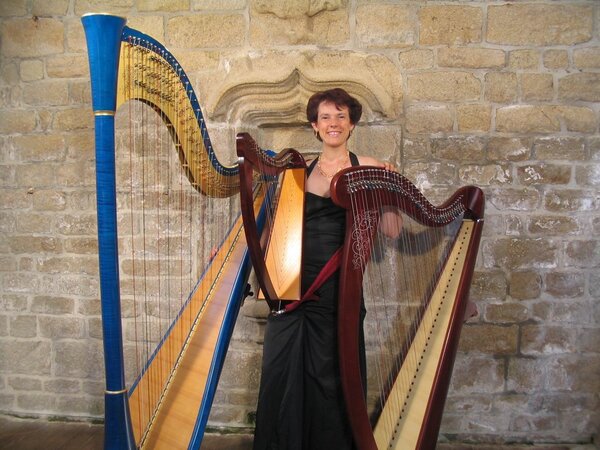
Meaning and pronunciation of the word ‘harp’
Etymology The English word “harp” comes from Middle English harpe, from Old English hearpe, tracing back to Proto-Germanic *harpǭ. It has cognates in other Germanic languages, such as Dutch harp, German Harfe, and Swedish harpa, all referring to the musical instrument. Pronunciation In British English: IPA /hɑːp/, with stress on the single syllable. In American English: IPA /hɑːrp/, rhyming with words like “carp” or “sharp.” The ‘h’ is aspirated, and the ‘r’ is often rolled or pronounced in American English. Meanings and Morphology Noun (plural: harps): Primarily, a harp is a musical instrument with strings stretched across a triangular frame, played by plucking. It derives from the Proto-Germanic root implying a plucking tool. Other uses include a harmonica (colloquial), the metal frame of a lamp for a lampshade, or a grain sieve in Scottish dialect. As an ellipsis, it refers to the harp seal, a species in the Arctic. Verb (harps, harping, harped): To harp on something means to dwell on a subject annoyingly, like nagging. It can also mean to play the harp instrumentally. Morphology: Regular conjugation; past tense “harped,” no irregular forms. Grammar notes: As a noun, it’s countable and uncountable in broader senses (e.g., “play the harp”). The verb is often used idiomatically in the phrasal form “harp on (about).” Synonyms and Antonyms Noun (instrument): Lyre (smaller ancient version), lute (similar but fretted). Verb: Nag, dwell on (synonyms); drop (antonym, as in stop mentioning). Common combinations: Harp strings, harp music, harp on a mistake, pedal harp (modern concert version). Examples in Sentences Simple: She plays the harp beautifully. Medium: The ancient Egyptians used harps in their religious ceremonies. Complex: While the orchestra tuned their instruments, the harpist delicately plucked the strings, creating a ethereal melody that filled the concert hall with enchanting harmony. Interesting Facts and Cultural Features The harp is one of the oldest known instruments, dating back to 3000 BCE in Mesopotamia, often symbolizing heavenly music or angels in Western art, like in Renaissance paintings. In Irish culture, the harp is a national emblem, featured on the country’s coat of arms and Guinness labels. Celtic myths associate it with poets and magic. Fun fact: A concert harp has 47 strings and weighs up to 80 pounds, requiring immense skill to play. Tips for Learning Mnemonic: Imagine “harping on” a topic like plucking harp strings repeatedly to annoy someone. Practice: Listen to harp music on platforms like YouTube to associate the sound with the word. Visualize: Picture the harp’s shape—a heart-like frame—to remember its form. Mini-Tasks for Practice Make a sentence: Write one using “harp” as a verb in the context of nagging. Find a synonym: List two synonyms for “harp” as a noun and explain the difference. Explore: Research one famous harpist, like Vanessa Mae, and note how the harp influences modern music. In other languages: Dutch harp means the same instrument; Turkish harp (dated) means “war,” from Arabic; Turkmen harp means “letter” of the alphabet, from Arabic ḥarf.
Meaning and pronunciation of the word ‘harmony’
Harmony Part of Speech: Noun (countable and uncountable; plural: harmonies) Etymology Attested since 1602, from Middle English armony, from Old French harmonie, from Latin harmonia, from Ancient Greek ἁρμονία (“joint, agreement, concord of sounds”), related to ἁρμόζω (“to fit together”). From Proto-Indo-European *h₂er- (“to join”). Doublet of harmonia. Pronunciation Received Pronunciation: /ˈhɑː.mə.ni/ (stress on first syllable) General American: /ˈhɑɹ.mə.ni/ (stress on first syllable) Rhymes with: -ɑː(ɹ)məni Homophone: hominy (in some non-rhotic accents) Meanings Agreement or accord in feelings, ideas, or interests. A pleasing combination of elements in art, colors, or nature. (Music) The simultaneous combination of notes to form chords; the structure of such combinations in a composition. (Music) The academic study of chord progressions and tonal relationships. A literary work harmonizing parallel accounts from different sources, showing their consistency. Morphology and Grammar Notes Harmony functions primarily as a noun. It is uncountable in abstract senses (e.g., “living in harmony”) but countable when referring to specific musical or artistic instances (e.g., “vocal harmonies”). No irregular forms; derives adjectives like harmonious (meaning concordant) and verbs like harmonize (to bring into agreement). Examples Simple: The family lives in harmony. Medium: The choir’s harmony added beauty to the song. Complex: In ancient Greek philosophy, harmony represented the ideal balance of opposites, much like the Pythagorean view of musical intervals reflecting cosmic order. Synonyms and Antonyms Synonyms: Accord, concordance, unity, balance, consonance (musical sense). Antonyms: Discord, disharmony, conflict, dissonance (musical sense). Common Word Combinations: Racial harmony, marital harmony, color harmony, vocal harmony, inner harmony, live in harmony, strike a harmony. Interesting Facts The concept of harmony originated in ancient Greece, where Pythagoras discovered that pleasing musical intervals corresponded to simple ratios (e.g., 2:1 for an octave), influencing both music theory and philosophy. In Eastern traditions, like Taoism, harmony (he in Chinese) emphasizes balance between yin and yang. Cultural or Contextual Features In Western music, harmony evolved from medieval polyphony to complex Romantic-era chords, as in Beethoven’s symphonies. Culturally, “harmony” symbolizes peace, often invoked in diplomacy (e.g., “global harmony”) or environmental contexts (e.g., “harmony with nature”). In art, it describes balanced compositions, like in feng shui. Tips on How to Learn It Easier Associate with music: Listen to harmonious chords in songs to remember the auditory sense. Use mnemonics: “Har-mo-ny” sounds like “heart money,” evoking emotional agreement. Practice in context: Describe daily balances, like “The room’s colors are in harmony.” Visualize: Picture puzzle pieces fitting together for the “joining” etymology. Mini-Tasks for Students Make a sentence: Write one using “harmony” in a musical context. Find a synonym: List two synonyms and use one in your own sentence. Explore: Research a famous harmonious artwork or song and explain why it’s harmonious. Contrast: Create sentences showing the difference between “harmony” and “dissonance.”
Meaning and pronunciation of the word ‘genre’
Etymology The English word genre is an unadapted borrowing from French genre, which comes from Old French gen(d)re, ultimately derived from Latin genere (meaning “kind” or “type”). It is a doublet of gender and genus, sharing roots related to categories and classification. Pronunciation In American English, it is pronounced as /ˈdʒɑːn.rə/ (ZHAN-ruh), with stress on the first syllable. In British English, it is /ˈdʒɒn.rə/ (JON-ruh). A nonstandard variant in the US is /ˈdʒɑː.nɚ/. Meaning Genre refers to a category or style, especially in literature, music, film, or art, defined by shared characteristics. For example, science fiction is a genre of books involving futuristic technology. Morphology and Grammar Notes As a noun, genre is countable (plural: genres) and uncountable in general senses. It rarely functions as a verb, meaning “to categorize into a genre” (e.g., genred), but this is uncommon and mostly in niche contexts like media criticism. No irregular forms; it follows standard English pluralization. Short Interesting Facts The word entered English in the 18th century amid growing interest in French literature. Interestingly, in French, genre also means “gender” in grammar and has evolved colloquially to act as a filler word like “like” or “you know” in spoken language, especially among youth. Tips to Learn It Easier Associate genre with familiar categories: think of your favorite movie genres like horror or romance. Break it down: “gen” (like generate or general) + “re” (kind of). Practice by labeling playlists or bookshelves with genres to reinforce memory. Cultural or Contextual Features In modern culture, genres shape entertainment industries—e.g., K-pop as a music genre blending pop and dance. Cross-genre fusions, like “genre-bending” films, reflect evolving tastes. In academia, genre theory analyzes how categories influence societal norms, as in feminist critiques of romance genres. Examples of Sentences Simple: I love the mystery genre. Medium: The fantasy genre often features magical worlds and heroic quests. Complex: Although she preferred realistic novels, her discovery of the historical fiction genre, which blends factual events with imaginative storytelling, completely changed her reading habits. Synonyms, Antonyms, and Common Word Combinations Synonyms: category, type, style, class, form. Antonyms: None direct, but opposites like “variety” (for uniformity) or “genreless” in experimental art. Common Combinations: Literary genre, music genre, film genre, genre fiction, cross-genre, genre-defining. Mini-Tasks for the Student Make a sentence: Create one using genre to describe your favorite book or movie. Find a synonym: List three synonyms and use one in a new sentence. Explore: Name three genres in music and explain what makes them unique. Practice pronunciation: Say “This sci-fi genre excites me” aloud, focusing on stress.
Meaning and pronunciation of the word ‘four-four time’
English Noun: Four-Four Time Definition: Four-four time is a musical meter or rhythm consisting of four beats per measure, with the quarter note receiving one beat. It is also known as simple quadruple time or common time, widely used in various genres for its straightforward, driving pulse. Pronunciation IPA: /ˌfɔːr ˈfɔːr ˌtaɪm/ (British English) or /ˌfɔːr ˈfɔːr ˌtaɪm/ (American English). The primary stress falls on the first syllable of “time,” giving it a rhythmic emphasis like the beat it describes. To practice, say it slowly: “four” (as in the number), pause, “four” again, then “time” with a strong punch. Morphology and Grammar Notes This is a compound noun formed by repeating the numeral “four” (indicating beats per measure and per whole note) and “time” (referring to musical timing). It functions as an uncountable noun, so use it without articles like “a” or “the” in general contexts (e.g., “Music in four-four time”). Hyphenated for clarity in writing. No plural form needed, as it describes a rhythmic structure. Short Interesting Facts Four-four time is the most common meter in Western music, powering hits from Beethoven to the Beatles—over 60% of Billboard top songs use it. Its symbol, ℉ (a broken circle with a vertical line), evolved from medieval notations and resembles a lowercase “f” for “four.” In marching bands, it mimics a soldier’s steady step, making it ideal for anthems and pop tracks. Tips to Learn It Easier Associate it with everyday rhythms: clap four times steadily while counting “1-2-3-4” to feel the pulse. Listen to familiar songs like “Happy Birthday” or Queen’s “We Will Rock You,” which are in 4/4. Visualize a 4/4 time signature as four boxes filling a measure—simple and balanced. Practice tapping your foot to build muscle memory for the term. Cultural and Contextual Features In Western classical music, four-four time dominates symphonies and operas for its versatility. Culturally, it’s the backbone of rock, pop, hip-hop, and dance music, enabling infectious grooves that get crowds moving. In contrast to flowing waltzes (3/4 time), it evokes energy and stability, often used in film scores for action scenes. Globally, similar quadruple meters appear in African drumming and Latin rhythms, showing its universal appeal. Examples in Sentences Simple: The band plays in four-four time. Medium: Jazz musicians often swing the notes in four-four time for a lively feel. Complex: While composing his symphony, the artist chose four-four time to create a marching rhythm that builds tension through repetitive, emphatic beats across multiple movements. Synonyms, Antonyms, and Common Word Combinations Synonyms: Common time, 4/4 time, quadruple meter. Antonyms: Triple time (e.g., 3/4 waltz), duple time (e.g., 2/4 march). Common Combinations: Four-four time signature, switch to four-four time, four-four time beat. Phrases like “back in four-four time” describe returning to a standard rhythm. Mini-Tasks for Practice Make a Sentence: Write one original sentence using “four-four time” in a musical context. Find a Synonym: Replace “four-four time” with a synonym in this sentence: “The song’s four-four time keeps it danceable.” Listen and Identify: Play a popular song (e.g., “Billie Jean” by Michael Jackson) and note how four-four time drives the rhythm—count the beats aloud. Create a Rhythm: Clap or tap a simple four-four time pattern and hum a melody over it. Translations: (Music) A meter with four beats per measure and four to a whole note; simple quadruple or common time.
Meaning and pronunciation of the word ‘folk music’
Folk Music Part of Speech: Noun Definition: Folk music refers to traditional music originating from the ethnic or cultural communities of a specific region. It is typically passed down orally through generations, without formal composition credits, and often serves social, ritualistic, or storytelling purposes. It also encompasses modern music inspired by these traditions, particularly the American genre blending Anglo-American roots with popular elements. Pronunciation The word is pronounced as /foʊk ˈmjuː.zɪk/, with primary stress on the second syllable (“mu-“). “Folk” rhymes with “poke,” and “music” is said as “MYOO-zik.” Morphology “Folk music” is a compound noun formed by combining “folk” (an adjective meaning people of a region or culture) and “music” (the art of sound). It functions as a single term but can be hyphenated as “folk-music” in some styles for clarity. Grammar Notes Folk music is usually uncountable, used without an article in general senses (e.g., “I love folk music”). For specific varieties, it can be countable in plural form: “folk musics” (e.g., “The folk musics of Europe vary widely”). It pairs well with adjectives like “traditional” or “American.” Short Interesting Facts The term “folk” derives from Old English “folc,” meaning “people” or “tribe,” highlighting its community roots. In the 19th century, folk music collectors like the Brothers Grimm preserved Europe’s oral traditions. During the 1960s American folk revival, artists like Woody Guthrie used it for social protest. Tips on How to Learn It Easier Associate “folk music” with everyday storytelling—think of it as “people’s music” from festivals or family gatherings. Listen to playlists on apps like Spotify featuring artists such as Pete Seeger to hear its rhythmic, acoustic style. Break it down: learn “folk” first as in “folklore,” then link to “music.” Cultural or Contextual Features Folk music is deeply tied to cultural identity, varying by region: Irish folk features lively jigs, while African folk incorporates call-and-response rhythms. In the U.S., it’s linked to the Great Depression era, influencing movements like the civil rights struggle. Today, it blends with indie rock at events like folk festivals. Examples of Sentences Simple: Folk music is fun to sing along to. Medium: She plays the guitar and sings traditional folk music at local events. Complex: Originating from rural communities where stories were shared around campfires, folk music has evolved into a global genre that preserves indigenous languages and histories through its melodies and lyrics. Synonyms, Antonyms, and Common Word Combinations Synonyms: Traditional music, ethnic music, roots music. Antonyms: Classical music (formal and composed), pop music (commercial and modern). Common Combinations: Folk singer, folk song, folk festival, acoustic folk, folk rock. Mini-Tasks for Students Make a sentence: Create your own simple sentence using “folk music” to describe a favorite song. Find a synonym: List two synonyms for “folk music” and explain why one fits a cultural context. Explore: Listen to one traditional folk song (e.g., “This Land Is Your Land”) and note three features like rhythm or theme. Compare: Write a short paragraph contrasting folk music with pop music in terms of origins.
Meaning and pronunciation of the word ‘folklore’
Meaning of the Word Folklore refers to the traditional beliefs, customs, stories, songs, and practices of a people, especially those handed down orally from generation to generation. It encompasses tales, legends, superstitions, and rituals that reflect a culture’s identity. In a broader sense, it can describe the shared knowledge or unwritten rules within any group, including slang uses in fields like mathematics for unpublished but widely known proofs. Etymology The term “folklore” was coined in 1846 by British writer William Thoms, combining “folk” (people) and “lore” (traditional knowledge). It replaced older phrases like “popular antiquities” and drew inspiration from German words such as Volklehre (people’s customs). An earlier Old English form, folclar, meant popular instruction or homily. Pronunciation and Stress In British English: /ˈfəʊk.lɔː/ (FOHK-lawr), with primary stress on the first syllable. In American English: /ˈfoʊk.lɔːɹ/ (FOHK-lor), also stressed on the first syllable. The ‘r’ is pronounced in American English but often silent in British. Morphology and Grammar Notes Folklore is primarily a noun, used as both countable (plural: folklores, e.g., various folklores of regions) and uncountable (general body of traditions). No verb form exists, but it compounds easily, like “folklore studies.” Alternative spelling: folk-lore (hyphenated in early uses). It’s uninflected for gender or case in English. Short Interesting Facts William Thoms invented “folklore” to promote the study of oral traditions amid industrialization, which threatened their survival. Today, UNESCO recognizes folklore as intangible cultural heritage. Interestingly, the term has been borrowed into many languages, like French folklore, Spanish folclore, and Swedish folklore, often without adaptation. Tips on How to Learn It Easier Associate “folk” with everyday people and “lore” with stories (like in “legends and lore”). Listen to podcasts on myths or read fairy tales to see it in context. Mnemonic: Folklore = Folk’s Lore (people’s wisdom). Practice by discussing cultural stories from your background. Cultural or Contextual Features Folklore preserves cultural identity, varying by region—e.g., Native American trickster tales or European fairy tales like those collected by the Brothers Grimm. In modern contexts, it influences media, such as Disney films or video games drawing from global myths. It highlights oral traditions over written history, emphasizing community bonds. Examples of Sentences Simple: Irish folklore includes leprechauns. Medium: She collected folklore from rural villages to write her book. Complex: While urban legends often blend with folklore, anthropologists argue that true folklore must originate from oral traditions passed down through generations within a specific community. Synonyms, Antonyms, and Common Word Combinations Synonyms: folk tales, mythology, legends, oral tradition, popular culture. Antonyms: high culture, formal literature, scientific knowledge. Common Combinations: folklore studies, urban folklore, comparative folklore, folklore festival, digital folklore. Mini-Tasks for the Student Make a sentence: Create one using “folklore” in a cultural context. Find a synonym: List two synonyms and use one in a sentence. Explore: Research a piece of folklore from your country and summarize it in three sentences. Pronounce: Record yourself saying “folklore” using the IPA guide and compare to online audio.
Meaning and pronunciation of the word ‘flute’
Flute Pronunciation: /fluːt/ (IPA), with stress on the single syllable. It rhymes with words like “boot” or “suit.” In American English, it’s often pronounced as “flo͞ot” (enPR notation). Etymology: From Middle English flute, borrowed from Old French flahute or flaute, ultimately from Old Provençal flaüt. Possible origins include Latin flātus (“blowing,” from flāre “to blow”) or imitative sounds. It’s a doublet of flauta (Spanish/Italian for flute) and fluyt (Dutch ship). Part of Speech: Primarily a noun (countable: flute/flutes); also a verb. Meanings (Noun): Music: A woodwind instrument, typically a transverse flute with holes for fingerings, played by blowing air across an opening to create vibrations. The Western concert flute is the most common in orchestras. Glassware: A tall, narrow stemmed glass for champagne or sparkling wine, allowing bubbles to rise visibly. Architecture/Tools: A vertical groove, like those on classical columns (fluting) or in drill bits to eject chips. Food: A long, thin French bread roll, similar to a baguette. Other: An organ pipe stop producing flute-like tones; a shuttle in weaving; historically, a type of flyboat ship. Verb Forms: Flutes (3rd person singular), fluting (present participle), fluted (past/past participle). Morphology: Regular verb; gerund/nominal form fluting refers to the act or grooves. Grammar Notes: As a noun, it’s countable (e.g., “play the flute”). Verb is mostly intransitive (e.g., “The bird flutes at dawn”) but transitive for shaping (e.g., “Flute the edges”). No irregular forms. Synonyms: (Instrument) transverse flute, recorder (colloquial); (glass) champagne flute; (groove) channel, furrow. Antonyms: (instrument) brass (opposite family); (groove) ridge. Common Combinations: Play the flute, flute glass, fluted column, flute solo, bone flute (ancient instrument). Examples: Simple: She plays the flute well. Medium: The orchestra featured a beautiful flute melody during the concert. Complex: Although the ancient Egyptians crafted early flutes from bone and reed, the modern Western concert flute, made of metal, revolutionized classical music in the 19th century. Interesting Facts: Flutes are among the oldest instruments, with evidence from 40,000-year-old bone flutes in Europe. In culture, the flute symbolizes freedom in Irish folklore (e.g., the tin whistle) and romance in films like Titanic. The champagne flute enhances effervescence, originating in 17th-century France. Cultural/Contextual Features: In Western music, the flute is key in ensembles like the Berlin Philharmonic. Globally, Native American cedar flutes evoke spirituality, while Japanese shakuhachi flutes aid meditation. Cognates include French flûte (/flyt/) and Italian flauto. Tips to Learn Easier: Associate with blowing (“flute” sounds like “flute” of wind). Practice by humming the pronunciation while imagining playing an instrument. Use mnemonics: “Flu-tea” for the airy sound. Listen to flute music (e.g., Mozart’s Flute Concerto) to reinforce auditory memory. Mini-Tasks: Make a sentence: Describe using a flute in a sentence about your favorite music. Find a synonym: List two synonyms for “flute” as a glass and explain why they’re similar. Explore: Research one cultural use of the flute (e.g., in Indian classical music) and share a fact.