Etymology
The English word “harp” comes from Middle English harpe, from Old English hearpe, tracing back to Proto-Germanic *harpǭ. It has cognates in other Germanic languages, such as Dutch harp, German Harfe, and Swedish harpa, all referring to the musical instrument.
Pronunciation
In British English: IPA /hɑːp/, with stress on the single syllable. In American English: IPA /hɑːrp/, rhyming with words like “carp” or “sharp.” The ‘h’ is aspirated, and the ‘r’ is often rolled or pronounced in American English.
Meanings and Morphology
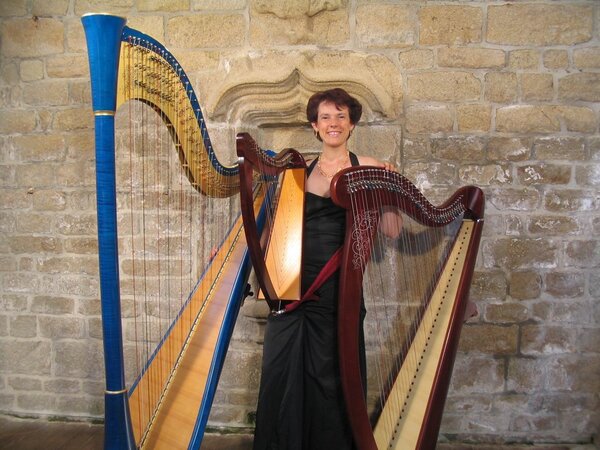
Noun (plural: harps): Primarily, a harp is a musical instrument with strings stretched across a triangular frame, played by plucking. It derives from the Proto-Germanic root implying a plucking tool. Other uses include a harmonica (colloquial), the metal frame of a lamp for a lampshade, or a grain sieve in Scottish dialect. As an ellipsis, it refers to the harp seal, a species in the Arctic.
Verb (harps, harping, harped): To harp on something means to dwell on a subject annoyingly, like nagging. It can also mean to play the harp instrumentally. Morphology: Regular conjugation; past tense “harped,” no irregular forms.
Grammar notes: As a noun, it’s countable and uncountable in broader senses (e.g., “play the harp”). The verb is often used idiomatically in the phrasal form “harp on (about).”
Synonyms and Antonyms
- Noun (instrument): Lyre (smaller ancient version), lute (similar but fretted).
- Verb: Nag, dwell on (synonyms); drop (antonym, as in stop mentioning).
Common combinations: Harp strings, harp music, harp on a mistake, pedal harp (modern concert version).
Examples in Sentences
- Simple: She plays the harp beautifully.
- Medium: The ancient Egyptians used harps in their religious ceremonies.
- Complex: While the orchestra tuned their instruments, the harpist delicately plucked the strings, creating a ethereal melody that filled the concert hall with enchanting harmony.
Interesting Facts and Cultural Features
The harp is one of the oldest known instruments, dating back to 3000 BCE in Mesopotamia, often symbolizing heavenly music or angels in Western art, like in Renaissance paintings. In Irish culture, the harp is a national emblem, featured on the country’s coat of arms and Guinness labels. Celtic myths associate it with poets and magic. Fun fact: A concert harp has 47 strings and weighs up to 80 pounds, requiring immense skill to play.
Tips for Learning
- Mnemonic: Imagine “harping on” a topic like plucking harp strings repeatedly to annoy someone.
- Practice: Listen to harp music on platforms like YouTube to associate the sound with the word.
- Visualize: Picture the harp’s shape—a heart-like frame—to remember its form.
Mini-Tasks for Practice
- Make a sentence: Write one using “harp” as a verb in the context of nagging.
- Find a synonym: List two synonyms for “harp” as a noun and explain the difference.
- Explore: Research one famous harpist, like Vanessa Mae, and note how the harp influences modern music.
In other languages: Dutch harp means the same instrument; Turkish harp (dated) means “war,” from Arabic; Turkmen harp means “letter” of the alphabet, from Arabic ḥarf.