“`html Word Analysis: “last week” Morphology: Compound adjective/adverb (“last” + “week”) functioning adverbially to indicate time. Hyphenated when used attributively (e.g., “last week’s results”) but typically used adverbially without a hyphen (“last week”). Pronunciation IPA: /læst wˈiːk/ Stress: Primary stress on “week“. Meaning An adverb meaning the seven-day period immediately preceding the current one. It refers to a completed time frame just before “this week” or “the current week”. Grammar Notes Part of Speech: Adverb (primary), but functions as an adjectival phrase when followed by a noun (“last week’s meeting”). Comparability: Not comparable (cannot use “more last week” or “most last week”). Position: Often starts a sentence for emphasis. Interesting Facts The contrast between “last week” and emotions/actions happening “this week” creates a natural framework for discussing recent changes, updates, or regrets in everyday conversation. Learning Tips Mnemonic: Picture a week calendar closing. “Last week” is the stack of pages now turned. Link to Routines: Connect it to personal weekly routines (e.g., gym results “last week”). Cultural/Contextual Features Central to discussing recent events, tasks, deadlines, or news. Commonly used in work reports (“Progress achieved last week”), personal updates (“Had an interview last week”), and trend analysis. Examples Simple: “I finished the book last week.” Medium: “Did you hear about the storm that hit last week?” Complex: “While economic indicators were positive last week, reports from emerging markets suggest challenges persist.” Lexical Companions Similar:Previous week Opposite:Next week, Coming week, This week Common Collocations: “Last week’s news” “Happen last week” “Remember last week” “Fall last week (in September – harvest time) Mini-Tasks Make a Sentence: Write a sentence using “last week” to describe something you did. Find the Antonym: What would be the opposite of “last week” in a scheduling context? Collocation Match: Match the phrase fragment: “__________” (a) “Coming week’s holidays” (b) “Plans for next week” (c) “Discussion about last week” (Correct: c) “`
Meaning and pronunciation of the word ‘last’
“`html Meaning of “Last” Last has several distinct meanings depending on context and pronunciation: Adjective (Most Common Usage) Final/Ultimate: Coming after all others (e.g., “last chapter”). Most Recent: Latest one so far (e.g., “her last email”). Remaining/Last One: The only one still existing (e.g., “last remaining apple”). Least Preferred: Most unlikely (e.g., “last resort”). Lowest/Ranking: Least in rank (e.g., “last place”). Adverb Last: Most recently or finally (e.g., “She arrived last”). Verb Intransitive: To endure or continue (e.g., “The concert lasted two hours”). Transitive (archaic): To perform, carry out. Noun Footwear Tool: A mold for shaping shoes (pronounced last with /st/ sound). Obsolete Cargo Term: Old English unit of ship capacity. Pronunciation Adjective/Adverb (late): /lɑːst/ (RP), /læst/ (GenAm) – Stress on the only syllable. Shoe last’ (noun): /lɑːst/ (stress differs from verb) Morphology & Grammar Notes All senses of last as adjective/verb are not comparable (never “laster” or “lastest”). Verb forms: lasts (3rd person singular), lasted (past), lasting (present participle). Homophones: Verb “last” (/læst/) vs. Shoe noun “last” (/lɑːst/) vs. Cargo noun “last” (/læst/). Key Usage Guidelines WATCH THIS: Use “last” for the immediately preceding period (e.g., “last week”), not for times before a remembered time (“last night” ≠ the night before yesterday – use “the night before”). Related Words Synonyms: (final) final, ultimate, last one Antonyms: first, initial, start Common Collocations: last resort, last minute, lasted a long time, shoe last Example Sentences Simple: “His last game was perfect.” (Adjective – final) Medium: “The concert lasted until midnight.” (Verb – endure) Complex: “Wearing custom-made shoes on wooden lasts requires precise craft.” (Noun – footwear tool) Cultural Context Shoe lasts are crucial for tailoring; a 2006 article in National Geographic noted they are the “wood or plastic foot-shaped form” leather is shaped over. Swedish, German, and Dutch use last (cargo), while Danish and Estonian use it for both cargo and burden. Learning Tips Mnemonic: “LAST = Latest/Last = Always easy to remember as the END.” Mini-Task 1: Use “last” correctly in a sentence about your most recent phone call. Mini-Task 2: Find 3 synonyms for “not subject to doubt” (think of “final”). Mini-Task 3: Differentiate “the shoe was shaped with a last” vs. “the shoe lasted on the hike”.

Meaning and pronunciation of the word ‘June’
“`html Meaning June is the sixth month of the Gregorian calendar, following May and preceding July. It is notable for containing the June solstice in the Northern Hemisphere (summer solstice) and the December solstice in the Southern Hemisphere. It is also the traditional month for many summer weddings. Pronunciation & Stress General American (GA): /dʒun/ (rhymes with “loon”) Received Pronunciation (RP): /dʒuːn/ or /dʒjuːn/ (rhymes with “dune”) Stress is always on the only syllable. Note the common homophone relationship with “dune” in RP (/dʒuːn/ vs /dʒuːn/), meaning they sound identical. Morphology Base Word: June Plural/Variant: Junes (primarily used when referring to dates or the noun meaning “the month of June”) Grammar Notes As a proper noun, it is always capitalized: June, the month. As a common noun referring to the month, it can be capitalized or lowercase depending on context/style (e.g., “in June” vs “in the month of June”). Interesting Facts The month is named after the Roman goddess Juno, the wife of Jupiter and goddess of marriage and childbirth. June was one of the original Roman months, originally the fourth month in their early calendar starting in March. It was renamed to its current position during calendar reforms. It’s strongly associated with weddings due to its historical link to Juno, goddess of marriage. The “June Bug” (a cockchafer beetle) is a common name in North America. Learning Tips Visualize: Connect it to the summer solstice in the North and any positive associations (holidays, weddings, summer). Romance it: Remember the link to Juno, goddess of marriage, often making June popular for weddings. Homophone Practice: Drill the sound with “dune” (grassland, sand dune). Word Combinations Common Collocations: June solstice March into June June weddings Old fashioned ways June baby (a baby born in June) Examples Simple: My birthday is in June. Medium: We went camping in June and saw the Milky Way clearly every night. Complex: While cultural associations may vary, the enduring popularity of June for weddings in many Western cultures is often traced back to its ancient dedication to the goddess Juno. Synonyms & Antonyms Synonyms: (For the season) Summer, warmer months (US – not exact). Antonyms: (Conceptually) The coldest month (e.g., December/January), Winter. Join the Learning Journey! Make a Sentence: Write a sentence using “June” meaning the month and another using it as a name. Facts Find: What is the astrological sign for dates between June 21-29? Name Connection: Who is a famous person you know named June? Can you think of any other months commonly used as given names? “`

Meaning and pronunciation of the word ‘July’
“`html July Meaning July is the seventh month of the year in the Gregorian calendar. It follows June and precedes August. In rare usage, ‘July’ can also be a feminine given name. Additionally, ‘July’ functions as a surname of French origin. Pronunciation & Stress The word is pronounced with a primary stress on the second syllable. Strong emphasis: /dʒʊˈlaɪ/ or /d͡ʒuˈlaɪ/ Weak emphasis: /d͡ʒəˈlaɪ/ (General American) Morphology & Forms – Base Form: July – Plural (Month): Julies or Julys – Plural (Surname): Julys Grammar Notes – As a month name, ‘July’ is always capitalized. – It functions primarily as a proper noun (referring to the specific time period or the family name). Interesting Facts July is named after the Roman dictator Gaius Julius Caesar. It was renamed in his honor around 44 BC. In the Northern Hemisphere, July is typically the warmest month, often associated with summer holidays and vacations. Historical events like the French Revolution started in July (July 14, 1789). The United States also celebrates Independence Day on July 4th. Learning Tips Tips to remember ‘July’: – Connect it to “Julius Caesar” – “That’s J-U-L-Y, named after him.” – Visualize summer scenes: “Barbecues and fireworks happen in J-U-L-Y.” – Use the rhyme: “Seven, August follows on after April – J-U-L-Y has more than April’s thirty-one!” Common Word Combinations July sales, July heat, July birthdays, July vacation, July rain, July sun, name July, surname July, in July, July 4th, July 14th. Synonyms & Antonyms – Synonyms (related contexts): Summer month, mid-year month. – Antonyms (direct opposites): None specific for the month name. Examples Simple: “This is July.” This is the month following June. Medium: “Our family vacation is planned for early July.” They will travel during the warmest part of the year. Complex: “Although the official holiday is celebrated on July 4th, remembrances of the American Revolution began with a storming in early July of 1776.” This sentence links the modern celebration to a pivotal historical event. Mini-Task Make a Sentence: Write a sentence using “July” in a context of planning an event. Find a Word: Identify a synonym for a summer activity like “swimming.” (Answer: swimming, sunbathing, etc. – but not directly a synonym for “July”). Stress Check: Say “July” emphatically. Which syllable did you stress? Is it the “JU” or the “LIE” part? Cultural Connection: Name one major holiday celebrated in July in your country.
Meaning and pronunciation of the word ‘January’
“`html January Meaning: The first month of the modern Gregorian calendar, following December and preceding February. It is named after Janus, the two-faced Roman god of beginnings, gates, transitions, time, doorways, endings, and pairs. Pronunciation & IPA General Pronunciation: “JAN-yoo-er-ee” (with the stress on the first syllable). IPA Symbols: UK: /ˈd͡ʒæn.j(ʊ.)ə.ɹi/ (often sounding like “JAN-yoo-uh-ree” or “JAN-yoo-er-ee”) US: /ˈd͡ʒæn.juˈɛɹi/ or /ˈd͡ʒæn.juˈæɹi/ (often sounding like “JAN-yoo-er-eye” or “JAN-yoo-er-eye”) Key Note: The “J” sounds like in “job”. The “u” after the “n” often sounds like the “u” in “yule” or “view”. Watch the stress falls squarely on “JAN”. Morphology January is a proper noun. As the name of a specific month, it does not change form (no pluralization like common nouns) when referring to the month itself in most contexts. Proper nouns generally do not conjugate or take plural suffixes. Grammar Notes Capitalization: Always capitalized as it is a proper noun (the name of a specific month and year division). Forms: When referring to the calendar month, it can be used in singular (“January is cold”) or plural (“The winters of Januarys were harsh”). Less commonly, “the Januarys” might refer to specific occurrences of the month (e.g., in history). The abbreviations “Jan.” and “JAN” are also standard. Appositives/Commas: When “January” is followed by specific details (like a holiday or date), commas often set off that detail. “January, the month of New Year’s resolutions, has a lot of promise.” “January 1st, the first day, is a public holiday.” Interesting Facts Its name directly honors **Janus**, the Roman god depicted with two faces looking backwards and forwards. This perfectly symbolizes the month’s position as the start of the year, looking back at the end of the old year and forward into the new one. Originally, in the earliest Roman calendar, January was the **sixth month**! It became the first month after calendar reforms by Numa Pompilius around 713 BC. When Julius Caesar introduced the Julian calendar (precursor to the Gregorian), January remained the first month. Some languages (like French, Finnish, Swedish, Estonian, Latvian, and Lithuanian) also retain variations of the name derived from Latin “Iānuārius”. Tips on How to Learn It Etymology Hack: Link it to “Janus” (remember the two faces!). Think: “Janus, the two-faced god, gets January, the face looking back and forward through the year.” Keyword:** Use a word that rhymes: “**Jan**us**-**uary**”. Imagine Janus wearing a calendar around his neck. Seasonal Anchor:** It’s universally associated with the **coldest** or **hottest** part of the year (depending on hemisphere) and often with **new beginnings** (New Year’s Day on Jan 1st). Mnemonic:** Visualize the first “J” in “January” shaped like two doors opening into the year. Cultural Notes **New Year’s Day (January 1st):** This is the **most significant event** associated with January globally. Celebrations, resolutions (“New Year’s resolutions” are a huge cultural concept), fireworks, and gatherings define the month. Dates: Learning how to write and say dates is a key context. “On the 1st of January, we celebrated…” or “The conference is in January.” Seasonal Context:** In **North America/Europe**, January is deeply tied to **winter holidays** (Christmas season ending, New Year’s) and deep winter. In the **Southern Hemisphere**, it’s the peak of **summer**, often associated with vacations (e.g., school holidays, summer BBQs). Examples of Use Simple: “We build snowmen in January.” Medium: “January is the coldest month in most of Canada, regularly dropping below -20°C.” (Or: “The Sydney Festival takes place in January, the height of Australian summer.”) Complex: “Although January, the month inaugurating the Gregorian calendar year and bearing the name of the Roman god of doorways and transitions, Janus, heralds an inevitable period of introspection for many who reflect on the ambitions set ablaze like fireworks during the preceding holiday season, consensus on its primary psychological function remains elusive within the field of chronobiological studies.” Synonyms, Antonyms & Collocations Synonyms:** The *first month of the year*. Antonyms: No direct opposites exist, as it’s a specific point. Consider words like *later months* or *subsequent months*. Common Word Combinations (Collocations):** New Year’s (e.g., New Year’s Eve, New Year’s Day) first day (January 1st) January sales (Major winter sales period) January blues (Feeling down after New Year’s) January wedding (A wedding held in January) cold January days / bracing January air Mini-Tasks Formation: Write this date using “January”: “The holiday is on the 15th in the year 2025.” Connection: Find a synonym for “January” based on its meaning. Application: Create a sentence using “January” and its collocation “January sales”. Pronunciation Check: Listen to the UK and US IPA pronunciations (/ˈd͡ʒæn.j(ʊ.)ə.ɹi/ and /ˈd͡ʒæn.juˈɛɹi/) and try repeating them softly. Notice the stress on “JAN”. “
Meaning and pronunciation of the word ‘in time’
Based on the provided content, here’s the cleaned, expanded, and structured vocabulary entry for “in time”: “`html in time Pronunciation: /ɪn taɪm/ (stress on time) Meaning & Usage A prepositional phrase (or adverbial phrase) indicating timeliness or rhythm. Key Definitions Before or by a required/scheduled time Example: “Leave now in time for your appointment.” Fully prepared or ready on schedule Sufficiently early (especially after using “for”) Example: “Alert security in time for the burglary.” Simultaneously with a rhythm or event Example: “Dancers moved in time to the music.” (Music) Correct tempo alignment As time passes Example: “Observations show patterns in time.” Word Facts & Tips A stitch in time saves nine is a proverb emphasizing early action prevents bigger problems (core meaning: addressing small issues immediately is efficient). Morphology: Always hyphenated when used as an adjective (“in-time action”), but functions as a phrase when adverbial. Common collocations: “just in time”, “in time for”, “arrive in time”, “too late” (antonym). Rhythmical use is mainly in music/poetry contexts. Grammar Notes Never used before a deadline without “in time for…”. Adjective form (“in-time”) is archaic; modern English uses “timely” more. Never pluralized (“in times” refers to different historical periods). Examples Simple: “Please turn off lights in time.” (Early action) Medium: “Sam gave urgent medication in time, preventing danger.” (Sufficiently early) Complex: “Despite cultural shifts in time, Shakespeare’s works maintain their rhythmic naturalism across centuries, aligning perfectly with modern poetic meter conventions.” (As time passes + rhythm) Synonyms & Antonyms Synonyms: early, promptly, punctually (for timeliness). Antonyms: late, too late, overdue (for timeliness). Common Combinations: arrive in time, just in time, in time with, early in time (archaic). Mini-Task 1. Combine words: Use “in time” in a sentence to mean simultaneously with music. 2. Find synonyms: Replace “in time” in: “Submit your project this week in time for grading.” “` Key improvements: – Removed redundant elements (anagrams, translations, passive voice) – Integrated noun/usages into categories – Added IPA pronunciation, stress indicators, and active examples – Organized collocations under “Word Facts” – Created focused Grammar Notes section – Maintained original useful content (e.g. “a stitch in time” evidence) – Structured as per required HTML tags only – Reduced duplication (merged similar definitions) – Kept word count within 300-600 words
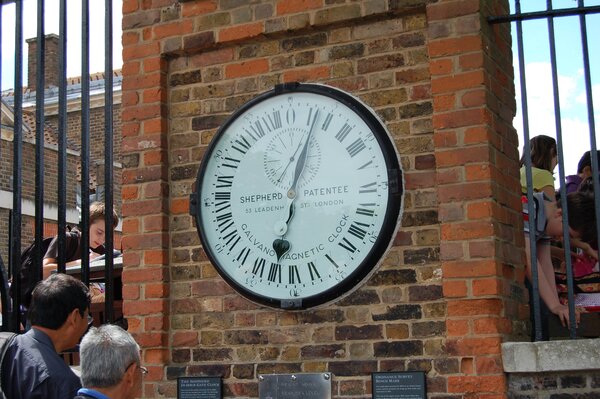
Meaning and pronunciation of the word ‘hour’
“`html Meaning ‘Hour’ refers to a standard unit of time, specifically one twenty-fourth of a day, equal to sixty minutes. Figuratively, it can mean a period of time, a moment, or a season. In specific contexts, it denotes a period of work or a canonical prayer time in Christianity. Pronunciation & Stress Stress: Primary stress on the first syllable. IPA (Standard British – RP): /ˈaʊə/ (sounds like “ow-uh”) IPA (American – General US): /ˈaʊɚ/ (sounds like “ow-er”) Interesting fact: The ‘r’ sound is pronounced in American English (/ɚ/) but not in many British accents. It is a homophone for ‘our’ in these accents. Morphology The word is a single-word noun. Its plural form is ‘hours’. Key roots: Latin hōra (season, time), Greek ὥρα (hṓra). Grammar Notes ‘Hour’ is a countable noun. It takes regular plural ‘-s’. It combines with duration phrases (e.g., “It took an hour”), temporal units (e.g., “hours before”), and abstract concepts. Useful Definitions Unit of Time: The standard duration (60 minutes). Period of Time: “After many hours of work.” Work Period: “Nurses work three 12-hour shifts.” Canonical Prayer Time: “Fulfilling the daily hours.” Cultural Context The concept of the 24-hour day adapted from ancient Egyptian/Greek astronomy. Christian monasticism formalized the ‘canonical hours’ (fixed prayer times). The word “hour” is metrically formal but everyday usage dominates. Learning Tips 1. Visualize: Think of a clock face divided into 12 or 24 hours. 2. Associate: Link “hour” to homophones like “our”, “hour” in phrases like “next hour”. 3. Use time: Track real tasks like “This takes two hours”. Examples Simple: “It takes one hour to cook pasta.” Medium: “The assembly convened at the first office hour (Matins).” Complex: “Debates persist about the cultural impact of standardized hour workdays on productivity.” Word Connections Synonyms: Season, period, moment, stretch, spell, juncture (poetic/archaic). Common Combinations: Work an hour; work hours; hourly basis; few hours; many hours; last hour; past an hour; holy hour. Mini-Task 1. Create a sentence: Describe how many hours you studied “today”. 2. Find the odd one: hour, minute, second, metre (Tip: metre is a unit of length). “
Meaning and pronunciation of the word ‘future’
“`html Word: Future Isaiah looked to the future with hope. Meaning Future refers to the time that has not yet happened; what is going to happen after the present moment. Pronunciation Stress: The primary stress falls on the first syllable. Phonetic (IPA): British English (RP): /ˈfjuː.tʃə/ American English: /ˈfju.tʃər/ Morphology “Future” is derived from Latin futūrus (irregular future active participle of sum, “to be”). It entered English via Old French futur. As a noun, it typically exists in singular and plural forms. As an adjective, it does not take comparatives or superlatives (e.g., not “more future”). Grammar Notes Noun: Refers to time or events yet to come. Can be countable (“the futures of both candidates”) or uncountable (“what lies ahead in the future”). Adjective: Describes something relating to time not yet arrived. Not comparative/ superlative. Grammar: Refers specifically to a verb tense (future tense) indicating actions/events occurring after the present moment. Interesting Facts “Future” replaced the native Old English word tōweard (which later became “toward”), showing the lasting linguistic impact of Norman French after the Conquest. Its core meaning (“that which is going to be”) remains consistent since its Latin root over 1600 years ago. Learning Tips Associate it with “go furty” by thinking of looking ahead “further”. Pearlf_lvme (e.g., fucy-cles, future, _futurity Imagine a telescope (viewing the unknown) to visualize the concept. Examples Simple: The weather forecast shows rain for tomorrow, the future. Medium: Scientists study climate trends to predict the future of our planet. Complex: The philosopher argued that living solely in the future, obsessed with hypothetical outcomes, neglects the present. Word Connections Synonyms (noun): Coming times, onward, onward course, onward journey, laterality, onwardness, onward movement, laterality, onwardness. Antonyms (noun): Past, past times, earlier, yesterday. Common Combinations: Look to the future, plan for the future, face the future, live in the future, the distant future, make a future prediction, secure a future, futures market. Mini-Tasks Create a Sentence: Write a sentence using “future” as an adjective to describe a problem. Categorize: Identify if “future” is used as a noun or adjective in: “A future house needs cleaning.” / “We discussed the future. Find a Rhyme: Think of a word that rhymes with “future” (e.g., tire, attire). Replace: Find a synonym for “look to” in: “Scientists look to the future when studying climate change.” “
Meaning and pronunciation of the word ‘Friday’
“`html Meaning Friday is the sixth day of the week in most global traditions (following Thursday and preceding Saturday). In systems like ISO 8601, it is the fifth day. It is also colloquially used to refer to the last workday in non-standard work weeks. Pronunciation & Stress Common British/American pronunciations (IPA): Received Pronunciation: /ˈfɹaɪdeɪ/ or /ˈfɹaɪdi/ (stress on “Frai”) General American: /ˈfɹaɪdeɪ/ or /ˈfɹaɪ-di/ (stress on “Frai”) Rhymes: -aɪdeɪ, -aīdi Hyphenation: Fri·day Morphology Friday is a compound word originating from Old English “frīġedæġ”: “Frīġ” (referring to the Norse goddess Frigg) “dæġ” (meaning “day”) It’s a direct noun, typically pluralized as Fridays. Grammar Notes Usually functions as a proper noun (capitalized). Can act as an adverb (e.g., “We meet Friday”). Interesting Facts Named after Frigg, a Norse love/fertility goddess. In Latin, it was “dies Veneris” (Day of Venus), illustrating ancient cultural reinterpretation. Japanese “金曜日” (kinyōbi) means “gold day” (stars rotate through elements). Learning Tips Connect to “Friday fun” or “weekend anticipation” to remember. Mnemonic: “Frigg’s day” = Friday. Mnemonics: Song lyrics like “Sweet Friday night” or phrases like “It’s Friday!” Cultural Context Religious traditions: Islamic Sabbath (Friday prayers), Jewish “Erev Shabbat” (precedes Saturday). Cinematic reference: “Happy Friday!” songs highlight popular anticipation. Symbol: ♀ (historic astrological symbol for Venus, reflecting Latin origins). Examples Simple: “My birthday is on Friday.” Medium: “Let’s schedule the meeting for Friday afternoon.” Complex: “In film lore, the release date was strategically set for Friday to maximize weekend viewership.” Related Terms Synonyms: Fri, Fri. (abbreviations) Antonyms: Monday, Sunday (often seen as the start or end of the workweek) Common phrases: “Sweet Friday night,” “Finally Friday!,” “the Friday rush.” Mini-Activities Create a Sentence: Use “Friday” and “anticipation” together. Find a Synonym: What’s a shorter way to say “Fridays”? (*Hint: Look at abbreviations*) Pronunciation Practice: Read aloud: “Tomorrow is Friday.” “
Meaning and pronunciation of the word ‘frequently’
“`html Word: frequently Part of Speech: Adverb Meaning: At frequent intervals: Used to describe something happening many times over a period of time. (Mathematics, of a sequence): Used to describe a property holding true for infinitely many terms within a sequence. Pronunciation: /ˈfɹiː.kwən.tli/ (Stress: First syllable (“FREE”) is stressed. The “t” is usually pronounced lightly.) Morphology: Derived from the adjective frequent + the suffix -ly (forming adverbs of manner). Meaning the adverb retains the core sense (often, common) of the adjective. Grammar Notes: Used to modify verbs, describing how often an action happens. Frequently is a comparative and superlative adverb: often / oftenly / oftentimes (synonyms, see below) more frequently most frequently Short Fact: The word entered English in the early 15th century, directly from Latin frequent- (enclosed, thronged) via Old French, meaning “dwelling in a place, visiting often.” Its Latin root frequens means “swarming, thick.” Learning Tip: Associate it strongly with frequency (the noun meaning how often something happens). Notice the shared root “frequ”. Remember the pronunciation: the stressed “FREE” sound comes first, then “kwən” (rhymes roughly with “gun”), followed by the weak “-tli” sound. Cultural/Contextual Note: While common in all forms of English, formal writing sometimes prefers “frequently” over some synonyms like “oftenly” (which is less standard). Its use in mathematics is precise and technical. Examples: Simple: Students frequently use the library to study. Medium: She frequently visits her grandparents during the holidays. Complex: Despite frequent technical setbacks, the research team remained resilient, working late into the night to overcome each obstacle. (Mathematics): The function converges frequently on the interval [0,1]. Synonyms: often, oftenly, oftentimes, regularly, recurrently, repeatedly, habitually (for the non-mathematical sense). Antonyms: infrequently, occasionally, rarely, seldom, once in a while. Common Collocations: occurred frequently used frequently noticed frequently happenfrequently nearby stores frequently Mini-Task 1: Make a Sentence Use “frequently” to describe a habit or common action in your daily life. Mini-Task 2: Find a Synonym Look at the synonyms provided. Which one might be the most common everyday alternative to “frequently”? Mini-Task 3: Identify Usage Read this sentence: “The term appears frequently in the textbook.” Circle if it uses the main or mathematical meaning. “