“`html Meaning of “often-2” “Often” is an adverb indicating frequency. It means: Frequently; many times on different occasions. (e.g., She visits her grandparents often) (Archaic/Adjective) Frequent. (e.g., She made often visits) Pronunciation IPA: /ˈɒfən/ (British English), /ˈɔfən/ (American English) Stress: Primary stress on the first syllable (OF-ən). Notes: The final /t/ sound found in the older form “oft” is silent in modern standard pronunciation. The traditional pronunciation without the /t/ (/ˈɒfən/, /ˈɔfən/) is considered standard and often preferred over the spelling-influenced pronunciation with the /t/ (/ˈɒftən/). Morphology (Word Structure) “Often” is a simple adverb. This means it doesn’t have a clear, separable root and suffix like a derived adjective (e.g., happiness from happy) or adverb (e.g., quickly from quick). Grammar Notes Adverb Function: “Often” primarily modifies verbs, adjectives, or other adverbs to show how frequently something happens. (e.g., He often arrives late. She is often tired. It happened very often). Comparative/Superlative Forms: It can be used with “more” and “most” (more often, most often) or with the less common “-er” and “-est” forms (oftener, oftenest), though “more/most often” is more common. Archaic Adjective Use: Its use as an adjective meaning “frequent” is now rare except in very formal or literary contexts. Interesting Facts The Silent “T”! The modern standard pronunciation (/ˈɒfən/, /ˈɔfən/) deliberately omits the /t/ sound found in its Old English ancestor “oft” and its Middle English forms. This change mirrors other English words like “soften”, “listen”, and “hidden” where the final consonant became silent over time. Germanic Cousin. “Often” shares deep Germanic roots (*ufta, *uftō) with words for “often” or “frequently” in several other Germanic languages like German “oft”, Dutch “vaak”, Swedish “ofta”, and Icelandic “oft”. Older Form “Oft”. The older Middle English form “oft” (pronounced /ɒft/ or /ɔft/) was used for centuries before its pronunciation shifted. You might occasionally still see it in poetry or archaic texts. Tips to Learn “Often” Easier Think of “often” as happening frequently… Group it with words like “many times”, “plenty”, “a lot”, “regularly”, and “habitually”. Focus on the silent “t”. When learning the pronunciation, emphasize saying /ˈɒf(ə)n/ or /ˈɔf(ə)n/, consciously leaving out the “t”. You can associate it with the feeling of something being said often (‘oft’) with less force (silent ‘t’). Contextualize. Think about times things happen “often” in your life (e.g., exercise, calls with family, coffee breaks). Examples of Usage Simple: You often see the cat in the garden. Medium: If you feel unwell, you should often contact your doctor. Complex: Despite the rain forecast for most days of the week, people often chose to ignore the predictions and proceeded with their outdoor plans. Synonyms & Antonyms & Collocations Synonyms (increasing frequency): frequently, very often, frequently, many times, repeatedly, again and again, habitually. Antonyms (increasing infrequency): infrequently, rarely, seldom, once in a while, not often. Common Collocations (Word Partners): be often (feeling tired, here, online) have often (occurred, happened, been mistaken) visit often do often (not something) happen often / more often made often visits (archaic) Mini-Tasks Create a Sentence: Using the word “often”, describe your exercise routine. Find a Synonym: What word means something happens frequently? Write it in the comments. Contrast: Use “often” and one of its antonyms in the same sentence. Identify Collocation: Circle the word that naturally collocates with “often” from the list provided. a) eat b) visit c) forget d) sleep (Hint: All can technically work, but which is most common?) “`

Meaning and pronunciation of the word ‘October’
“`html Word: October Meaning: The tenth month of the Gregorian calendar, positioned between September and November. Pronunciation & Stress: English (Global): /ɒkˈtəʊ.bə/ (Received Pronunciation), /ɑkˈtoʊ.bəɹ/ (General American). Primary stress on the second syllable. Latin (Classical): /okˈtoː.bɛr/ Morphology The root “Oct-” comes from Latin octō, meaning “eight”. The suffix “-ber” originates from Latin -ber (from -bris), an adjectival suffix used for month names. Historically, October was the eighth month in the Roman calendar (which started in March). Grammar Notes Noun: October is a common noun referring to the month. Plural: Octobers (rare, but accepted) Comeronyms (months before/after): January, February, March, April, May, June, July, August, September, November, December (Optional Note for Advanced Learners): In Latin, Octōber could also function as a third-declension adjective meaning “of October”. Interesting Facts Despite being the tenth month, its name literally means “eight” month, reflecting the ancient Roman calendar starting in March. In the early Soviet Union, “October” was sometimes used symbolically in names for children to represent the October Revolution (1917), contrasting with traditional religious names. Historically, “October” referred to a type of ale traditionally brewed in October for autumn consumption. Tips to Remember It Pattern Recognition: Group “September”, “October”, “November”, and “December” together. Their names end in -ber (from Latin -bris) and correspond to letters Sept (7), Oct (8), Nov (9), Dec (10). Remember: Sept=7, Oct=8. Season Association: Think of autumn/Spring depending on hemisphere. In the North, October has falling leaves and Halloween. In the South, it is springtime. Examples Simple: Sarah’s birthday is in October. Medium: The Halloween decorations went up in late October. Complex: After weeks of preparation throughout September and early October, the annual harvest festival attracted crowds to the city park. Related Words Synonyms: None directly, as it’s a proper noun for a specific month. Tips: Use prepositional phrases: “in October”, “during October”, “of October”. Common Combinations: October holiday(s) (e.g., Halloween) October event(s) Mid-October / Early October / Late October October statistics / October sales Jones’ Rescue Timeline: October is notable for crises. Mini-Tasks Fill in the blank: The pumpkin festival is always __________. Find the synonym: What prepositional phrase means “during October”? (in October, during October) Word Puzzle: Complete the pattern: September is the 9th, October is the 10th (Look: Sept = 7, Oct = 8?). Real-life: What important event in your country occurs in October? “`
Meaning and pronunciation of the word ‘now’
“`html Understanding the Word “Now” “Now” is a versatile and fundamental word in English, primarily used as an adverb but also functioning as an adjective, conjunction, interjection, and noun in specific contexts. Its core meaning relates to the present moment or current time, but it carries several nuanced uses. Meaning and Usage Main Meaning (Adverb): At this present time; immediately. Example: “I’m busy now, but call back in an hour.” (simple) Example: “They’ve moved house. Go now, while the boxes are still here.” (medium) Example: “Having gathered all the intelligence, now was the moment to strike, despite the risks.” (complex) Adverb (Transition): Used to introduce a new point, shift focus, express contrast with the past/future, or emphasize a change. Example: Basic: “It’s raining. Now, let’s go indoors.” Medium: “She was strict in the past; now, she’s very patient.” Complex: “Previous experiments had failed; now, after a fundamental redesign, success seemed probable.” Adverb (Frequency): Sometimes; occasionally (less common today). Conjunction: Meaning “since” or “because” (archaic/rare). Adjective: Present; current; fashionable/popular. Example Noun Context: “Check this blog out now!” (fashionable/popular) Interjection: Signals the start of an activity (“All right everyone, now!”). Noun: The present time itself (“In now, one must act quickly”). Noun (Phenomenology): A particular instant in time. Pronunciation and Grammar IPA Pronunciation: Used primarily in English. Most Common (Received Pronunciation/non-rhotic, General American non-rhotic): /naʊ/ (like “cow”). Some Regional Variants: /nɒ/ (e.g., some Irish English – like “cork”), /næʊ/ or /nɛʊ/ (e.g., some Dublin varieties). Stress: Only one syllable, unambiguously stressed. Grammar Notes: Never has comparative/superlative forms (“*nower”, “*nowest”). Often used emphatically (“Now!“, “Now you listen!”). Key word for indicating urgency or immediate action. Synonyms and Word Combinations Synonyms (Adverb – Present Time): at present, currently, presently, this moment, immediately. Synonyms (Adverb – Transition): however, on the other hand, but, yet, speaking of which. Common Collocations: at this now-time (at present) not now (later) but now (however, contrary to expectation) in now‘s world (in the current time/society) time after now (future time) Interesting Facts & Learning Tips Deep Roots: It comes from Old English “nū”, Proto-Germanic “*nu”, and even stretches back to Proto-Indo-European “*nū” – making it one of English’s most ancient core words. Sound Symbolism? Some linguists note its vowel sound (/aʊ/ like “out”) might subconsciously suggest movement towards a different state, relating to its transition meaning. Mnemonic for Pronunciation: Think of the largest bird in Africa, the Ostrich. Say “Ostrich” quickly, but stop after the “n” sound and the vowel – that’s “now”. Tips for Learning: Practice placing “now” in different positions within a sentence to understand its structural impact. Focus on its prefix use “at this now-time“. Note how adding “now” immediately changes the meaning from past to present. Listen for its use as a strong interjection in commands (especially with children or animals: “Now! Stop that!”) or dramatic transitions. Mini-Tasks Make Sentences: Write three sentences using “now” as an adverb with different meanings: present time, contrast with the past, and as a transition signal. Find Synonyms: For each meaning of “now” listed above, find one synonym. Collocation Practice: Complete these phrases with “now”: – “______ in America” – “______ a point” – “time after ______” “`
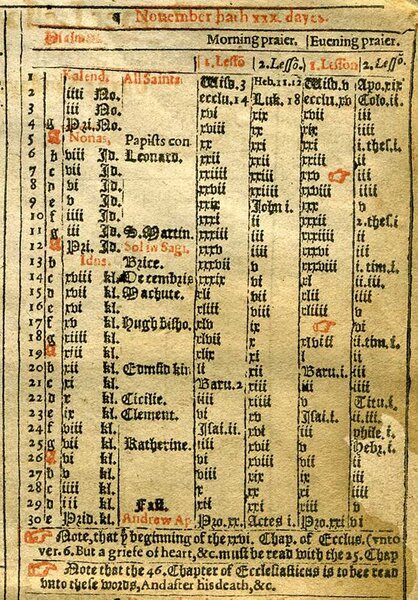
Meaning and pronunciation of the word ‘November’
“`html Word Study: November Meaning **Time**: The eleventh month of the Gregorian calendar. **Name**: A female given name. (Less common) In NATO spelling alphabet & time zones): Represents the letter “N”. Pronunciation & Stress International Phonetic Alphabet (IPA): /noʊˈvɛmbər/ Primary stress falls on the second syllable (-VEM-). Common variations exist (e.g., /nəʊˈvɛmbə/ in UK English, /noʊˈvɛmbɚ/ in US English). Rhymes with words like “ember”, “November”, “January”. Morphology Root: Greek novem (nine). Suffix: Latin -ber (denoting a month). Noun Forms: Singular: November, Plural: Novembers. Adjective Form: November (e.g., November rainfall). Short Form: Nov or Nov. (e.g., Nov 5th). Grammar Notes Always capitalized as it’s a proper noun (month name). Can function as a common noun: “We arrived in November.” Collocates strongly with calendar context: “month of November”, “November 1st”, “in November”. Interesting Facts Originated as the ninth month in the ancient Roman calendar before March was the start. Replaced the Old English name “Blōtmōnaþ” (sacrifice-month) when Christianity spread. Shares its root “nov-” with words like “novel” (new), “novel” (new), “novena” (nine-day prayer). Learning Tips Use the root “nov-=nine” to remember it was originally the 9th month. Visualize: “Nov” (for nine) + “ember” (fifth month in Roman calendar) = November. Associate with November-related words: Halloween, Thanksgiving (US), harvest, autumn, cold. Examples Simple: “My birthday is in November.” “Leaf are falling in November.” Medium: “After months of drought, November brought heavy rainfall.” “November marks the beginning mass migrations of geese.” Complex: “The historical significance of November lies in its transformation from a pagan sacrificial month to a standardized Gregorian calendar period.” “Meteorologists predicted that the 2023 November rains would alleviate the ongoing agricultural drought.” Related Words Common Combinations: November rainfall, Thanksgiving (US), November 11th (Veterans Day/Remembrance Day), month of November. Synonyms: (Only as a time period) The eleventh month. Antonyms: (As a month) First month (January), Twelfth month (December). Derived Words: Novembere (archaic); Novembrian (rare, adjective). Mini-Tasks Grammar Check: Correct the sentence: “We have holiday on November.” Synonym Search: Find a synonym for “November” meaning “the eleventh month”. Spelling Drill: Write the word with correct capitalization and IPA stress mark (/noʊˈvɛmbər/). Usage Challenge: Use “November” correctly in a sentence about planning an event. “`
Meaning and pronunciation of the word ‘Monday’
“`html Word: Monday Pronunciation & Stress IPA: /ˈmʌn.deɪ/ Stress: Emphasis is on the first syllable (MUN-day). Tips: Hear it pronounced: [Link to audio resource – e.g., dictionary.cambridge.org]. Meaning & Context Monday is the first official day of the standard workweek/personal week in many countries. It follows Sunday and precedes Tuesday. Interesting Fact: Its name comes from the Old English “mōna(dæ)ġ”, meaning “Moon’s Day”, reflecting ancient associations between days of the week and celestial bodies (Latin: “dies Lūnae” – Moon’s Day). Morphology Simple Word: “Monday” is a single-word noun. Components: Root/Combining Form: “Mona-” (from “Moon”) Suffix: “-day” (meaning ‘day’) – common in day names. Synonyms, Antonyms & Collocations Synonyms: Moon-day (archaic/technical), Washing day (historical, UK). Antonyms: Sunday (in many weekly cycles), Friday or Saturday (often considered the weekend). Common Collocations: Monday blues First Monday Monday morning Labor Day Monday Virtual Monday (MonDay) Grammar Notes Part of Speech: Noun Number: Singular (Monday), Plural (Mondays). Capitalization: Always capitalized as it is a proper noun (day name). Abbreviations: Mon., Mon (less formal). Examples of Usage Simple: “Today is Monday.” Medium: “I hate having to work on Monday mornings.” Complex: “After enduring the infamous ‘Monday blues’, Sarah finally felt a renewed sense of purpose once she started her challenging project.” Cultural Notes Monday often symbolizes the return to routine after the weekend. The term “Monday” is used differently in various cultural/religious contexts (e.g., in Judaism, Sunday is the first day; in Iran, Saturday/Sunday are the weekend). Interesting Point: Some cultures or businesses strategically refer to “Monday reentry meetings” to mark the transition back to work. Learning Tips & Mini-Tasks Tips: Associate “Monday” with the Moon – “Mona-ne Day”. Use flashcards with the image of the Moon and the word “Monday”. Practice the pronunciation: Emphasize the first syllable (MUN-day). Mini-Task 1: Make a Sentence Create a sentence using “Monday blues”. Mini-Task 2: Find a Synonym What other word is listed as a synonym for Monday? Mini-Task 3: Stress Practice Repeat these words, emphasizing the first syllable: “MUN-day”, “TUE-sday”, “WED-nesday”. Mini-Task 4: Word Connection The word “Monday” means “Moon’s Day”. What does “Moon” mean in Welsh? (Hint: Try Nepali, Swahili, or other languages!). Mini-Task 5: Sentence Challenge Write a sentence describing your feelings about Monday using a synonym. “`
Meaning and pronunciation of the word ‘minute’
“`html Meaning As a noun: A unit of time: 1/60th of an hour (60 seconds). A unit of angle: 1/60th of a degree. A written record of a meeting’s proceedings. A short, unspecified period of time (informal). A unit of use on a phone/network (roughly 60 seconds). As an adjective: Extremely small (e.g., a minute detail). Very careful and precise (e.g., a minute examination). Pronunciation & Stress Noun (time/angle): /ˈmɪnɪt/ (MIN-it, stressed on first syllable) Adjective: /maɪˈnjuːt/ or /maɪˈnjʊt/ (MINE-yoot or MINE-yoot, stressed on second syllable) Note: Confusingly, both meanings are often written as “minute” but pronounced differently. Morphology & Grammar Notes Origin: From Latin minūta (meaning “small part” or “note”), from minuō (“to make smaller”). Plural: minutes (verb: minuted / minuting) Derived Adverb: minutes (e.g., “He reviewed the reports minutes after receiving them”). Related Words: menu, minuscule, minute (noun). Grammar: As a noun, it can be countable (e.g., “five minutes”) or uncountable (e.g., “at that minute”). As an adjective, it’s comparative (“minuter/more minute”) and superlative (“minutest/most minute”). Interesting Facts The word “minute” as an angle unit comes from Babylonian mathematics (base-60 system still used in time/angles). Its connection to “menu” is through the Latin root meaning “small” (a menu lists small courses). As a meeting record, it originated in medieval formal gatherings where proceedings were “minuted” (noted briefly). Learning Tips Sound it out: Remember “MIN-it” for time/angle units, “MINE-yoot” for tiny/detail-oriented ideas. Use flashcards: Example phrase: “A minute detail can change the minute-photographed scene.” Visualize: Imagine a clock hand moving one tick = 1 minute, or zooming into a map pixel = a minute scale. Synonyms & Antonyms Synonyms (Noun – time): sec, second Antonyms: hour, year Synonyms (Adjective – small): tiny, trivial Antonyms: huge, major, crucial Common Phrases: A minute later (soon after), give me a minute (wait a short time), in minute detail (very precisely). Examples Simple: “The meeting notes are in the minutes folder.” Medium: “The astronomer calculated the star’s position in minutes and seconds of arc.” Complex: “Her minute-detail approach uncovered errors too small to be visible in preliminary reviews.” Mini-Task Sentence Challenge: Write a sentence using “minute” to mean both time *and* size. Synonym Swap: Replace “minute” in this sentence: “She analyzed the data very carefully.” Context Check: Which “minute” fits here? “Our team needs to take ________ to finalize the contract by Friday.” (Hint: Not the time unit) “`

Meaning and pronunciation of the word ‘May’
Meaning Noun: The fifth month of the Gregorian calendar, following April and preceding June. Associated with springtime blooming and cultural celebrations. Proper noun: A female given name (often shortened as “Mae”), commonly derived from the month name. Also functions as a surname with multiple origins including: Pet name for Mary or Margaret Surname from musicals (e.g., Fannie Mae) Place names in the US (towns and townships) Verb: Modal verb expressing possibility (“It may rain”), permission (“May I leave?”), or hypothetical situations. Pronunciation IPA: /meɪ/ (emphasizing the “ay” sound) Stress: Single syllable, primary stress on the word Homophones: Mae (given name), Mei (Chinese surname) Morphology Noun forms: Plural “Mays” (e.g., May and June) Verb characteristics: Irregular (no -s/-ing suffixes: “may, may not”) Vocabulary relatives: Mary, Margaret, apomay (botanical term), Mayflower Grammar Notes As a modal verb: Changed form for negation (“may not”), interrogative (“May I”), and questions without wh-words (“May he come?”). Interesting Facts Named after the Roman earth goddess Maia (from Latin maius). The month celebrates connections to spring births (peonies, honeysuckle) and traditions like May Day. The surname also appears in the Mexican holiday Cinco de Mayo. Learning Tips Memorize seasonal words: may flower (botanical), may day (celebration) Use homophones: “Mae” when thinking of the month Note verb contexts: Permission (“May I…?”) vs. Possibility (“She may win”) Cultural Features Cinco de Mayo (May 5th) celebrates Mexican heritage despite common misconceptions. In literature, May often symbolizes youth and romance (Shakespeare’s use in As You Like It). Examples Simple: “Class photo taken in May.” Medium: “The May-born roses are fragrant.” Complex: “A shawl painted with May-day gardens was said to bring luck.” (Contextual: Victorian tradition) Verb: “If caught, you may receive detention.” Synonyms & Combinations Synonyms: Possibility (might, perhaps); permission (can, could) Fixed phrases: May-June holidays, make may-le (inaccurate reindeer trick), radish may-le (etymology of “maypole”) Antonyms: Must (for obligation) Mini-Tasks Create a 4×6 flashcard with the verb “may” in affirmative+negative sentences Find 2 May-related birthdays (e.g., Marilyn Monroe: Feb 1, Christmas: Dec 25 → May holiday trivia) Identify a synonym for may meaning “maybe” in: “It may rain”

Meaning and pronunciation of the word ‘March’
“`html Understanding the Word “March” Meaning: noun (Month): The third month of the Gregorian calendar, following February and preceding April. It typically contains the March equinox in the Northern Hemisphere. noun (Boundary): A border region or territory, especially one shared with an enemy country or subject to dispute. (e.g., the Welsh Marches). noun (Military): A formal or ceremonial progression of individuals or groups in step. verb: To walk steadily and rhythmically, often in time with a beat or to the accompaniment of music. Pronunciation & Stress: Month / noun (Boundary / Military): IPA: /mɑːtʃ/ (UK), /mɑrtʃ/ (US). Stress on the single syllable. Verb: IPA: /mɑːtʃ/ (UK & US). Stress on the single syllable. Morphology: “March” as a word is primarily used as a noun (with multiple meanings) or a verb. It functions as a proper noun when naming the third month (capitalized: March). Derived forms include: Adjective: Martian (related to Mars/March) Adverb: Martially (rare, related to war) Neologism: Marsch (German military march). Grammar Notes: As the name of a month, it is always capitalized: March. “March” (verb) is regular: past tense/PP = marched. Can be used in various structures: Present Continuous (is marching) Perfect (has marched) Infinitive (to march) Gerund (marching) Interesting Facts: Named after the Roman god of war, Mars. The month was originally the start of the military campaign season. The verb meaning to walk steadily in step shares this Latin root via the Old French “marcher” (to walk, go, progress). Eponymous with the lesser-known mathematical concept of a “march” or “progress” in continued fractions. Learning Tips: Rhyme:** Pair “March” with common rhymes like “arch”, “smarch” (mocked), or “reward” to solidify pronunciation. Image Association:** Visualize soldiers marching, a calendar flip to March, or a literal boundary line. Substitute:** Remember the verb is about movement (“to march forward = to advance”) and the noun about location (“area on the march = near a border”). Examples: Simple: “March has twenty-two days this year.” Medium: </em"After reaching march temperatures this week, spring feels imminent.” Complex: </em"To ensure the march to new headquarters was successful, security personnel meticulously planned the advance route.” Synonyms & Antonyms: Verb (walk steadily): Synonyms: advance, proceed, progress, go, trudge. Antonyms: halt, stand, remain, stop. Noun (movement): Synonyms: procession, parade, walk, stride. Common Combinations:** March on/through/forward/back Take a march / proceed in march Victory march March deadline, month of march Mini-Tasks:** Grammar Check: Is this sentence correct? “The troops will march towards the hill at dawn.” (Answer: Yes.) Synonym Search: Find a synonym for the verb “march” meaning to move steadily. Creative Sentence: Write a sentence using “march” to mean moving on a specific date in the future. Differentiation: How do you tell if “march” is the noun for the month or the verb in this sentence? “It looks like we may March in the funding early.” “`
Meaning and pronunciation of the word ‘later’
“`html Word: later Meaning: An adverb or adjective meaning “in a more distant time, further ahead, or occurring after a point”. It functions as the comparative form of “late”. Pronunciation: /ˈleɪtə/ (Received Pronunciation). In American English, the ‘r’ sound is pronounced after the ‘t’, becoming /ˈleɪtɚ/. Stress falls on the first syllable (“LAY-tuh”). It rhymes with “mater” and “later”. Morphology: Derived from Old English lætra or Middle English lator, itself equivalent to late + the comparative suffix -er. Cognates exist in Dutch, German Low German, and Frisian. Grammar Notes: As an adverb, it compares times or sequences: “He arrived later than us.” As an adjective, it describes something occurring after: “The later chapters are more exciting.” Used idiomatically in interjections (slang) to say goodbye: “Later!” (meaning “See you later!”) Interesting Fact: In Singaporean English (Singlish), “later” can be used provocatively: “Later you get tired how?” (meaning “What if you get tired?”). This highlights language evolution in multicultural contexts. Learning Tip: Connect “later” to its root “late”. Notice how adding “-er” creates the comparative. Associate it with common collocations: “At later date”, “From later on”, “See you later“. Examples: Simple: We’ll meet at later time. Medium: The later stages of the project will require more resources. Complex: “If traffic is heavy, I’ll call later, so don’t worry.” Word Relationships: Synonyms: afterward, afterwards, subsequently, in the future, later on. Antonyms: earlier, sooner, formerly. Common Collocations: at a later stage/date, later developed, after this later mention, won’t be back until later, see you/later lax, later years. Your Turn! Create a sentence using “later” as an adverb to compare two events: e.g., “The movie ends later than the book.” Find a synonym for the phrase “at some point after now”: e.g., “later on”, “someday“, “in a while“. Identify the grammatical function (adverb, adjective, interjection) of “later” in this sentence: “We can discuss this later.” (Adverb)
Meaning and pronunciation of the word ‘last year’
Meaning and Usage Last year is a temporal adverbial phrase denoting the 12-month period immediately preceding the current year. It functions as a time marker in past-tense contexts, often paired with actions or events that occurred in that timeframe. Unlike adverbs like “now” or “soon,” it specifies a fixed historical reference point. Pronunciation and Stress IPA: /læst jɪər/ (British English), /læst jɪr/ (American English). Stress falls on last, with reduced emphasis on “year.” Morphology Compound noun used adverbially. “Last” functions as an attributive adjective modifying “year,” creating a temporal unit. Hyphenation is optional in compound modifiers (e.g., “last-year revenue”). Grammar Notes No comparative/superlative forms exist. Commonly paired with past simple tense verbs: “They visited Paris last year.” Can be expanded with modifiers: “Five years earlier, last year felt distant.” Interesting Facts • In some cultures, “last year” refers to lunar calendar cycles rather than Gregorian dates. • Historically used in legal documents to track tax years or contracts (e.g., “as of last year’s audit”). • Synonyms like “yesteryear” evoke nostalgia, while “previous year” sounds more technical. Learning Tips Connect the phrase to personal timelines (travel, education) for contextual memory. Use calendar visualizations to anchor “last year” temporally. Contrast with “earlier this year” to avoid confusion. Example Sentences Simple: “Last year, I celebrated my birthday in Tokyo.” Medium: “The economy improved last year, though inflation risks remain.” Complex: “After reviewing last year’s sustainability report, the CEO announced eco-friendly policies for this year.” Vocabulary Links Synonyms: the year before, previous year, yesteryear Antonyms: next year, the following year Common Collocations: “last year’s data,” “as of last year,” “compared to last year” Mini-Tasks 1. Craft a 5-sentence diary entry using “last year” 3 times. 2. Identify synonyms for “last year” in three news articles. 3. Create a timeline using 3 time references: “last year,” “five years ago,” “between 2018 and 2019.”