Viola Meanings: In English, “viola” primarily refers to (1) a genus of flowering plants including violets and pansies, (2) a stringed musical instrument similar to but larger than a violin with a deeper tone, (3) a violist (person who plays the viola), or (4) an interjection used humorously as a misspelling of “voilà” (meaning “there it is”). It derives from Latin viola for the flower and Italian viola for the instrument. Pronunciation (UK) IPA: /ˈviː.ələ/ or /ˈvaɪələ/ (stress on first syllable for flower sense). (US) IPA: /vaɪˈoʊlə/ or /vɪˈoʊlə/ (stress on second syllable for instrument sense). The flower sense often rhymes with “viola” as in “see-uh-luh,” while the instrument is “vee-oh-luh.” Morphology and Grammar Notes Noun: Plural: violas (standard); viole (uncommon for instrument). Uncountable in botanical contexts (e.g., “the viola genus”). No irregular forms. Adjective form: violaceous (violet-like). In sentences, it’s countable for instruments (“play the viola”) and uncountable for plants (“viola blooms”). Verb inflection absent in English; related verbs like “violate” stem from Latin violō (to treat with force). Etymology Etymology 1 (flower): From Latin viola (“violet”), possibly from a pre-Indo-European Mediterranean substrate. Etymology 2 (instrument): From Italian viola, from Medieval Latin vitula (“stringed instrument”), akin to Frankish *fiþulā (fiddle). Doublet of “viol.” Etymology 3 (interjection): Humorous alteration of French voilà. Short Interesting Facts: The viola is the “middle voice” of the violin family, often underrepresented in orchestras but crucial for harmony. Famous violists include William Primrose. The flower’s name links to violet color, symbolizing modesty in Victorian language. In other languages, like Portuguese, viola also means a 10-string guitar in Brazilian folk music (viola caipira), influencing samba and sertanejo genres. Cultural and Contextual Features In Western classical music, the viola provides inner harmony in symphonies (e.g., Beethoven’s works). Botanically, Viola species like the pansy (Viola × wittrockiana) are garden favorites. Culturally, “voilà!” (and its misspelling) appears in magic tricks or French cuisine reveals, adding flair. In Spanish slang (Rioplatense), viola means electric guitar, tying to rock culture. Examples Simple: She picked a viola from the garden. Medium: The orchestra’s viola section added depth to the symphony. Complex: Although often overshadowed by the violin, the viola, with its warm, resonant tone, plays a pivotal role in chamber music ensembles like the string quartet, where it bridges the high strings and cello. Synonyms, Antonyms, and Common Combinations Synonyms: For instrument: viola da braccio, alto violin. For flower: violet, pansy. For interjection: voilà, there!. Antonyms: For instrument tone: shrill (violin-like). For color: yellow (opposite of violet). Common Combinations: Viola player/violist, viola section, sweet viola (flower), play the viola, viola concerto. Tips to Learn Easier Mnemonic: Link “viola” to “violet” for the flower (visualize purple petals) and “violin” for the instrument (imagine a bigger version under the chin). Practice pronunciation by saying “vee-oh-luh” while mimicking bowing a string. Group with music terms like violin-cello-viola for family recall. For the interjection, associate with French phrases in movies. Mini-Tasks Make a sentence: Write one using “viola” as the instrument. Find a synonym: List two synonyms for the flower meaning. Fact check: Research a famous viola piece and note its composer. Translate: How is “viola” (instrument) said in your native language?

Meaning and pronunciation of the word ‘valve’
English: Valve Etymology From Middle English valve, from Latin valva (“double door, valve”). It is a doublet of valva, highlighting its root in ancient Roman architecture and mechanics. Pronunciation IPA: /vælv/ (British and American English). Stress falls on the first syllable: VALV. Rhymes with halve or salve. In casual speech, it may sound like “valv” with a soft ‘v’ at the end. Meanings As a noun, valve primarily refers to a mechanical device that regulates the flow of fluids or gases, like in pipes or engines. In anatomy, it describes flaps that control blood or substance flow one way, such as heart valves. In biology and botany, it denotes separable parts of shells, fruits, or anthers. Less commonly, it means a folding door leaf or (British English) a vacuum tube. As a verb (transitive): To control flow using a valve, e.g., “valving the fuel intake.” Morphology and Grammar Notes – Noun: Countable, plural valves. No irregular forms. – Verb: Regular conjugation – valves (3rd person), valving (present participle), valved (past). Morphologically simple; derives from Latin but unchanged in modern English. No gender or case inflections in English. Interesting Facts The word’s Latin origin ties to doors, evolving to modern engineering—think heart valves mimicking one-way doors. In music, “valve” refers to trumpet mechanisms, influencing brass instruments since the 19th century. Culturally, in British English, it once meant “electron tube,” reflecting early 20th-century tech. Learning Tips Associate “valve” with “value” phonetically for memory (both start with ‘val-‘), but visualize a pipe to distinguish. Practice by drawing a simple valve sketch and labeling senses. Mnemonic: “Valves validate flow” for the controlling idea. Compare to other languages: French valve (feminine, same meaning), Finnish valve (“awakeness,” unrelated semantically). Example Sentences – Simple: The plumber fixed the leaky valve. – Medium: In the engine, the intake valve opens to let air in. – Complex: Although the heart’s valves function silently, any malfunction can lead to serious circulatory issues requiring surgical intervention. Synonyms, Antonyms, and Combinations – Synonyms: Gate, flap (mechanical); cusp (anatomy). – Antonyms: Obstruction, blockage. – Common combinations: Safety valve, check valve, heart valve; “turn the valve,” “valve stem,” “bicuspid valve.” Mini-Tasks Make a sentence using “valve” in an anatomical context. Find a synonym for “valve” in engineering and explain why it fits. List two common word combinations with “valve” and use one in a question.
Meaning and pronunciation of the word ‘unison’
English: Unison Etymology From Middle English unisoun, borrowed from Middle French unisson, ultimately from Medieval Latin ūnisonus (“having the same sound”), combining ūni- (“one”) and sonus (“sound”). This reflects its origins in musical harmony, evolving to denote agreement in broader contexts. Pronunciation IPA: /ˈjuː.nɪ.sən/ or /ˈjuː.nɪ.zən/. Stress falls on the first syllable: UNI-son. In American English, it’s often pronounced with a softer ‘z’ sound in the middle. Morphology and Grammar Notes “Unison” is primarily a noun (uncountable in most uses, though plural unisons appears in music). It derives from Latin roots: uni- (one) + son- (sound). No common prefixes or suffixes alter it much, but it’s often used in phrases like “in unison.” As an adverbial phrase, “in unison” means simultaneously or agreeably, without needing additional grammar markers. Meanings (Music) The identical pitch of two or more notes or sounds played together, often at the same octave. Also refers to a string or note matching this pitch. (General) Harmony, agreement, or synchronized action; acting or speaking together as one. (By extension) Multiple voices or instruments producing the same sound simultaneously. In music, it’s abbreviated as P1 (perfect unison interval). Examples Simple: The choir sang in unison. Medium: The team moved in perfect unison during the performance. Complex: As the orchestra struck the opening chord in unison, the audience held its breath, captivated by the harmonious blend of strings and winds. Synonyms, Antonyms, and Common Combinations Synonyms: Harmony (for agreement), synchrony, accord; in music, perfect fifth or octave (related intervals). Antonyms: Discord, disharmony, cacophony. Common Combinations: In unison (together), speak/act in unison, unison rhythm, play in unison. Interesting Facts Unison has deep roots in ancient music theory, where Greek philosophers like Pythagoras studied sound intervals, laying groundwork for Western harmony. In modern contexts, it’s used metaphorically in politics or sports for unified action—think of fans chanting in unison at a soccer match. Culturally, in choral traditions like gospel or barbershop quartets, unison singing builds emotional intensity before diverging into parts. Tips for Learning Associate “unison” with “unity” and “sound”—imagine a single sound wave uniting voices. Practice by humming a note with a friend to feel the musical sense. For agreement, recall phrases from songs like “Row, Row, Row Your Boat,” sung in rounds but starting in unison. Use mnemonics: “Uni (one) son (sound) = one sound together.” Listen to unison passages in Beethoven’s symphonies via apps like Spotify to contextualize it. Mini-Tasks Make a sentence: Describe a group activity using “in unison.” Find a synonym: Replace “unison” in “They acted in unison” with another word. Explore: Listen to a piano piece and identify a unison moment; note how it creates unity. Quiz yourself: What’s the musical abbreviation for unison? (Answer: P1) In other languages, “unison” appears similarly: Romanian unison (noun, harmony); Swedish unison (adjective for unified song). For deeper etymology, check Wiktionary or Wikipedia.
Meaning and pronunciation of the word ‘tuning fork’
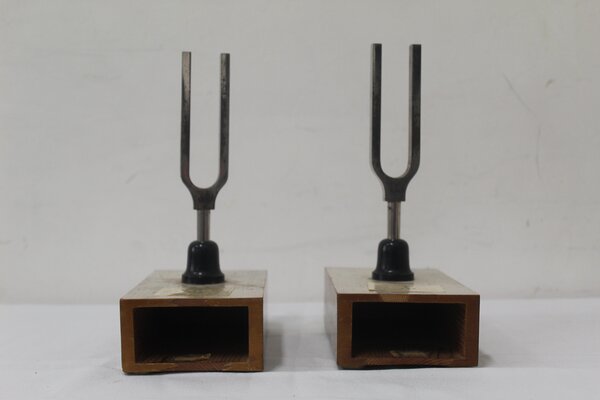
English Word: Tuning Fork Pronunciation: In General American English, it’s pronounced as /ˈtuː.nɪŋ ˌfɔːrk/, with primary stress on the first syllable of “tuning” and secondary on “fork.” The IPA captures the diphthong in “tuning” as /uː/ and the open vowel in “fork” as /ɔːrk/. For British English, it’s similar: /ˈtjuː.nɪŋ fɔːk/, with a slight /j/ glide after /t/. Listen to audio samples online to hear the clear, resonant tone it mimics. Meaning: A tuning fork is a small, two-pronged metal device that produces a pure musical tone of a fixed pitch when struck. It’s primarily used in music to provide a standard reference pitch for tuning instruments, ensuring they are in harmony. Morphology: This is a compound noun formed by combining “tuning” (the gerund form of the verb “tune,” meaning to adjust pitch) and “fork” (referring to its U-shaped prongs, resembling a fork). It’s typically written as two words: “tuning fork,” though sometimes hyphenated as “tuning-fork” in older texts. No irregularities in spelling or formation. Grammar Notes: It’s a countable noun, so use “a tuning fork” or “tuning forks” in plural. It functions as a subject, object, or modifier (e.g., “tuning fork test” in medicine). No verb forms; it’s strictly nominal. Short Interesting Facts: Invented in 1711 by British musician John Shore, the tuning fork revolutionized music by standardizing pitch—often set to A440 Hz today. Interestingly, it’s also used in neurology to test hearing and vibration sense, like in the Weber test. Fun fact: The “devil’s tuning fork” is a slang term for a marijuana pipe due to its forked shape! Tips to Learn It Easier: Visualize an orchestra conductor striking it before a performance to associate the word with harmony. Break it down: “Tuning” links to adjusting radios or guitars, and “fork” evokes the shape. Practice by humming the note it produces (usually a clear “A”) while saying the word aloud. Use mnemonics like “Tune in with a fork” to remember its purpose. Cultural or Contextual Features: In Western classical music, the tuning fork symbolizes precision and unity—think of symphony orchestras starting with its pitch. It’s less common in modern digital tuning apps but remains iconic in education and traditional settings. Culturally, it appears in films like The Sound of Music for tuning scenes, highlighting its role in auditory arts. Examples: Simple: The piano tuner used a tuning fork. Medium: She struck the tuning fork gently to match the violin’s string. Complex: Although electronic tuners are widespread now, many professional musicians still rely on a traditional tuning fork during rehearsals to ensure the ensemble’s intonation remains perfectly aligned with the concert hall’s acoustics. Synonyms: Pitch standard, diapason fork (historical). Antonyms: None directly, but contrasts with off-pitch tools like untuned hammers. Common Word Combinations: Steel tuning fork, vibrating tuning fork, medical tuning fork, tuning fork frequency. Mini-Tasks for Students: Make a sentence: Describe using a tuning fork in a music class. Find a synonym: Research another word for a device that sets musical pitch. Practice: Strike an imaginary tuning fork and say its pronunciation aloud three times. Explore: Look up how tuning forks are used in science experiments, like testing resonance. This versatile tool bridges music and science, making “tuning fork” a word worth mastering for anyone interested in sound and harmony.
Meaning and pronunciation of the word ‘tune’
English Word: Tune Meaning: As a noun, “tune” primarily refers to a melody or a short musical composition, like a catchy song. It can also mean the act of adjusting something to work properly, such as tuning a radio or instrument. As a verb, it means to adjust or fine-tune something, like a car engine or a musical instrument, to optimize its performance. Pronunciation: IPA: /tjuːn/ (British English, with a “y” glide after /t/). In American English, it often simplifies to /tuːn/ (yod-dropping). Stress is on the single syllable: tune. Rhymes with “moon” or “soon.” Morphology: Derived from Middle English “tune,” a variant of “tone,” from Old French “ton,” ultimately from Latin “tonus” (tension or sound). It’s a doublet of “tone.” Plural: tunes (noun). Verb forms: tunes, tuning, tuned. Grammar Notes: Noun: countable (a tune) or uncountable (in tune). Verb: transitive (tune the guitar) or intransitive in some contexts (the engine isn’t tuning well). Commonly used in music and technical contexts. Short Interesting Facts: The word “tune” entered English around the 14th century. It’s related to “attune,” meaning to bring into harmony. In slang, especially UK, “tune” as an interjection means “great song!” – like shouting “Tune!” at a club. Tips to Learn Easier: Associate “tune” with music: hum a favorite melody to remember it. Practice by “tuning” everyday objects, like adjusting your phone’s volume, to link the verb form. Use mnemonics: “Tune” sounds like “toon” (cartoon tune-up). Cultural/Contextual Features: In music culture, a “banger tune” means a hit song (UK slang). Phrases like “in tune” (harmonious or aware) or “out of tune” (discordant or unaware) are idiomatic. Historically, it ties to medieval music theory from Greek “tonos” (tension of strings). Examples: Simple: I like this tune. Medium: She hummed a cheerful tune while cooking dinner. Complex: The mechanic spent hours tuning the old car’s engine, ensuring every part worked in perfect harmony before the road trip began. Synonyms: Noun: melody, song, air. Verb: adjust, calibrate, harmonize. Antonyms: Noun: discord, noise. Verb: detune, disrupt. Common Word Combinations: Catchy tune, fine-tune (verb), out of tune, to the tune of (approximately, e.g., “to the tune of $100”). Mini-Tasks for Students: Make a sentence: Write a sentence using “tune” as a verb in a music context. Find a synonym: List two synonyms for “tune” as a noun and use one in a sentence. Practice pronunciation: Say “Tune the piano” aloud three times, noting the /uː/ sound. Record yourself and compare to online IPA audio. Explore: Think of a famous tune and describe why it’s memorable. For other languages, “tune” appears in French slang as “thune” (money), but the core English usage revolves around music and adjustment.
Meaning and pronunciation of the word ‘trumpet’
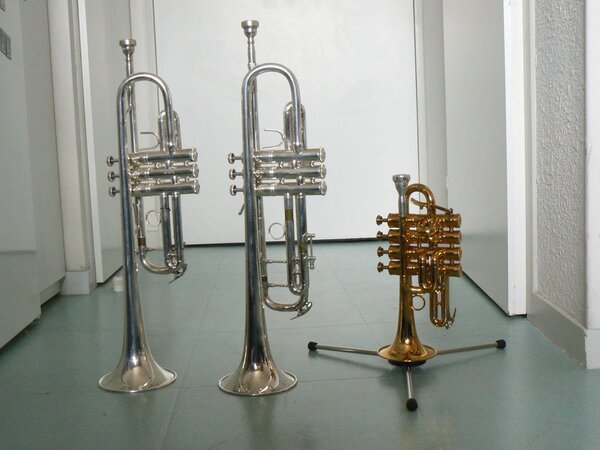
Etymology The word trumpet comes from Middle English trumpet or trumpette, borrowed from Old French trompette, a diminutive of trompe meaning “horn” or “trump.” This traces back to Frankish *trumpa or *trumba, which is imitative of the instrument’s sound. It displaced the native Old English bīeme. Cognates include Old High German trumpa and Middle Dutch tromme (drum). Pronunciation IPA: /ˈtrʌm.pɪt/ (British and American English). Stress falls on the first syllable: TRUM-pit. It rhymes with words like “strumpet.” Meanings Noun: Primarily, a brass musical instrument with a flared bell, played by blowing into a mouthpiece; used in orchestras, jazz, and marching bands. Extended senses include: the cry of an elephant; a person who loudly promotes something (e.g., a propagandist); a trumpet-shaped flower (e.g., angel’s trumpet); or slang for a fervent supporter of Donald Trump. Verb: To play the trumpet; to proclaim loudly or announce dramatically (e.g., trumpet one’s achievements); or for an animal like an elephant to make a loud call. Morphology and Grammar Trumpet is both a countable noun (trumpets) and a verb. Plural: trumpets. As a verb, it follows regular conjugation: trumpets, trumpeting, trumpeted. No irregular forms. Derived words include trumpeter (noun, player of the instrument) and trumpet-like (adjective). Interesting Facts The trumpet’s sound inspired its name, mimicking the blast of a horn. Ancient trumpets date back to 1500 BCE in Egypt, used for signaling in battles. In jazz, Louis Armstrong popularized the trumpet in the 20th century. The word also appears in idioms like “blow one’s own trumpet” (to boast). Tips for Learning Associate the word with its sound: imagine a loud “toot” from a brass horn. Listen to trumpet music (e.g., Miles Davis tracks) to hear pronunciation in context. Break it down: “trum” like “drum” + “pet” as in a small sound maker. Use mnemonics: “Trumpet like a trump card—bold and attention-grabbing.” Cultural and Contextual Features Trumpets feature in Western classical music (e.g., fanfares in Beethoven’s symphonies) and religious ceremonies like Christmas carols. In modern slang, “Trumpet” (capitalized) refers to U.S. political supporters, highlighting its evolving cultural role. Globally, similar instruments appear in African griot traditions and Indian shehnai music. Sentence Examples Simple: The boy plays the trumpet. Medium: During the parade, the band leader blew a long note on his shiny trumpet. Complex: Although she had only practiced for a few months, the talented musician managed to trumpet a complex melody that captivated the entire audience at the concert hall. Synonyms and Antonyms Synonyms (noun): horn, bugle, cornet. (Verb): proclaim, announce, blare. Antonyms (verb): whisper, mumble, silence. Common Combinations: trumpet player, bass trumpet, trumpet solo, blow the trumpet, trumpet call, angel’s trumpet (plant). Mini-Tasks Make a sentence: Write one using trumpet as a verb to describe promoting an idea. Find a synonym: List two synonyms for trumpet as a musical instrument. Contextual use: Describe a scene where an elephant trumpets, then translate it to your native language. Quiz yourself: What does blow one’s own trumpet mean? Use it in a sentence.
Meaning and pronunciation of the word ‘trombone’
Definition The word trombone primarily refers to a brass musical instrument with a long tubular shape and a sliding mechanism to change pitch. It is part of the brass family, known for its mellow, resonant tone. Secondarily, in telecommunications, it describes transmitting data back to a central point before forwarding it. In film slang, it means to overextend a zoom lens. Other niche uses include a type of paper clip in French or a bird in some contexts. Etymology Borrowed from Italian trombone, meaning “large trumpet,” from tromba (“trumpet”) + -one (augmentative suffix), literally “big trumpet.” This reflects its shape and sound resemblance to an enlarged trumpet. The term entered English in the 18th century. Pronunciation In British English: /ˌtrɒmˈbəʊn/ (stress on the second syllable: trom-BOHN). In American English: /ˌtrɑːmˈboʊn/ (trom-BOHN). The “tr” is a voiced consonant blend, and the ending is a diphthong. To practice, say “trom” like “prom” with a ‘t’, and “bone” like the skeleton part. Morphology and Grammar Trombone is a noun, countable, with plural trombones (or rarely tromboni in playful contexts). As a verb, it is regular: trombones, tromboning, tromboned. No irregular forms. Derived from Italian, it has no prefixes or suffixes in English beyond its root. Interesting Facts The trombone is one of the oldest brass instruments, dating back to the 15th century, evolving from the sackbut. Its slide mechanism allows for glissando effects, mimicking a human voice—hence names like “tromba” (trumpet) in Italian. In jazz, it’s iconic with players like J.J. Johnson. Fun fact: The word’s augmentative origin highlights its size, about 9 feet long when extended! Learning Tips Associate it with “trom” (like trumpeting) and “bone” (long like a bone). Listen to recordings on YouTube for the sound—it helps auditory learners. Break it into syllables: trom-bone. Mnemonic: “Trombone slides like a tromping bone in a parade.” Cultural and Contextual Features Central to orchestras, marching bands, and jazz ensembles. In Western culture, it’s linked to classical works like Beethoven’s symphonies and big band music. In Italian, it figuratively means an annoying, arrogant person, showing cultural evolution. Modern telecom use draws from its extendable slide. Sentence Examples Simple: The musician plays the trombone. Medium: In the orchestra, the trombone section provided a deep, resonant harmony during the symphony. Complex: Although the trombone’s slide mechanism can be challenging for beginners, experienced players like those in a jazz band use it to create smooth glissandos that add emotional depth to improvisational solos. Synonyms, Antonyms, and Common Combinations Synonyms: sackbut (historical), slide trombone. Antonyms: None direct; contrast with fixed-pitch brass like trumpet. Common combinations: tenor trombone, bass trombone, play the trombone, trombone player (trombonist), brass trombone section. Mini-Tasks Make a sentence using trombone in a musical context. Find a synonym for trombonist and use it in a sentence. Listen to a trombone solo online and describe its sound in three words. Create a short story where a trombone plays a key role.
Meaning and pronunciation of the word ‘trio’
English: Trio Meaning: A trio refers to a group of three people or things, often in a collaborative context like music or performance. It commonly denotes three musicians performing together or a composition for three instruments or voices. Extended uses include a cocktail with a spirit, liqueur, and creamy element, or a “three-in-one” fast food item. Pronunciation: In Received Pronunciation (UK), it’s /ˈtɹi.əʊ/ with stress on the first syllable (TRY-oh). In General American (US), it’s /ˈtɹioʊ/ (TREE-oh). The “tr” sounds like in “tree,” and the ending vowel glides smoothly. Morphology and Grammar Notes: Trio is a countable noun, forming the plural as “trios.” It derives from Italian trio, meaning “three,” borrowed into English around 1715–1725. No irregular forms; it’s straightforward in sentences as a subject or object. Interesting Facts: The word entered English via Italian during the Baroque music era, reflecting the popularity of three-part compositions by composers like Haydn. In modern culture, famous trios include the Bee Gees (music) or the Three Musketeers (literature, though not strictly musical). Tips to Learn Easier: Break it down: “tri-” from Latin tres (three) plus “-o” for a group sound. Visualize a band with three members to remember it. Practice rhyming with “rio” or “Ohio” for the vowel sound. Cultural/Contextual Features: In music, a trio contrasts with larger ensembles like quartets; it’s intimate and versatile, seen in jazz (e.g., piano trios) or classical (minuet trios in symphonies). Socially, it evokes balanced dynamics, like a “threesome” in games or teams, but avoid slang overlaps. Examples: Simple: The pop trio sang a catchy song. Medium: During the concert, the violin trio played an original melody. Complex: Although they started as a duo, the group expanded into a trio by adding a drummer, which enriched their harmonies and stage presence. Synonyms: Threesome, triad, trinity, troika. Antonyms: Solo (one performer), duo (two). Common Combinations: Jazz trio, string trio, vocal trio, comedy trio, love triangle (related idiomatically). Multilingual Notes The word “trio” appears similarly in many languages due to Italian influence: French trio (/tʁi.jo/), Spanish/Portuguese cognate, Dutch trio (/ˈtri.oː/), and even Finnish trio. In Catalan, it doubles as a verb form of “to sort.” Esperanto forms it as tri + -o for “threesome.” Mini-Tasks for Practice: Make a sentence: Describe your favorite musical trio. Find a synonym: List two alternatives to “trio” in a music context. Word play: Create a trio of rhyming words (e.g., trio, Ohio, patio). Contextual use: Explain how “trio” differs from “quartet” in a band setting.
Meaning and pronunciation of the word ‘trill’
Word: Trill Meaning: “Trill” primarily refers to a rapid alternation of notes in music, a vibrating consonant sound in phonetics, or a high-pitched cat sound. As a verb, it means to produce such a sound or to twirl something. In modern slang, especially hip-hop, it means “true” or “real,” indicating authenticity and respect. Pronunciation: IPA: /tɹɪl/ (British and American English). The stress is on the single syllable, with a clear ‘tr’ blend and short ‘i’ vowel as in “fill.” Rhymes with “drill” or “grill.” Morphology and Grammar Notes: As a noun, it’s countable (e.g., a trill). Plural: trills. As a verb, it’s regular: trill (base), trills (3rd person), trilling (present participle), trilled (past). No irregular forms. In slang use, it’s an adjective without comparatives in formal grammar but informally “triller” or “trillest.” Etymology From Middle English “trillen,” borrowed from Italian “trillo” (a trill in music). Related to German “trillern” (to warble). The slang sense likely blends “true” and “real,” emerging in 2000s hip-hop culture. Short Interesting Facts: The musical trill dates back to the 17th century in Baroque music, often used by composers like Handel. In phonetics, the rolled ‘r’ trill is iconic in languages like Spanish (e.g., “perro”) but rare in English. Cats’ trills are a friendly greeting, distinct from purring. Cultural/Contextual Features: In music education, trills add ornamentation to melodies, teaching precision. In hip-hop, “trill” symbolizes street credibility, popularized by rappers like Bun B and the Southern rap scene. It’s a staple in Urban Dictionary but gaining mainstream use. Examples: Simple: The bird sang with a trill. Medium: She trilled the high note during her opera performance. Complex: In the symphony, the flute player’s trill on the melody line created a shimmering effect that captivated the entire audience. Synonyms and Antonyms: Synonyms (music/phonetics): roll, vibrate, warble; (slang): real, genuine, legit. Antonyms: flat (music), monotone; (slang): fake, phony. Common Combinations: trill sound, vocal trill, keep it trill, trill consonant. Tips to Learn It Easier: Associate the musical trill with rolling your tongue like in Spanish “rr” to mimic the vibration. For slang, listen to hip-hop tracks like “Trill OG” by Bun B. Practice by humming trills while speaking to feel the sound. Use mnemonics: “Trill” like a thrilling roll of the tongue. Mini-Tasks for Students: Make a sentence: Describe a cat’s trill in your own words. Find a synonym: List two words similar to “trill” in music. Practice pronunciation: Say “The trill thrilled the crowd” five times, focusing on the ‘tr’ blend. Explore: Watch a video of a Baroque trill on YouTube and note how it ornaments the music.
Meaning and pronunciation of the word ‘tonality’
Etymology The word tonality comes from French tonalité, derived from Latin tonus meaning “tone” or “sound,” combined with the suffix -ity to form a noun indicating quality or state. Pronunciation In British English: /təʊnˈæl.ɪ.tiː/ (stress on the third syllable). In American English: /toʊnˈæl.ə.ti/ (stress on the third syllable). The word rhymes with words like “finality” or “rationality.” Morphology Tonality is formed by adding the suffix -ity to the adjective tonal, which comes from tone. This creates a noun form denoting the property or quality of being tonal. Meaning Noun (countable and uncountable; plural: tonalities). 1. (Music) The organization of music around a central tone (tonic), typically using major or minor scales; the tonal system as opposed to atonality. 2. (Music) The character or quality of a sound, related to timbre or pitch. 3. (Art) The arrangement of tones, shades, or colors in a painting to create harmony or mood. Grammar Notes As a noun, tonality functions as the subject or object in sentences. It is often used in abstract discussions of music or art, and can be modified by adjectives like “warm” or “dissonant.” Short Interesting Facts Western music relied on tonality from the Baroque period (1600s) until the early 20th century, when composers like Arnold Schoenberg pioneered atonality to break free from traditional harmony. In visual art, tonality refers to how artists like Monet used light and shadow to evoke emotion. Tips on How to Learn It Easier Break it down: Think of “tone” + “-ality” as the “quality of tones.” Listen to music: Play a piece by Beethoven to hear tonal structure versus something atonal like Schoenberg’s. Mnemonics: Associate it with “tonal tea” – sipping tea while appreciating harmonious notes. Cultural or Contextual Features In classical music, tonality is foundational to genres like symphonies and operas, reflecting emotional narratives through resolved tensions. In modern contexts, it’s contrasted with experimental music. In art, tonal values influence everything from Renaissance paintings to digital design, where balanced colors create visual “harmony.” Examples Simple: The song’s tonality is major, making it sound happy. Medium: Composers in the Romantic era explored rich tonalities to express deep feelings. Complex: While traditional tonality provides a sense of resolution through its key-based structure, avant-garde works deliberately abandon it to challenge listeners’ expectations of harmony. Synonyms, Antonyms, and Common Word Combinations Synonyms: Key (music), timbre (sound quality), hue (art). Antonyms: Atonality, dissonance. Common Combinations: Tonal quality, harmonic tonality, color tonality; e.g., “The painting’s tonality evokes serenity.” Mini-Tasks for the Student Make a sentence: Write one using tonality in a musical context. Find a synonym: List two synonyms and explain when to use each. Listen and describe: Play a short clip of tonal music and note its tonality in three words. Compare: Explain the difference between tonality and atonality in your own words.