Adult Education Part of Speech: Noun (uncountable) Definition: Adult education refers to the practice where adults participate in organized, ongoing learning activities. This can serve as remedial education to address knowledge gaps or as continuing education to build new skills and knowledge throughout life. Pronunciation: /əˈdʌlt ˌɛdʒuˈkeɪ.ʃən/ (uh-DULT ej-oo-KAY-shuhn). The primary stress falls on the second syllable of “adult” and the third syllable of “education.” In American English, it may sound slightly more nasalized. Morphology: This is a compound noun formed by combining “adult” (an adjective meaning fully grown or mature) and “education” (a noun meaning the process of acquiring knowledge). It is typically written as two words without a hyphen, though “adult-education” appears in some formal or hyphenated contexts for emphasis. Grammar Notes: As an uncountable noun, it does not take an indefinite article (“an” or “a”) and remains singular in form. Use “adult education” for general reference; quantify it with phrases like “a form of adult education” or “adult education programs.” Short Interesting Facts: The concept gained prominence in the early 20th century with the rise of public libraries and community centers. UNESCO recognizes adult education as key to sustainable development, promoting it globally through initiatives like International Literacy Day. Tips to Learn It Easier: Associate it with real-life scenarios, like evening classes for working adults. Break it down: “adult” evokes maturity and independence, while “education” reminds you of school but extended into adulthood. Practice saying the full phrase aloud to master the rhythm. Cultural or Contextual Features: In the U.S. and UK, adult education often occurs in community colleges or online platforms like Coursera, targeting career advancement or hobbies. In developing countries, it focuses on literacy and vocational training to empower marginalized groups, reflecting a shift from child-centered to lifelong learning cultures. Examples: Simple: She enjoys adult education classes on painting. Medium: Many companies offer adult education to help employees learn new technologies. Complex: Although formal schooling ends in one’s youth, adult education enables individuals to pursue higher qualifications, adapt to evolving job markets, and enrich personal lives through sustained intellectual growth. Synonyms: Continuing education, lifelong learning, further education. Antonyms: Childhood education, formal schooling (as opposites in learner age and structure). Common Word Combinations: Adult education program, adult education center, adult education course, vocational adult education. Mini-Tasks for Students: Make a sentence: Create your own simple sentence using “adult education” related to career development. Find a synonym: List two synonyms for “adult education” and explain why one might be used in a professional context. Explore usage: Research one famous adult education program (e.g., Open University) and write a short paragraph on its impact. Related Terms: Andragogy (adult learning theory), pedagogy (child-focused teaching), hypernyms like education and learning.
Meaning and pronunciation of the word ‘active learning’
English Noun active learning (uncountable) A teaching method where students actively participate in shaping their own learning process, rather than passively receiving information. This approach emphasizes engagement, critical thinking, and hands-on activities to enhance understanding and retention. Pronunciation The word is pronounced as /ˈæk.tɪv ˈlɜː.nɪŋ/ in American English, with primary stress on the first syllable of each part: AC-tive LEAR-ning. In British English, it may sound like /ˈak.tɪv ˈlɜː.nɪŋ/, with a similar stress pattern but a slightly different vowel in “learning.” Morphology “Active learning” is a compound noun formed by combining the adjective active (meaning energetic or involved) with the gerund noun learning (the process of acquiring knowledge). The space between words is standard, though it’s sometimes hyphenated as “active-learning” in titles or technical contexts for clarity. Grammar Notes As an uncountable noun, “active learning” does not take an indefinite article (“an” or “a”) and cannot be pluralized. Use it with quantifiers like “some active learning” or “a form of active learning.” It often functions as a subject or object in sentences about education. Examples Simple: The class uses active learning every day. Medium: Active learning helps students remember information better than lectures alone. Complex: While traditional education relies on rote memorization, active learning, by involving collaborative projects and real-world problem-solving, fosters deeper comprehension and long-term skill development among diverse learners. Synonyms, Antonyms, and Common Combinations Synonyms: Interactive learning, student-centered learning, experiential learning. Antonyms: Passive learning, rote learning. Common Combinations: Active learning strategies, active learning techniques, implement active learning, benefits of active learning. Interesting Facts The concept of active learning surged in popularity during the late 20th century, backed by research from educators like David Boud. Studies, such as those from the National Science Foundation, show it can boost student performance by up to 6% in STEM fields. Interestingly, it’s inspired by constructivist theories from psychologists like Jean Piaget, who believed knowledge is built through active exploration. Tips to Learn It Easier To remember “active learning,” associate it with dynamic classroom activities like debates or experiments—visualize yourself “actively” jumping into a lesson. Practice by discussing it in study groups, and break it down: “active” suggests movement, while “learning” ties to education. Use flashcards with real-life examples to reinforce the term. Cultural or Contextual Features Active learning is a cornerstone of modern pedagogy, especially in Western education systems like those in the US and UK, where flipped classrooms and project-based learning are common. In global contexts, it’s adapted in online platforms like Khan Academy, promoting inclusivity for non-traditional students. Culturally, it shifts power from teachers to learners, aligning with democratic values of participation. Mini-Tasks for Students Make a sentence: Create your own simple sentence using “active learning” in an educational context. Find a synonym: List two synonyms for “active learning” and explain why they fit. Apply it: Describe a real or imagined classroom activity that embodies active learning. See also: Interactive learning Further reading: “Active learning”, in Lexico, Dictionary.com; Oxford University Press, 2019–2022.
Meaning and pronunciation of the word ‘accurately’
English Word: Accurately Etymology The adverb “accurately” is formed by adding the suffix “-ly” to the adjective “accurate,” which originates from the Latin word accūrātus, meaning “done with care” or “exact.” This suffix turns adjectives into adverbs, indicating manner. Pronunciation In Received Pronunciation (British English): /ˈak.jə.ɹɪt.li/, with primary stress on the first syllable (AK-kyuh-rit-lee). In General American English: /ˈæk.jɚ.ɪt̬.li/, stressed similarly (AK-yuh-rit-lee). The “r” sounds are more prominent in American English, and the “t” may be flapped as a soft “d” in casual speech. Tip: Listen to audio on sites like Forvo or YouGlish to hear native speakers; practice by exaggerating the stress on “ac-” to match the rhythm. Morphology and Grammar Notes “Accurately” is an adverb derived from the adjective “accurate” (meaning free from error). It modifies verbs, adjectives, or other adverbs to describe how something is done. As a flat adverb, it follows standard comparative forms: more accurately (comparative), most accurately (superlative). No irregular grammar; use it before adjectives (e.g., accurately measured) or at the end of clauses (e.g., He spoke accurately). Meaning In an accurate manner; exactly, precisely, without error or defect. It emphasizes precision in actions, measurements, or descriptions. Synonyms and Antonyms Synonyms: exactly, precisely, correctly, faultlessly. Antonyms: inaccurately, erroneously, imprecisely, wrongly. Common Word Combinations: measure accurately, describe accurately, predict accurately, work accurately (e.g., in scientific or technical contexts). Examples Simple: She draws accurately. Medium: The scientist measured the temperature accurately to avoid errors. Complex: In order to ensure the experiment’s success, the researchers calibrated the instruments as accurately as possible, taking into account environmental variables that could introduce discrepancies. Short Interesting Facts The word gained prominence in the 17th century during the Scientific Revolution, as thinkers like Galileo emphasized precise observations. Today, it’s crucial in fields like journalism and law, where “reporting accurately” prevents misinformation. Fun fact: In everyday tech, GPS systems aim to locate you “accurately” within meters, but urban canyons can reduce precision! Tips to Learn It Easier Associate “accurately” with “accuracy” in games like darts or archery—aim to hit the target precisely. Break it down: “ac-” (like “acknowledge”), “curate” (to care for), “-ly” (manner). Practice by timing yourself to write sentences accurately, or use apps like Duolingo for adverb drills. Mnemonic: “A cat curiously rates accuracy lately” to remember spelling. Cultural or Contextual Features In English-speaking cultures, accuracy is valued in professional settings like medicine or engineering to build trust. Idioms like “to a T” (perfectly accurately) highlight this. In global contexts, mistranslations can lead to “inaccurate” diplomacy, underscoring the word’s importance in cross-cultural communication. Mini-Tasks for Practice Make a sentence: Use “accurately” to describe a daily activity, e.g., cooking. Find a synonym: Replace “accurately” in “He answered accurately” with a synonym and explain why it fits. Antonym challenge: Rewrite “The clock tells time accurately” using an antonym to show the opposite scenario. Context quiz: Is “accurately” more likely in science, poetry, or sports? Why?
Meaning and pronunciation of the word ‘accomplishment’
Etymology The word “accomplishment” derives from the English verb “accomplish” combined with the suffix “-ment,” indicating the result or process of an action. It was borrowed from French accomplissement, which comes from the verb accomplir meaning “to fulfill” or “to complete.” First attested in the early 15th century, with senses related to completion appearing around 1600. Pronunciation In Received Pronunciation: /əˈkɒm.plɪʃ.mənt/ or /əˈkʌm.plɪʃ.mənt/. In General American: /əˈkɑːm.plɪʃ.mənt/. The primary stress is on the second syllable: ə-KOM-plish-mənt. To practice, break it into syllables and emphasize the “kom” sound. Morphology “Accomplishment” is formed by adding the suffix “-ment” to “accomplish,” turning the verb into a noun denoting the act or result. The root “accomplish” comes from Old French, blending Latin ad- (to) and complere (to fill up). Related forms include “accomplished” (adjective) and “accomplishing” (verb form). Grammar Notes “Accomplishment” is a noun, countable or uncountable. Use it as countable for specific achievements (e.g., “a great accomplishment”) or uncountable for the general concept (e.g., “full of accomplishment”). It fits lexical aspect in grammar, describing telic events (those with a natural endpoint) like finishing a task. Meanings The act of accomplishing; completion or fulfillment of something. Something accomplished; an achievement or success. A skill or talent acquired through education or training, enhancing one’s abilities or manners. In linguistics: The aspect of verbs indicating progression to a natural end point. Short Interesting Facts Historically, “accomplishment” in the 18th century referred to social graces like playing music or dancing, seen as essential for refined individuals—think Jane Austen’s novels where characters boast “accomplishments” to attract suitors. Today, it evokes personal milestones, from career wins to personal growth. Tips on How to Learn It Easier Associate it with “complete” or “achieve” to remember the root. Visualize a finish line for the sense of fulfillment. Practice by listing your daily “accomplishments” in a journal to build familiarity. Mnemonic: “A ccomplish ment” – “A complete moment of success.” Cultural or Contextual Features In Western culture, “accomplishments” are often highlighted in resumes or eulogies, symbolizing progress and self-worth. In motivational contexts like self-help books, it’s tied to goal-setting (e.g., “small accomplishments lead to big dreams”). Cross-culturally, it parallels concepts like Japanese seikō (success) but emphasizes personal effort. Examples Simple: Her accomplishment made her happy. Medium: Finishing the marathon was a major accomplishment for the runner. Complex: Despite numerous obstacles, the team’s accomplishment in launching the innovative product not only boosted company morale but also revolutionized the industry. Synonyms, Antonyms, and Common Word Combinations Synonyms: Achievement, attainment, feat, success. Antonyms: Failure, setback, defeat. Common combinations: Sense of accomplishment, major accomplishment, list of accomplishments, personal accomplishment. Mini-Tasks for Students Make a sentence: Describe one of your recent accomplishments using the word. Find a synonym: Replace “accomplishment” in “It was a great accomplishment” with a synonym and explain why it fits. Quiz yourself: What does the “-ment” suffix do? Give another example word. Context challenge: Use “accomplishment” in a sentence about historical figures, like inventors.
Meaning and pronunciation of the word ‘woodwinds’
Woodwinds Part of Speech: Noun (plural) Definition: The woodwind instruments of an orchestra or ensemble collectively, such as flutes, oboes, clarinets, and bassoons. These produce sound by vibrating a column of air, often using a reed or by blowing across an opening. Pronunciation IPA: /ˈwʊd.wɪndz/ Stress: Primary stress on the first syllable (“WOOD-winds”). The word rhymes with “good winds,” emphasizing the wooden origins of many instruments. Morphology “Woodwinds” is the plural form of “woodwind.” It combines “wood” (referring to the traditional material) + “wind” (from “wind instrument,” meaning air-powered) + “-s” (plural suffix). The singular “woodwind” dates back to the 19th century in musical contexts. Grammar Notes This is a collective plural noun, treated as a group (e.g., “The woodwinds are tuning”). It functions as the subject or object in sentences and pairs with verbs like “play,” “sound,” or “section.” Interesting Facts Originally, woodwinds were made from wood, but modern versions like flutes are often metal. They evolved from ancient folk instruments and became standardized in the 18th-century orchestra. Fun fact: The bassoon, a woodwind, can play humorous “wawk” sounds, famously used in comedy scores like in cartoons. Tips to Learn It Easier Visualize an orchestra’s woodwind section to remember: link “wood” to trees (natural materials) and “winds” to blowing air. Practice saying it rhythmically: “Wood-winds, like the breeze through trees.” Listen to recordings of pieces like Debussy’s Prélude à l’après-midi d’un faune, which highlights woodwinds, to associate the term with music. Cultural and Contextual Features In Western classical music, woodwinds add expressive, lyrical tones to symphonies, as in Beethoven’s works. They’re prominent in jazz (e.g., clarinet solos) and folk traditions worldwide. Culturally, they symbolize pastoral or mystical elements in film scores, like the flute in Native American-inspired music. Example Sentences Simple: The woodwinds start the melody. Medium: During the concert, the woodwinds blended smoothly with the strings. Complex: While the brass section provided power, the woodwinds, with their reedy tones and agile fingerings, wove intricate counterpoints that elevated the entire orchestral performance to new heights. Synonyms, Antonyms, and Common Combinations Synonyms: Woodwind instruments, aerophones (technical term), reeds (for reed-based ones like oboe). Antonyms: Brass (loud, metallic winds), percussion (struck instruments), strings (bowed or plucked). Common Combinations: Woodwind section, woodwinds player, solo woodwinds, orchestral woodwinds. Mini-Tasks for Practice Make a Sentence: Write a sentence using “woodwinds” in a description of a musical event. Find a Synonym: List two synonyms for “woodwinds” and explain why they fit. Instrument Hunt: Name three specific woodwind instruments and imagine how they sound together. Context Challenge: Use “woodwinds” in a sentence comparing them to another orchestra section. Anagrams: Widdowson (a surname, unrelated to music but a word puzzle twist).
Meaning and pronunciation of the word ‘wind instruments’
Wind Instruments Part of Speech: Noun (plural) Meaning: Wind instruments are musical devices that produce sound when air is blown into or across them. They are divided into woodwinds (like flutes and clarinets) and brass instruments (like trumpets and trombones). This term refers to the category as a whole, excluding strings or percussion. Pronunciation: /wɪnd ˈɪnstrəmənts/ (WIND in-struh-muhnts). The primary stress is on the second syllable of “instruments,” with a secondary light stress on “wind.” To practice, say “wind” quickly like the breeze, then emphasize “IN-struh” as in “instrument.” Morphology: This is a compound noun formed by combining “wind” (referring to air or breath) and “instruments” (tools for making music). It’s the plural form of “wind instrument,” where the singular ends in -t and pluralizes by adding -s without change. Grammar Notes: Always used as a plural noun; no singular form for the category. It functions as a subject, object, or complement in sentences. No irregular forms—treat it like standard plural nouns. Short Interesting Facts: The earliest wind instruments date back over 40,000 years, like bone flutes from prehistoric times. In modern orchestras, wind instruments make up about 30-40% of the ensemble, providing melody and harmony. Tips to Learn Easier: Visualize blowing into a flute or trumpet to remember “wind” as air-powered. Group them into woodwinds (mostly wooden but not always) and brass (made of metal) to build associations. Listen to orchestral music daily, like Beethoven’s symphonies, to hear them in action—apps like Spotify playlists for “wind instruments” help reinforce. Cultural or Contextual Features: Wind instruments are central to Western classical music, jazz bands, and marching bands. In cultures worldwide, they’re vital: the Japanese shakuhachi flute for meditation, or the Indian shehnai for weddings. They’re portable, making them popular in folk traditions and military parades. Examples: Simple: Wind instruments are loud. Medium: The band features various wind instruments like saxophones and oboes. Complex: While string instruments dominate the melody in this quartet, the subtle interplay of wind instruments adds depth and color to the overall harmony. Synonyms: Aerophones, blown instruments, brass and woodwinds (subcategories). Antonyms: String instruments, percussion instruments, keyboard instruments. Common Word Combinations: Brass wind instruments (e.g., horns) Woodwind instruments (e.g., clarinets) Wind instrument section (in an orchestra) Playing wind instruments (hobby or skill) Mini-Tasks for Practice: Make a sentence: Create one using “wind instruments” in a description of your favorite music genre. Find a synonym: List two synonyms and explain why they fit. Recall examples: Name three specific wind instruments and say if they’re woodwind or brass. Listen and identify: Play a short clip of orchestral music and note when wind instruments appear.
Meaning and pronunciation of the word ‘wind band’
English Noun wind band (plural: wind bands) A musical ensemble made up exclusively of woodwind and brass instruments, such as flutes, clarinets, trumpets, and trombones, typically without strings or percussion. Pronunciation /wɪnd bænd/ (British and American English). The primary stress falls on the first syllable of each word: WIND band. Meaning A wind band refers to a group of musicians who perform using aerophones—instruments that produce sound when air is blown through them. This distinguishes it from orchestras or rock bands that incorporate other instrument families. Morphology This is a compound noun formed by combining “wind” (referring to the air-powered nature of the instruments) and “band” (a group of musicians). It functions as a single unit in English, with no inflectional changes beyond standard pluralization by adding “-s.” Grammar Notes Used as a countable noun. It takes the definite article “the” when referring to a specific group (e.g., “the school wind band”) and “a” for general or first mentions. No irregular plurals or gender associations. Short Interesting Facts Wind bands trace their origins to military traditions in the 18th century, where portable instruments were ideal for marching troops. The word “wind” here specifically means instruments powered by breath, not weather-related gusts—avoid confusion with the verb “to wind” a path. Famous wind bands include the United States Marine Band, known as “The President’s Own,” which has performed since 1798. Tips on How to Learn It Easier To remember “wind band,” visualize musicians “winding” breath into instruments like a gentle breeze forming a musical storm. Practice by listening to recordings of wind bands on platforms like YouTube—associate the term with lively marches or concert pieces. Break it down: “wind” for breathy sounds, “band” for the group dynamic. Cultural or Contextual Features Wind bands are prominent in educational settings, such as school marching bands in the U.S., where they build teamwork and discipline. In Europe, they often feature in festivals and community events, emphasizing precision and harmony. Unlike full orchestras, wind bands highlight bold, resonant tones suited for outdoor performances. In modern contexts, they appear in film scores or video games to evoke triumphant or ceremonial moods. Examples Simple: The wind band marched in the parade. Medium: Our local wind band practices twice a week in the community center. Complex: While the symphony orchestra brings together diverse instruments for rich textures, a dedicated wind band, relying solely on brass and woodwinds, delivers powerful, unified blasts that resonate across open fields during festivals. Synonyms, Antonyms, and Common Word Combinations Synonyms: Concert band, symphonic band (more formal contexts); brass band (if focusing mainly on brass, though less precise). Antonyms: String orchestra (lacks wind instruments); full orchestra (includes strings and percussion). Common Combinations: Military wind band, school wind band, professional wind band; wind band conductor, wind band repertoire, wind band festival. Mini-Tasks for the Student Make a sentence: Create your own simple sentence using “wind band” in a school context. Find a synonym: List two synonyms for “wind band” and explain why one might be more appropriate for a military setting. Explore further: Listen to a famous wind band piece, like John Philip Sousa’s “Stars and Stripes Forever,” and note how the instruments create a “windy” energy. Contrast it: Write a short paragraph comparing a wind band to a rock band in terms of instruments and typical venues.
Meaning and pronunciation of the word ‘waltz’
English: Waltz Etymology From German Walzer, from walzen (“to dance” or “to roll”), derived from Old High German walzan (“to turn”). It traces back to Proto-Germanic *walt- (“to turn”) and Proto-Indo-European *welH- (“to turn, to roll”). This word is a doublet of French valse. Pronunciation In British English: /wɒlts/ (rhymes with “bolts”), with stress on the first syllable: WALTZ. In American English: /wɔlts/ or /wɑlts/ (in regions with cot-caught merger), also stressed on the first syllable. The “w” is pronounced like in “water,” and the “tz” like “ts” in “cats.” Meanings As a noun, a waltz is a smooth, graceful ballroom dance in 3/4 time, often associated with romance and elegance. It can also refer to a piece of music composed for this dance, typically in triple time. Informally, it means an easy task, implying something done with effortless grace. As a verb, to waltz means to perform the waltz dance (intransitive or transitive, e.g., “waltz with someone”). It also describes moving briskly and confidently, often casually or unexpectedly (e.g., “waltz into a room”). Informally, it suggests achieving something with little effort. Transitive use can imply moving something with flair. Morphology and Grammar Notes – Noun: Countable (plural: waltzes). No irregular forms. – Verb: Regular conjugation – present: waltzes, past/past participle: waltzed, present participle: waltzing. Can be intransitive (no object) or transitive (with object like “waltz the night away”). Often used in progressive tenses for ongoing movement. Interesting Facts The waltz originated in 18th-century Europe, particularly Austria and Germany, evolving from folk dances like the ländler. It became a sensation in 19th-century Vienna, popularized by composers like Johann Strauss II (the “Waltz King”). Initially scandalous for its close partner hold, it symbolized romance and is featured in films like The English Patient. Cultural and Contextual Features Waltzing is central to Viennese balls and wedding dances. In idioms, “waltz off with” means to win easily, reflecting its graceful ease. It’s evoked in literature, like in Washington Irving’s tales, or modern contexts like “waltz through an exam.” Synonyms and Antonyms – Synonyms: (dance) foxtrot, tango; (easy task) breeze, cinch; (move) saunter, glide. – Antonyms: (difficult task) ordeal, struggle; (hesitant move) shuffle, creep. – Common combinations: waltz around (evade), waltz in (arrive casually), waltz through (complete easily). Examples – Simple: They danced a waltz at the party. – Medium: She waltzed gracefully across the ballroom floor with her partner. – Complex: Although nervous at first, he waltzed into the interview room confidently, charming the panel with his easy demeanor and securing the job offer on the spot. Tips for Learning Associate “waltz” with swirling dancers to remember its turning etymology. Listen to Strauss waltzes on YouTube for auditory reinforcement. Practice the rhythm: count “one-two-three” while imagining the steps. Use mnemonics like “Waltz = Whirl And Lightly Turn Zigzag” for spelling. Mini-Tasks Make a sentence: Write one using “waltz” as a verb in a casual context. Find a synonym: List two synonyms for “waltz” meaning an easy task. Explore: Watch a short video of a Viennese waltz and describe its movements in three words.
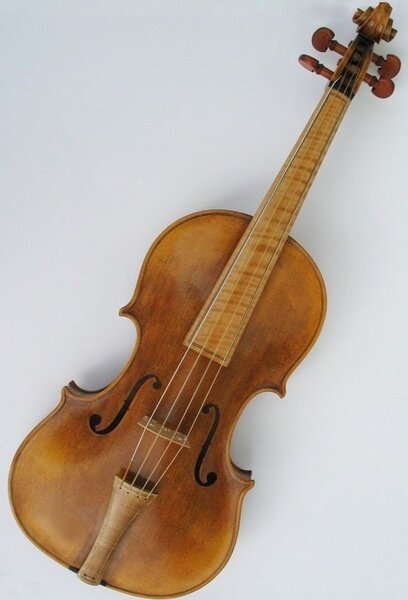
Meaning and pronunciation of the word ‘violin’
Etymology The word violin comes from Italian violino, meaning “little viola,” derived from viola (a larger string instrument) plus the diminutive suffix -ino. Pronunciation Standard British and American English: IPA [ˌvaɪəˈlɪn], with primary stress on the second syllable (li-). In Hong Kong English, it may be [ˌvaɪ.oʊˈlin] or [ˌwaʊˈlin]. It rhymes with words like “siren” or “chagrin.” Meaning Noun: A violin is a small, wooden string instrument with four strings tuned G-D-A-E (lowest to highest). It is held under the chin and played with a bow, common in classical, folk, and various music genres. Extended uses: Sometimes refers to the violin family (including viola and cello) or, metonymically, to a violinist in an ensemble. Verb (rare): To play something as if on a violin, e.g., “violining the strings of emotion.” Morphology and Grammar Notes As a noun, violin is countable: singular “violin,” plural “violins.” No irregular forms. The verb is regular: violins, violining, violined. It’s uncountable in abstract senses, like “the sound of violin.” Short Interesting Facts The violin evolved in 16th-century Italy, with masters like Antonio Stradivari crafting instruments still prized today—worth millions! The term “fiddle” is often interchangeable, but “violin” sounds more formal. Cultural or Contextual Features In classical music, the violin leads orchestras (e.g., Vivaldi’s concertos). In folk traditions, it’s a “fiddle” for energetic dances like Irish jigs. Culturally, it symbolizes romance or melancholy, as in films like The Red Violin. Tips on How to Learn It Easier Associate it with visuals: Imagine a musician tucking it under their chin. Use mnemonics: “Vio” like “viola” but smaller, “lin” like a fine line of strings. Listen to pieces like “Twinkle, Twinkle, Little Star” on violin to hear the sound. Practice spelling: Vio-lin, not “vio-line.” Synonyms, Antonyms, and Common Word Combinations Synonyms: Fiddle (informal, especially in folk music), kit violin (small historical type). Antonyms: None direct; contrast with brass instruments like trumpet. Common combinations: Electric violin, play the violin, violin section (in orchestra), Stradivarius violin. Example Sentences Simple: She plays the violin well. Medium: The orchestra’s violin solo captivated the audience during the concert. Complex: Although he had only practiced for a year, the young musician’s violin performance, infused with passion and precision, earned a standing ovation from the seasoned critics. Mini-Tasks for the Student Make a sentence: Write one using “violin” in a folk music context. Find a synonym: List two ways to refer to a violin informally. Listen and describe: Play a violin piece online and note three emotions it evokes. Etymology quiz: Explain why “violin” means “little viola.”
Meaning and pronunciation of the word ‘viola’
Viola Meanings: In English, “viola” primarily refers to (1) a genus of flowering plants including violets and pansies, (2) a stringed musical instrument similar to but larger than a violin with a deeper tone, (3) a violist (person who plays the viola), or (4) an interjection used humorously as a misspelling of “voilà” (meaning “there it is”). It derives from Latin viola for the flower and Italian viola for the instrument. Pronunciation (UK) IPA: /ˈviː.ələ/ or /ˈvaɪələ/ (stress on first syllable for flower sense). (US) IPA: /vaɪˈoʊlə/ or /vɪˈoʊlə/ (stress on second syllable for instrument sense). The flower sense often rhymes with “viola” as in “see-uh-luh,” while the instrument is “vee-oh-luh.” Morphology and Grammar Notes Noun: Plural: violas (standard); viole (uncommon for instrument). Uncountable in botanical contexts (e.g., “the viola genus”). No irregular forms. Adjective form: violaceous (violet-like). In sentences, it’s countable for instruments (“play the viola”) and uncountable for plants (“viola blooms”). Verb inflection absent in English; related verbs like “violate” stem from Latin violō (to treat with force). Etymology Etymology 1 (flower): From Latin viola (“violet”), possibly from a pre-Indo-European Mediterranean substrate. Etymology 2 (instrument): From Italian viola, from Medieval Latin vitula (“stringed instrument”), akin to Frankish *fiþulā (fiddle). Doublet of “viol.” Etymology 3 (interjection): Humorous alteration of French voilà. Short Interesting Facts: The viola is the “middle voice” of the violin family, often underrepresented in orchestras but crucial for harmony. Famous violists include William Primrose. The flower’s name links to violet color, symbolizing modesty in Victorian language. In other languages, like Portuguese, viola also means a 10-string guitar in Brazilian folk music (viola caipira), influencing samba and sertanejo genres. Cultural and Contextual Features In Western classical music, the viola provides inner harmony in symphonies (e.g., Beethoven’s works). Botanically, Viola species like the pansy (Viola × wittrockiana) are garden favorites. Culturally, “voilà!” (and its misspelling) appears in magic tricks or French cuisine reveals, adding flair. In Spanish slang (Rioplatense), viola means electric guitar, tying to rock culture. Examples Simple: She picked a viola from the garden. Medium: The orchestra’s viola section added depth to the symphony. Complex: Although often overshadowed by the violin, the viola, with its warm, resonant tone, plays a pivotal role in chamber music ensembles like the string quartet, where it bridges the high strings and cello. Synonyms, Antonyms, and Common Combinations Synonyms: For instrument: viola da braccio, alto violin. For flower: violet, pansy. For interjection: voilà, there!. Antonyms: For instrument tone: shrill (violin-like). For color: yellow (opposite of violet). Common Combinations: Viola player/violist, viola section, sweet viola (flower), play the viola, viola concerto. Tips to Learn Easier Mnemonic: Link “viola” to “violet” for the flower (visualize purple petals) and “violin” for the instrument (imagine a bigger version under the chin). Practice pronunciation by saying “vee-oh-luh” while mimicking bowing a string. Group with music terms like violin-cello-viola for family recall. For the interjection, associate with French phrases in movies. Mini-Tasks Make a sentence: Write one using “viola” as the instrument. Find a synonym: List two synonyms for the flower meaning. Fact check: Research a famous viola piece and note its composer. Translate: How is “viola” (instrument) said in your native language?