English: Lecture Etymology From Middle English lecture, from Medieval Latin lectura (“reading”), derived from Latin lectus, past participle of legō (“to read”). The word evolved to mean both reading and formal instruction. Pronunciation UK: /ˈlek.tʃə/ (stress on first syllable: LEK-chə) US: /ˈlek.tʃɚ/ (stress on first syllable: LEK-chər) Rhymes with texture or picture. Meanings As a noun: 1. A formal talk on a subject, often educational, given to an audience (e.g., in a university). 2. A class or session focused on such a talk. 3. A lengthy scolding or reprimand. As a verb: 1. To give a lecture (intransitive or transitive). 2. To scold or reprimand someone sternly. Morphology and Grammar Notes Noun: Countable (plural: lectures). Can be uncountable in sense of scolding (“gave him a lecture”). Verb: Regular conjugation – lectures, lecturing, lectured. Often used with prepositions like “on” (lecture on a topic) or “to” (lecture someone). Short Interesting Facts The term originates from ancient Roman reading practices, where public recitations were common. In modern times, “lecture” ties to academia, but its scolding sense reflects how tiresome talks can feel like rebukes. Fun fact: In the 19th century, “lecture tours” by authors like Charles Dickens popularized the word in entertainment. Cultural or Contextual Features In English-speaking universities (e.g., Oxford or Harvard), lectures are central to higher education, often contrasting with interactive seminars. Culturally, phrases like “death by lecture” humorously describe boring talks. In British English, it’s more formal; in American, it can imply criticism, as in “moral lectures.” Tips to Learn It Easier Associate “lecture” with “lectern” (a speaker’s stand) and “read” (from Latin root). Practice by thinking of university settings. Mnemonic: “Lec-TURE” sounds like “let sure” – make sure to listen during a talk! Examples – Simple: The professor gave a lecture today. – Medium: She attended a lecture on climate change at the conference. – Complex: Although the lecture on quantum physics lasted three hours and covered advanced theories, the students remained engaged due to the professor’s enthusiastic delivery. Synonyms and Antonyms Synonyms (noun): talk, speech, discourse; (verb): teach, instruct; scold, reprimand. Antonyms (noun): discussion, conversation; (verb): praise, commend. Common combinations: guest lecture, public lecture, lecture hall; lecture notes, to lecture at someone. Mini-Tasks for Practice Make a sentence: Write one using “lecture” as a verb in the scolding sense. Find a synonym: List two synonyms for “lecture” as a noun and use one in your own sentence. Context quiz: Is “lecture” more likely a formal talk or a casual chat? Why? Root exploration: Connect “lecture” to “read” and explain how reading led to lecturing. Related Terms Lectern (speaker’s stand), lection (a reading or lesson), lesson. See also thesaurus entries for reprehend (to scold).
Meaning and pronunciation of the word ‘learning disability’
Learning Disability Part of Speech: Noun (countable and uncountable) Definition: A learning disability is a neurological disorder that affects a person’s ability to process information, making it difficult to learn in a typical way. It impacts skills like reading, writing, speaking, or math, despite average or above-average intelligence. Pronunciation: /ˈlɜːrnɪŋ ˌdɪsəˈbɪlɪti/ (British English) or /ˈlɝːnɪŋ ˌdɪsəˈbɪləti/ (American English). The primary stress is on the first syllable of “learning” and the second syllable of “disability.” Morphology: This is a compound noun formed by combining “learning” (a gerund derived from the verb “learn,” indicating the process of acquiring knowledge) and “disability” (a noun meaning a lack of ability, from “disable” + suffix “-ity” for abstract nouns). Hyphenation is optional but common in formal writing to clarify it’s a single concept. Grammar Notes: Used as a countable noun when referring to specific cases (e.g., “a learning disability”), and uncountable in general discussions (e.g., “learning disability affects many students”). No irregular forms; plural is “learning disabilities.” Short Interesting Facts: The term “learning disability” was first widely used in the 1960s after a U.S. conference on children with reading issues. Famous individuals like Albert Einstein and Whoopi Goldberg have spoken about their experiences with undiagnosed learning disabilities in childhood. Tips to Learn It Easier: Break it down: Visualize “learning” as a student studying, and “disability” as a barrier—think of it as a “learning barrier.” Associate it with real-life examples, like dyslexia (a common type), to make it memorable. Practice by discussing accommodations in schools. Cultural or Contextual Features: In educational contexts, especially in the U.S., laws like the Individuals with Disabilities Education Act (IDEA) ensure students with learning disabilities receive support, such as individualized education plans (IEPs). Globally, awareness has grown, reducing stigma and promoting inclusive education. Examples: Simple: She has a learning disability. Medium: Schools provide extra help for students with learning disabilities in math. Complex: Despite facing a learning disability that complicates reading comprehension, the young artist channeled her creativity into visual projects, achieving remarkable success in school exhibitions. Synonyms: Learning difficulty, learning difference, specific learning disorder. Antonyms: Learning ability, cognitive strength (though not direct opposites, as disabilities are specific impairments). Common Word Combinations: Specific learning disability (SLD), developmental learning disability, undiagnosed learning disability; often paired with “affects,” “diagnosed with,” or “support for.” Mini-Tasks for Practice: Make a sentence: Create your own example using “learning disability” in a school context. Find a synonym: List two synonyms and explain why one might be preferred in casual talk. Reflect: Think of a famous person with a learning disability and write a short note on how it influenced their life. Understanding “learning disability” fosters empathy and highlights the importance of tailored education for diverse learners.
Meaning and pronunciation of the word ‘learning’
Etymology The word “learning” comes from Middle English lernyng or lernynge, derived from Old English leornung meaning “learning” or “study.” It traces back to Proto-West Germanic *liʀnungu, formed from the root learn plus the suffix -ing, indicating the process or result of an action. An obsolete alternative form is learnyng. Cognates include Old Saxon lernunga and German Lernung. Pronunciation In General American English, it’s pronounced /ˈlɝnɪŋ/, with primary stress on the first syllable (LEARN-ing). In Received Pronunciation, it’s /ˈlɜːnɪŋ/, also stressed on the first syllable. The “r” in American English is rhotic, while British English uses a non-rhotic “r.” It rhymes with words like yearning or burning. Morphology and Grammar Notes “Learning” functions primarily as a noun (uncountable, referring to the act or accumulated knowledge) but can be countable in informal or proscribed uses meaning “a lesson learned” (often pluralized as learnings). It is also the present participle and gerund of the verb learn. Hyphenation: learn‧ing. As a noun, it pairs with articles like “the learning process” and adjectives such as “lifelong learning.” The verb form follows standard present participle rules, used in continuous tenses (e.g., “I am learning”). Meanings (Uncountable Noun): The act or process of gaining knowledge or skills through study, experience, or instruction. (Uncountable Noun): The knowledge acquired through this process. (Countable Noun, proscribed/informal): A specific piece of knowledge or lesson gained, often in plural learnings. Synonyms, Antonyms, and Common Combinations Synonyms: education, knowledge, study, acquisition, scholarship. Antonyms: ignorance, forgetting, unlearning. Common Combinations: lifelong learning, machine learning, learning curve (a graph showing progress in acquiring a skill), active learning, learning disability. Examples in Sentences Simple: Learning is fun. Medium: She enjoys learning new languages every year. Complex: Although technology has revolutionized education, the essence of learning remains a personal journey that requires dedication and curiosity to truly master complex subjects. Interesting Facts and Cultural Features The term evokes the ancient Greek “Pierian spring,” a metaphorical source of knowledge from Mount Pieria, home to the Muses, symbolizing the pursuit of wisdom. In modern culture, “learning” is central to philosophies like lifelong learning promoted by UNESCO, emphasizing continuous education in a fast-changing world. Interestingly, in psychology, the “learning curve” illustrates how skills improve nonlinearly—steep at first, then plateauing—highlighting that persistence pays off despite initial challenges. Tips for Learning the Word Easier Associate it with personal experiences: Recall a time you learned something new to make the word memorable. Break it down: Notice how learn + -ing shows ongoing action, like “running” from “run.” Use mnemonics: Link “learning” to “yearning” for knowledge, as both share the -earning sound. Practice in context: Read articles on e-learning or AI learning to see it in action. Mini-Tasks for Practice Make a sentence: Create one using “learning curve” to describe a hobby. Find a synonym: List three synonyms and use one in a sentence. Explore related: Research “game-based learning” and explain how it differs from traditional methods. Antonym challenge: Write a short paragraph contrasting “learning” with “ignorance” in daily life.
Meaning and pronunciation of the word ‘language education’
Language Education Part of Speech: Noun (uncountable) Meaning Language education refers to the process of teaching and learning a second or foreign language, often within formal settings like schools or universities. It encompasses methods, curricula, and techniques aimed at developing proficiency in speaking, reading, writing, and listening skills in that language. Pronunciation The word is pronounced as /ˈlæŋ.ɡwɪdʒ ˌedʒ.uˈkeɪ.ʃən/ in IPA. Stress falls primarily on the first syllable of “language” (LANG-gwij) and the third syllable of “education” (ed-joo-KAY-shun), giving it a rhythmic flow when spoken naturally. Morphology “Language education” is a compound noun formed by combining “language,” derived from Old French lange (tongue) and Latin lingua, with “education,” from Latin educare meaning “to bring up.” It functions as a single concept without a hyphen in standard usage, though hyphenated forms like “language-education” may appear in titles for emphasis. Grammar Notes As an uncountable noun, it does not take an article in the plural form and is used with quantifiers like “some” or “much.” For example, “There is a need for more language education in schools.” It often pairs with adjectives such as “bilingual” or “multilingual” to specify the type. Interesting Facts The modern field of language education gained prominence after World War II, influenced by the U.S. Foreign Service Institute’s methods for diplomats. Interestingly, the Critical Period Hypothesis suggests that language education is most effective before puberty, as children’s brains are more adaptable to new linguistic structures. Tips on How to Learn It Easier To grasp “language education,” associate it with real-world applications like travel or career advancement. Break it down: visualize “language” as a bridge between cultures and “education” as the training to cross it. Practice by discussing your own language learning experiences, which reinforces the term’s relevance. Cultural or Contextual Features In multicultural societies like Canada or the European Union, language education promotes inclusivity and economic mobility. For instance, programs like immersion schools in Quebec teach French alongside English, reflecting bilingual policies. Globally, apps such as Duolingo have democratized language education, making it accessible beyond traditional classrooms. Examples Simple: Language education helps people communicate better. Medium: Many schools now include language education in their core curriculum to prepare students for a globalized world. Complex: Although funding for language education has decreased in some countries, innovative online platforms continue to offer interactive resources that enhance learners’ fluency and cultural understanding. Synonyms, Antonyms, and Common Word Combinations Synonyms: Foreign language instruction, second language acquisition, linguistics training. Antonyms: Language neglect, monolingual isolation (though not direct opposites, these convey contrasting ideas). Common Combinations: Bilingual language education, modern language education, language education policy, effective language education strategies. Mini-Tasks for the Student Make a sentence: Create your own example using “language education” in a context from your life. Find a synonym: List two synonyms and explain why one might be preferred in academic writing. Explore further: Research a famous language education method, like the communicative approach, and note one key benefit.
Meaning and pronunciation of the word ‘knowledge’
English Word: Knowledge Pronunciation: The standard British English pronunciation is /ˈnɒlɪdʒ/ (NOL-ij), with stress on the first syllable. In American English, it’s /ˈnɑːlɪdʒ/ (NAHL-ij). An older variant was /ˈnoʊlɪdʒ/. Etymology: Derived from Middle English knowleche, from knowen (“to know”) + suffix -leche, related to acknowledgment. It traces back to Old English roots meaning recognition or understanding. Morphology and Grammar Notes: Primarily a noun (uncountable in most uses, e.g., “gaining knowledge”), but countable as “knowledges” for specific fields (rare). As a verb (archaic), it means to acknowledge, conjugated as knowledges (3rd person), knowledging (present participle), knowledged (past). No irregular forms; it’s non-gradable as an abstract noun. Meanings Noun (main use): Information, understanding, or awareness acquired through learning or experience. E.g., general facts about a subject. Specific awareness of a fact or situation. Intellectual grasp of truth or skills in a field. (Philosophy) Justified true belief. (Archaic/Legal) Carnal knowledge means sexual intercourse. (UK Informal) “The Knowledge” refers to London taxi drivers’ exam on city routes. Verb (obsolete): To acknowledge or confess something as true. Examples in Sentences Simple: She has knowledge of history. Medium: His knowledge of the local laws helped win the case. Complex: Although technology advances rapidly, true knowledge requires not just data accumulation but critical analysis and ethical application. Synonyms, Antonyms, and Common Combinations Synonyms: Awareness, cognition, expertise, familiarity, insight, learning, wisdom. Antonyms: Ignorance, unawareness, nescience. Common Combinations: Common knowledge (widely known fact), prior knowledge (previous understanding), working knowledge (practical familiarity), knowledge base (collection of information), thirst for knowledge (desire to learn). Interesting Facts The phrase “to my knowledge” means as far as I know. In philosophy, Plato defined knowledge as “justified true belief,” a concept debated for centuries (e.g., Gettier problems challenge it). “The Knowledge” is a unique London tradition: cabbies must memorize 25,000 streets via 320 routes, often taking years. Cultural and Contextual Features In Western culture, knowledge is valued in education and innovation, as in the proverb “Knowledge is power” (Francis Bacon). Contextually, it’s key in professions like law (“beyond reasonable doubt” tests knowledge) or tech (“knowledge economy” emphasizes information workers). In global contexts, indigenous knowledge systems highlight traditional wisdom over Western science. Tips to Learn It Easier Associate with “know” + “ledge” (like a platform of knowing). Use mnemonics: “No ledge” – don’t fall off without knowledge. Practice in daily life: Track “knowledge gaps” by journaling what you learn each day. Read simple texts like news articles, noting knowledge-related words. Mini-Tasks for Practice Make a sentence: Write one using “knowledge” in a professional context. Find a synonym: List three synonyms and use one in your own sentence. Explore: Research “The Knowledge” for London taxis and share a fun fact. Antonym challenge: Describe a situation showing the difference between knowledge and ignorance.
Meaning and pronunciation of the word ‘introduction’
Etymology The word “introduction” comes from Middle English introduccioun, borrowed from Old French introduction, which derives from Latin intrōdūctiōnem, the accusative of intrōdūctiō. This stems from the verb intrōdūcō, meaning “to lead in.” By surface analysis, it’s intro- (meaning “inward” or “inside”) + Latin dūctiō (from “to lead”). Pronunciation IPA: /ˌɪn.trəˈdʌk.ʃən/ (British and American English). The primary stress is on the third syllable: in-trə-DUC-tion. It rhymes with words like “production” or “deduction.” Hyphenation: in-tro-duc-tion. Meaning Introduction (noun, countable and uncountable; plural: introductions) refers to: The act or process of introducing something or someone. A means of presenting one person to another, like a letter of introduction. An initial section of a book, article, or speech that presents the main topic. A basic explanation or overview of a subject, e.g., “Introduction to Biology.” Morphology and Grammar Notes Morphologically, “introduction” is derived from the verb “introduce” + the suffix “-ion,” which forms nouns indicating action or result. It’s a Latinate word, common in formal English. As a noun, it can be countable (specific introductions) or uncountable (the general concept). No irregular forms; it follows standard pluralization with “-s.” Interesting Facts In publishing, the “introduction” differs from a “preface”: an introduction explains the book’s content, while a preface discusses the author’s purpose. Historically, Latin roots like this entered English via Norman French after the 1066 conquest, enriching vocabulary for abstract concepts. Fun fact: The word shares roots with “deduction” and “production,” all involving “leading” ideas. Tips to Learn It Easier Associate “introduction” with “intro” (short for introductory), like the start of a party or song. Break it down: “intro” (enter) + “duction” (leading). Practice by linking to real life—think of email intros or book prologs. Use mnemonics: “Intro-duce” someone new to remember the social meaning. Cultural or Contextual Features In academic and professional settings, introductions set the tone; in Western cultures, they’re polite gateways in networking (e.g., “Let me introduce you…”). In literature, famous introductions like Jane Austen’s in Pride and Prejudice hook readers. Contextually, it’s essential in speeches (e.g., TED Talks) to engage audiences. Examples of Sentences Simple: The teacher gave an introduction to the lesson. Medium: She wrote a brief introduction for her essay on climate change. Complex: After a thorough introduction to the company’s policies, which highlighted ethical standards and operational procedures, the new employees felt more confident in their roles. Synonyms, Antonyms, and Common Word Combinations Synonyms: Preface, foreword, prologue (for written works); presentation, initiation (for acts). Antonyms: Conclusion, epilogue, finale. Common Combinations: Letter of introduction, self-introduction, introduction course, brief introduction, make an introduction. Mini-Tasks for Practice Make a sentence: Write a simple sentence using “introduction” in a social context. Find a synonym: List two synonyms for “introduction” as the opening of a book. Create a dialogue: Imagine introducing a friend at a party and include the word “introduction.” Translate and compare: If you know French, note how “introduction” is similar in both languages.
Meaning and pronunciation of the word ‘interest’
Word: Interest Part of Speech: Noun (usually uncountable; plural: interests) Etymology: From Middle English interest, borrowed from Old French interesse and Latin interesse, meaning “to be between” or “to concern.” Originally related to financial compensation in Roman law. Morphology: Derived from Latin interesse (inter- “between” + esse “to be”). Modern forms include gerunds like “interesting” and participles like “interested.” No irregular inflections; follows standard English noun patterns. Grammar Notes: Often uncountable for abstract senses (e.g., “show interest”), but countable for specific concerns (e.g., “hobbies and interests”). Used with prepositions like “in” (interest in something) or “of” (person of interest). Meanings: Finance: The cost of borrowing money, expressed as a percentage (e.g., interest rate). Attention/Curiosity: A feeling of wanting to learn or know more about something. Stake or Share: A legal or personal involvement in a business or matter (e.g., vested interest). Importance: The quality of being significant or worthy of attention. Pronunciation: /ˈɪn.tər.ɪst/ (British) or /ˈɪn.t̬ɚ.ɪst/ (American). Stress on the first syllable: IN-ter-est. Rhymes with “forest” or “honest.” Synonyms: curiosity, concern, fascination (for attention); rate, yield (for finance). Antonyms: boredom, disinterest, apathy. Common Word Combinations: Compound interest, love of learning (interest in education), conflict of interest, public interest, interest group. Examples: Simple: I have no interest in sports. Medium: The bank charges high interest on loans. Complex: Despite her initial lack of interest, she developed a deep fascination with ancient history after visiting the museum, which influenced her career choice. Short Interesting Facts: In medieval times, charging “interest” on loans was often seen as usury and sinful in Christian Europe, leading to Jewish communities dominating moneylending. Today, “interest” films refer to early 20th-century short documentaries, like those shown in theaters before main features. Cultural/Contextual Features: In English-speaking finance cultures (e.g., Wall Street), “interest” is central to economics, symbolizing growth or debt. In personal development, pursuing “interests” aligns with self-improvement trends like hobby-based learning on platforms such as YouTube. Tips to Learn Easier: Associate “interest” with “inter-” (between) and “est” (is), like something that “is between you and boredom.” Practice by linking it to daily life: Track your interests in a journal to remember financial vs. curiosity meanings. Use mnemonics: “Interest earns rest” for money growth. Mini-Tasks for Students: Make a sentence: Write one using “interest” in a financial context. Find a synonym: List two synonyms for “interest” as curiosity and use one in a sentence. Explore: Research a famous “conflict of interest” in history and summarize it in 50 words. Quiz yourself: What’s the opposite of “interest”? Explain why in a short paragraph.
Meaning and pronunciation of the word ‘homework’
Etymology The word “homework” is a compound formed from “home” + “work,” dating back to the late 19th century. It originally referred to work done at home but evolved to mean school assignments. Pronunciation In Received Pronunciation (British English), it’s pronounced as /ˈhəʊm.wɜːk/, with primary stress on the first syllable (“HOME”). In General American English, it’s /ˈhoʊm.wɝːk/, again stressing “HOME.” The “w” in “work” is subtle, blending into a soft “r” sound in American English. Meanings Primary: Exercises or tasks assigned by a teacher to students to complete outside of class, reviewing or reinforcing lesson material. It’s usually uncountable, though “homeworks” can pluralize in rare cases for specific assignments. Extended: Any self-directed study or learning done independently. Rare/Literal: Work performed at home, such as housework. Slang/Euphemistic: Sexual intercourse (informal and humorous usage). BDSM Context: Tasks given by a dominant to a submissive to do when apart. Morphology and Grammar Notes “Homework” is a compound noun, combining the noun “home” (place of residence) and “work” (labor or effort). It’s typically uncountable and treated as a mass noun in English, so we say “do homework” rather than “do a homework.” For emphasis on multiple assignments, “homeworks” is occasionally used but sounds non-standard. No verb form exists; related verbs include “to assign homework” or “to do homework.” Interesting Facts The concept of homework has ancient roots, with Roman philosopher Pliny the Younger assigning reading or poetry recitation in the 1st century AD. In modern times, “homework” became widespread in the U.S. during the Progressive Era (late 1800s), though it faced bans in some cities like Los Angeles in 1901 due to concerns over child labor. Interestingly, in slang, it can euphemistically mean intimate activities, adding a playful layer to the word. Tips to Learn It Easier Associate “homework” with your own routine—visualize a backpack at home filled with books. Break it down: “home” reminds you it’s done at home, “work” emphasizes the effort. Practice by linking it to daily life, like saying, “After dinner, it’s homework time.” Use mnemonics: “Homes often mean work after school.” Cultural or Contextual Features In Western education, homework symbolizes discipline and self-reliance, often sparking debates on workload (e.g., “no homework weekends” movements). Culturally, it’s a staple in school life, featured in media like Harry Potter (endless essays from professors) or American sitcoms portraying kids negotiating with parents. In non-Western contexts, like Japan, “homework” (shukudai) ties into rigorous after-school cram sessions (juku). Examples in Sentences Simple: I have homework tonight. Medium: The teacher gave us math homework to practice fractions. Complex: Although she was tired after soccer practice, Emily completed her homework before watching TV, ensuring she stayed on top of her studies. Synonyms, Antonyms, and Common Combinations Synonyms: Assignment, schoolwork, exercises (for primary sense); chores (for literal housework); intimacy (slang). Antonyms: Playtime, leisure, break (opposing the effort of school tasks). Common Combinations: Do homework, finish homework, heavy homework load, homework help, after-school homework, holiday homework. Mini-Tasks for Practice Make a sentence: Create one using “homework” in a school context. Find a synonym: List two synonyms for “homework” and use one in a sentence. Word combo: Write three phrases with “homework,” like “forget my homework.” Reflection: How much homework do you typically do daily? Discuss in a short paragraph.
Meaning and pronunciation of the word ‘homeschooling’
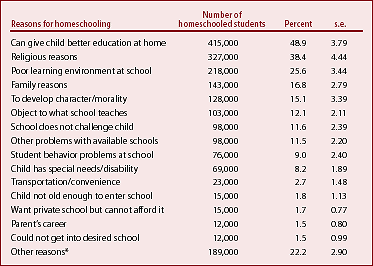
English Word: Homeschooling Meaning Homeschooling refers to the practice of educating children at home by parents or tutors, rather than sending them to a traditional school. It is an alternative form of education that emphasizes personalized learning. Etymology Derived from home + schooling, the term emerged in the late 20th century as home-based education gained recognition, particularly in the United States. Pronunciation In American English: /ˈhoʊmˌskuːlɪŋ/ (HOHM-skool-ing), with primary stress on the first syllable and secondary on the third. In British English: /ˈhəʊmˌskuːlɪŋ/, similar but with a more rounded vowel in “home.” Morphology Homeschooling is a compound noun formed by combining the noun home (place of residence) and the gerund schooling (the act of educating). It can be hyphenated as home-schooling in some styles, but the solid form is most common today. Related forms include the verb homeschool (e.g., to homeschool a child) and the adjective homeschooled. Grammar Notes Homeschooling is an uncountable noun, so it does not take an article like “a” or plural form. Use it with verbs like “practice,” “choose,” or “engage in.” It functions as a gerund in phrases like “the practice of homeschooling.” Short Interesting Facts The modern homeschooling movement began in the 1970s, led by educators like John Holt, who advocated for child-led learning. Today, over 3 million children in the U.S. are homeschooled, a number that surged during the COVID-19 pandemic due to school closures. Interestingly, homeschooled students often score higher on standardized tests than their peers. Tips on How to Learn It Easier Break it down: Visualize a “home” where “schooling” happens. Associate it with real-life examples, like families during lockdowns. Practice saying it aloud, emphasizing the stress: HOME-schooling. Use flashcards linking the word to images of kids studying at a kitchen table. Cultural or Contextual Features Homeschooling is legally recognized in most countries but varies by region—in the U.S., it’s protected under parental rights, while some European nations require oversight. It’s popular among families seeking religious, philosophical, or special needs-based education. Culturally, it challenges traditional schooling norms and promotes family involvement in learning. Examples of Sentences Simple: We started homeschooling our son last year. Medium: Homeschooling offers flexibility for families who travel frequently. Complex: Although homeschooling requires significant parental commitment and resources, it allows children to learn at their own pace and explore interests that traditional classrooms might overlook. Synonyms, Antonyms, and Common Word Combinations Synonyms: Home education, home schooling, distance learning (in some contexts). Antonyms: Public schooling, traditional education, formal schooling. Common Combinations: Legal homeschooling, begin homeschooling, homeschooling curriculum, benefits of homeschooling. Mini-Tasks for the Student Make a sentence: Write a sentence about why a family might choose homeschooling. Find a synonym: List two synonyms for “homeschooling” and use one in a new sentence. Explore related terms: Choose one related term (e.g., “homeschooled”) and create a short paragraph describing its use. Pronunciation practice: Record yourself saying “homeschooling” three times, focusing on the stress, and compare to an online audio source.
Meaning and pronunciation of the word ‘higher education’
Higher Education Meaning: Higher education refers to advanced learning that occurs after secondary school, typically at universities, colleges, or equivalent institutions. It includes undergraduate and postgraduate studies, focusing on specialized knowledge and skills for professional development. Pronunciation The word is pronounced as /ˈhaɪər ˌɛdʒʊˈkeɪʃən/ in IPA. The primary stress falls on the first syllable of “higher” (HIGH-er) and the second syllable of “education” (ed-yoo-KAY-shun). Practice by breaking it into parts: “high-er” rhymes with “fire,” and “education” like “ed-you-cation.” Morphology “Higher education” is a compound noun formed by combining the comparative adjective “higher” (from “high,” indicating advanced level) with the noun “education” (from Latin educare, meaning to rear or bring up). The hyphenated form “higher-education” is sometimes used attributively, but it’s typically two words as a noun phrase. No inflections; it remains uncountable. Grammar Notes This is an uncountable noun, so it doesn’t take an indefinite article (“a” or “an”) and uses no plural form. Use “the” for specificity (e.g., “the higher education system”). It can function as a subject, object, or modifier (e.g., “higher education costs”). Short Interesting Facts The concept of higher education dates back to ancient Greece and the Academy of Athens, founded by Plato around 387 BCE. Today, over 200 million students worldwide are enrolled in higher education, with online degrees making it more accessible since the 1990s. Tip to Learn It Easier: Link it to familiar images like graduation caps or campus buildings. Repeat phrases like “higher education leads to higher pay” to build associations. Use flashcards with visuals of universities. Cultural or Contextual Features In the US, “higher education” often means college or university, emphasizing liberal arts and vocational training. In the UK, it distinguishes from “further education” (vocational post-16). Globally, access varies; for example, many European countries offer free or low-cost higher education, while in developing nations, it’s a key pathway out of poverty. Debates around student debt highlight its economic role. Examples Simple: She pursues higher education. Medium: Higher education improves job opportunities for graduates. Complex: Although tuition fees have risen sharply in recent years, pursuing higher education remains essential for those seeking advanced careers in fields like medicine and engineering. Synonyms, Antonyms, and Common Word Combinations Synonyms: tertiary education, further education, higher learning, postsecondary education. Antonyms: primary education, basic schooling, elementary learning. Common Combinations: access to higher education, cost of higher education, higher education reform, quality higher education, funding for higher education. Mini-Tasks for Students Make a sentence: Write a sentence using “higher education” in the context of your future goals. Find a synonym: List two synonyms for “higher education” and use one in a new sentence. Explore context: Research how higher education differs in your country versus another (e.g., USA vs. Germany), and note one key difference. Practice pronunciation: Record yourself saying “higher education” three times, focusing on stress, and compare to an online audio source.