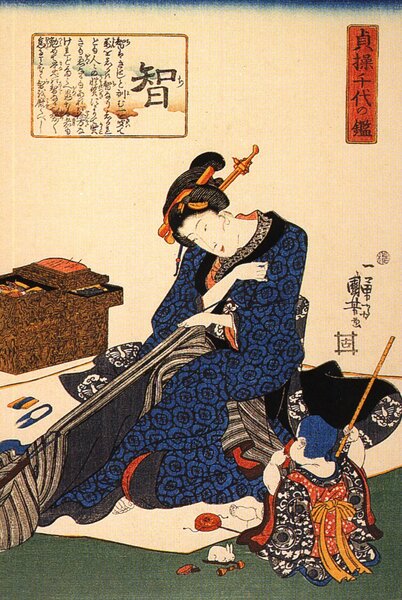
Sewing Pronunciation: In Received Pronunciation (RP), it’s /ˈsəʊɪŋ/ with stress on the first syllable. In General American (GA), it’s /ˈsoʊɪŋ/. It rhymes with words like “showing” and has a homophone in “sowing” (planting seeds). Etymology The word “sewing” comes from the Old English “sīwian” (to sew), evolving through Middle English “sewinge.” It’s formed by adding the suffix “-ing” to the verb “sew,” indicating ongoing action or the result. Meanings Verb form: As the present participle or gerund of “sew,” it describes the act of joining fabrics or materials using a needle and thread. Example: “She is sewing a dress.” Noun form: Refers to the activity of sewing (uncountable) or a specific item being sewn, like a seam (countable). It can mean the stitches or the product of sewing. Morphology and Grammar Notes “Sewing” is a gerund (noun derived from a verb) or present participle (used in continuous tenses). It functions as a subject or object in sentences, e.g., “Sewing requires patience.” No irregular forms; it follows standard -ing rules from “sew” (base form). Use it in progressive tenses: “I have been sewing all day.” Synonyms, Antonyms, and Common Combinations Synonyms: Stitching, needlework (for noun); stitching (for verb). Antonyms: Unsewing, ripping (informal opposites). Common combinations: Sewing machine, hand sewing, sewing kit, home sewing, sewing circle. Examples in Sentences Simple: I like sewing clothes. Medium: My grandmother taught me sewing when I was young. Complex: Although she had never tried it before, she spent the entire weekend sewing a quilt that incorporated fabrics from her family’s old clothes, resulting in a beautiful heirloom. Interesting Facts Sewing dates back over 20,000 years, with the oldest known needle found in a Siberian cave. During the Industrial Revolution, the sewing machine revolutionized clothing production, enabling mass manufacturing. In modern culture, sewing is a key skill in fashion design and a popular hobby, often featured in shows like “Project Runway.” It’s also a metaphor for careful, deliberate work in phrases like “sewing up loose ends.” Cultural and Contextual Features In many cultures, sewing symbolizes creativity and tradition. For instance, in quilting bees in American history, women gathered for communal sewing to create blankets, fostering social bonds. Today, it’s central to sustainable fashion, where upcycling through sewing reduces waste. In literature, sewing appears in fairy tales like “The Elves and the Shoemaker,” highlighting craftsmanship. Tips to Learn “Sewing” Easier Associate it with the homophone “sowing” by visualizing seeds (sowing) versus threads (sewing)—both involve “planting” something. Practice by describing daily activities: “I’m sewing a button on my shirt.” Use mnemonics: “Sewing” sounds like “so-wing,” imagining wings being sewn on a bird for flight. Watch tutorials on YouTube for visual reinforcement of the action. Mini-Tasks for Practice Make a sentence: Create one using “sewing” in the gerund form, e.g., as a hobby. Find a synonym: List two synonyms and use one in a sentence. Word combination: Write a short paragraph about a “sewing machine” and its importance. Homophone challenge: Write sentences distinguishing “sewing” from “sowing.”
Meaning and pronunciation of the word ’embroidery’
English Etymology From Middle French embrouderie, from embrouder + -erie, ultimately derived from Old French embroider, blending en- (in) and brodier (to border or stitch). Pronunciation IPA: /ɪmˈbɹɔɪdəɹi/. Stress falls on the second syllable: em-BROI-duh-ree. The “oi” diphthong sounds like “oy” in “boy,” and the “r” is lightly rolled in American English. Meaning Embroidery (noun, countable and uncountable; plural: embroideries) refers to: The art of decorating fabric or other materials using a needle and thread to create designs, patterns, or pictures. A specific piece of fabric that has been embroidered. Figuratively, the act of adding unnecessary or exaggerated details to a story or account, often to make it more interesting. Morphology The word is formed by adding the suffix -y to embroider, a verb meaning “to decorate with stitches.” This nominal suffix turns the action into a noun denoting the result or process, common in English for arts and crafts (e.g., poetry from poet). Grammar Notes As a noun, embroidery is versatile: use it uncountably for the general craft (“She loves embroidery”) or countably for specific items (“This embroidery is handmade”). It pairs well with adjectives like intricate, delicate, or traditional. No irregular forms; it’s non-gendered and fits standard article usage (a/the embroidery). Interesting Facts Embroidery dates back over 30,000 years, with the oldest known fragments from Siberia’s Denisova Cave. During the Renaissance, it symbolized wealth—Queen Elizabeth I’s wardrobe featured gold thread embroidery worth fortunes. Today, it’s a therapeutic hobby and appears in modern fashion, like Sabyasachi’s Indian-inspired designs. Tips to Learn It Easier Associate embroidery with “embroider a story,” linking the literal stitching to figurative embellishment. Visualize a needle threading colorful patterns to remember the “em-broid” root (from “brod” meaning edge or stitch). Practice by sketching simple designs and labeling them in sentences to build visual-linguistic connections. Cultural or Contextual Features In Western cultures, embroidery evokes Victorian-era samplers with moral quotes, while in Asia, it’s central to kimono silk work or Chinese Suzhou stitching. Globally, it’s tied to folk traditions and feminism—movements like “Pussyhat” knitting used embroidery for activism. In literature, it’s a metaphor for creativity, as in Jane Austen’s subtle social “stitching.” Examples Simple: Her embroidery is beautiful. Medium: The antique shop sells fine embroidery from China. Complex: While learning embroidery during the lockdown, she discovered not only the joy of creating intricate floral motifs on linen but also how the rhythmic stitching helped her unwind after long days of work. Synonyms, Antonyms, and Common Word Combinations Synonyms: needlework, needlepoint, sewing (ornamental), tapestry. Antonyms: plainness, simplicity (for the figurative sense). Common combinations: cross-stitch embroidery, gold embroidery, machine embroidery, blackwork embroidery; phrases like “do embroidery” or “embroidery hoop.” Mini-Tasks for the Student Make a sentence: Create one using embroidery in its figurative meaning. Find a synonym: List two synonyms and use one in a sentence. Explore: Research a famous embroidered artwork (e.g., Bayeux Tapestry) and describe it in three words. Practice: Translate “embroidery” into your native language and note any cultural equivalents. Translations Basic equivalents: French broderie; Spanish bordado; German Stickerei; Mandarin 绣花 (xiùhuā).
Meaning and pronunciation of the word ‘needlework’
Needlework Part of Speech: Noun (countable and uncountable; plural: needleworks) Etymology: Derived from “needle” + “-work,” referring to activities involving a needle. Alternative archaic form: needle-work. Pronunciation: /ˈniːdəl.wɜːk/ (British English) or /ˈniːdəl.wɝːk/ (American English). The primary stress is on the first syllable: NEED-le-work. Morphology: This is a compound noun combining “needle” (a sharp tool for sewing) and “work” (labor or craft). It exemplifies English’s tendency to form nouns by compounding everyday objects with action terms, similar to “handiwork” or “footwork.” Grammar Notes: As an uncountable noun, it often refers to the general activity or skill (e.g., “She enjoys needlework”). In countable form, it denotes specific items or types (e.g., “These needleworks are exquisite”). It functions as a subject, object, or complement in sentences. Meanings: The art, skill, or process of sewing or embroidering with a needle, especially in creating decorative patterns like embroidery or needlepoint. The finished product of such sewing or embroidery, such as a stitched cloth or garment. The profession or hobby involving skilled needle-based crafts. Synonyms: needlecraft, embroidery, sewing, stitchery. Antonyms: None directly, but contrasts with “machine sewing” or “industrial production” in modern contexts. Common Word Combinations: fine needlework, traditional needlework, needlework class, intricate needlework, needlework tools (e.g., needles, threads, hoops). Examples: Simple: Needlework is relaxing. Medium: My grandmother taught me basic needlework skills. Complex: While digital design tools have revolutionized fabric creation, many artisans still prefer the tactile precision of needlework to produce heirloom-quality pieces that tell personal stories through intricate stitching. Short Interesting Facts: Needlework dates back over 20,000 years, with evidence from ancient Egyptian tombs showing embroidered garments. During the Victorian era in Britain, it was a common pastime for women, often used to create “samplers” – embroidered panels displaying alphabets, motifs, and moral sayings as a rite of passage for young girls. Cultural or Contextual Features: In many cultures, needlework symbolizes patience, creativity, and heritage. For instance, in Indigenous American traditions, quillwork and beadwork serve as storytelling mediums, while Japanese sashiko embroidery preserves rice-farming patterns. Today, it’s experiencing a revival through modern crafts like cross-stitch art on social media, blending tradition with contemporary expression. Tips on How to Learn It Easier: Visualize the word by picturing someone sewing with a needle – break it into “needle” (the tool) and “work” (the activity). Associate it with hobbies like knitting; practice by saying it aloud with the stress on “needle” while mimicking a sewing motion. Use apps like Duolingo for craft-related vocabulary to reinforce context. Mini-Tasks for the Student: Make a sentence: Create one using “needlework” in a hobby context. Find a synonym: List two synonyms and use one in your own example sentence. Explore further: Research a famous needlework artist (e.g., William Morris) and note how their work influenced design.
Meaning and pronunciation of the word ‘woodcarving’
English Noun woodcarving (countable and uncountable, plural woodcarvings) The art or practice of carving wood into decorative or functional objects, such as sculptures, ornaments, or utensils. It serves as an alternative spelling of wood carving, often used as a compound word in modern English. Pronunciation IPA: /ˈwʊdˌkɑː.vɪŋ/ (British English) or /ˈwʊdˌkɑr.vɪŋ/ (American English). The primary stress falls on the first syllable (“wood”), with secondary stress on “carv-“. To pronounce it clearly, emphasize the “wood” part like in “wooden,” followed by “carving” as in cutting with a knife. Morphology This is a compound noun formed by combining wood (the material) and carving (the action of cutting shapes). It evolved from the separate words “wood carving” in the 19th century, reflecting a trend in English to merge common noun phrases into single words for efficiency, similar to bookshelf or raincoat. Grammar Notes As a noun, it can be countable (referring to specific pieces, e.g., “a beautiful woodcarving”) or uncountable (the general art form, e.g., “Woodcarving requires patience”). When countable, the plural is woodcarvings. It functions as a subject, object, or modifier in sentences, but avoid using it as a verb—use “to carve wood” instead. Short Interesting Facts Woodcarving dates back to prehistoric times, with evidence from 30,000-year-old mammoth ivory carvings. In medieval Europe, it adorned churches with intricate Gothic details. Today, it’s a UNESCO-recognized intangible cultural heritage in places like Japan (where it’s called mokuzōkō) and Scandinavia, where Viking-era ship prows featured mythical beasts. Tips on How to Learn It Easier Visualize the word by picturing a craftsman with a chisel shaping a wooden figure—link “wood” to forests and “carving” to knife work. Practice spelling by noting it’s one word, unlike its older form “wood carving.” Use mnemonic: “Wood carving woods a masterpiece.” Repeat the IPA aloud while mimicking carving motions to build muscle memory for pronunciation. Cultural or Contextual Features Woodcarving holds deep cultural significance worldwide. In Native American traditions, it’s used for totem poles symbolizing ancestry. In Bali, Indonesia, it’s integral to temple decorations blending Hindu motifs with local folklore. Contextually, it appears in art history, crafts fairs, or tourism (e.g., Swiss woodcarving cuckoo clocks), emphasizing sustainability as artisans often use reclaimed wood. Examples Simple: She enjoys woodcarving on weekends. Medium: Traditional woodcarving tools include chisels and gouges. Complex: Although modern technology offers alternatives, the skilled artisan’s woodcarving, passed down through generations in rural villages, continues to captivate collectors with its timeless detail and natural grain patterns. Synonyms, Antonyms, and Common Word Combinations Synonyms: wood carving, whittling (for smaller-scale), xylography (rare, for wood engraving). Antonyms: None direct, but contrasts with metal casting or 3D printing in crafting contexts. Common Combinations: decorative woodcarving, folk woodcarving, intricate woodcarving, woodcarving knife, Scandinavian woodcarving. Mini-Tasks for the Student Make a sentence: Create one using woodcarving in a cultural context, like travel. Find a synonym: List two words similar to woodcarving and explain why they fit. Pronunciation practice: Say the word five times, recording yourself to check the stress on “wood.” Explore: Research a famous woodcarver (e.g., Grinling Gibbons) and note one fact about their work.
Meaning and pronunciation of the word ‘winemaking’
Winemaking Etymology From wine + making, referring to the craft or process of producing wine from grapes or other fruits. Pronunciation /ˈwaɪnˌmeɪ.kɪŋ/ (British and American English) Stress on the first syllable of “wine” and the second syllable of “making.” The word is pronounced as two parts: “wine” like the drink, and “making” as in crafting something. Part of Speech Noun Winemaking (usually uncountable, plural winemakings) Meaning The process of making wine, involving steps like harvesting grapes, crushing, fermenting, aging, and bottling. It can apply to traditional methods using grapes or modern techniques with other fruits. Morphology This is a compound noun formed by combining wine (a beverage from fermented fruit) and -making (the suffix indicating the act of creating something). The hyphen connects the roots for clarity in spelling and pronunciation. Grammar Notes Typically uncountable, used in general senses (e.g., “Winemaking requires patience”). Plural form winemakings is rare but possible when referring to specific regional or stylistic varieties (e.g., “Traditional winemakings of Tuscany”). It functions as a gerund in phrases like “the art of winemaking.” Synonyms Vinification Wine production Enology (broader term for wine science) Antonyms Winemaking (no direct antonym; opposites might include “wine consumption” or “distilling” for spirits) Common Word Combinations Artisanal winemaking Organic winemaking Winemaking process Home winemaking Examples Simple sentence: Winemaking is fun with friends. Medium sentence: Ancient Romans perfected winemaking techniques centuries ago. Complex sentence: Although modern technology has revolutionized winemaking by introducing stainless steel tanks and precise temperature controls, many enthusiasts still prefer traditional methods that rely on oak barrels for aging and natural yeast for fermentation. Short Interesting Facts Winemaking dates back over 8,000 years to ancient Georgia and China, making it one of humanity’s oldest crafts. The word “oenology” (from Greek oînos meaning wine) is a related term for the science of winemaking, often confused with “enology” in American English. In English, “winemaking” emphasizes the practical process, while “viticulture” focuses on grape growing. Cultural or Contextual Features Winemaking is deeply embedded in cultures like those of France (Bordeaux), Italy (Chianti), and California (Napa Valley). It’s celebrated in festivals such as harvest celebrations and tied to traditions like pairing wine with meals. Contextually, it’s discussed in tourism, agriculture, and even climate change impacts on vineyards. Tips on How to Learn It Easier Associate it with familiar activities: Think of “wine” as your favorite drink and “making” as baking bread—combining flavors over time. Break it down: Practice saying “wine-mak-ing” while imagining steps like squeezing grapes. Use mnemonics: “Wine making wins medals” to remember the rewarding process. Watch documentaries on YouTube about winemaking to visualize and hear the term in context. Mini-Tasks for the Student Make a sentence: Write a simple sentence using “winemaking” in a hobby context. Find a synonym: List two synonyms for “winemaking” and explain when to use one over the other. Explore related terms: Research “viticulture” and compare it to winemaking in one paragraph. Creative task: Describe a fictional winemaking adventure in three sentences. Related terms: Winemaker, enology, oenology. See also: Wine, fermentation.
Meaning and pronunciation of the word ‘Hobbies’
Hobbies Meaning: Hobbies refer to activities pursued for pleasure and relaxation during one’s free time, rather than for financial gain. They can include creative pursuits like painting or collecting stamps, sports like gardening, or intellectual endeavors like reading. This plural form emphasizes multiple interests. Pronunciation The word is pronounced as /ˈhɒb.iːz/ in British English or /ˈhɑː.biːz/ in American English. The primary stress falls on the first syllable: HOB-bees. To practice, say it slowly, emphasizing the short ‘o’ sound like in “hot,” followed by a long ‘ee’ sound. Morphology and Grammar Notes “Hobbies” is the plural form of the noun “hobby,” which follows standard English pluralization by adding “-ies” to words ending in a consonant + “y” (hobby → hobbies). It functions as a countable noun and is typically used in the plural to describe a variety of interests. No irregular forms; the singular possessive is “hobby’s.” In sentences, it often pairs with verbs like “have,” “enjoy,” or “pursue.” Interesting Facts The word “hobby” originates from the Middle English “hobyn,” meaning a small horse or pony, evolving into a term for a child’s toy horse (hobbyhorse) by the 16th century, and finally a metaphor for any leisurely pursuit by the 18th century. Interestingly, the phrase “ride one’s hobbyhorse” still means to talk excessively about a favorite topic. Tips for Learning To remember “hobbies,” associate it with personal fun—list three of your own daily to build connections. Practice by discussing them in conversations, as repetition in context aids retention. Use flashcards: one side with the word, the other with an image of someone knitting or hiking. Cultural and Contextual Features In English-speaking cultures, hobbies are valued for work-life balance; job interviews often ask, “What are your hobbies?” to gauge personality. In the UK and US, hobby clubs (e.g., model railroads or birdwatching) foster community. During holidays, people share hobbies like crafting gifts, reflecting a cultural emphasis on self-expression outside work. Examples in Sentences Simple: My hobbies include reading and swimming. Medium: She spends weekends on her hobbies, such as baking delicious cakes for friends. Complex: While balancing a demanding career, he dedicates evenings to his hobbies—photography and playing guitar—which not only recharge his energy but also inspire creative ideas for his professional projects. Synonyms, Antonyms, and Common Combinations Synonyms: pastimes, interests, leisure activities, diversions. Antonyms: (contextual) work, obligations, chores—hobbies contrast with duties. Common Word Combinations: pursue hobbies, share hobbies with friends, hobby-related clubs, turn a hobby into a business. Mini-Tasks for Practice Make a sentence: Write one using “hobbies” to describe your daily routine. Find a synonym: Replace “hobbies” in “I love my hobbies” with another word and explain why it fits. List and reflect: Name three of your hobbies and one way each helps you relax—share with a study partner if possible.
Meaning and pronunciation of the word ‘frame’
Word: Frame Pronunciation: IPA: /freɪm/ (rhymes with “name”). Stress is on the first syllable: FRAME. The “fr” is like in “free,” and “ame” like in “game.” Part of Speech: Primarily a noun and verb. As a noun, it’s countable (frame/frames) and uncountable in some contexts like “frame of mind.” As a verb, it’s regular: frame (base), frames (3rd person), framing (present participle), framed (past). Etymology: From Middle English framen (“to construct”), from Old English framian (“to advance”). Rooted in Proto-Indo-European *pro- (“forward”), linking to words like “from.” Cognates include Danish fremme (“promote”) and Swedish främja (“encourage”). Meanings Noun: The basic structure of something, like a building or bicycle: “The house has a wooden frame.” A border for a picture or photo: “She hung the photo in a silver frame.” One image in a film or video: “The movie has 24 frames per second.” A person’s body build: “He has a tall, athletic frame.” A mental perspective: “In that frame of mind, she decided to quit.” In sports: A single game in snooker or a set of pins in bowling. Verb: To build or construct: “They framed the new house last week.” To put a picture in a border: “Frame this painting for the wall.” To compose or plan: “Frame your argument carefully.” (Informal, negative) To falsely accuse: “They framed him for the crime.” In photography/film: To position within a view: “The director framed the scene beautifully.” Grammar Notes: Often transitive as a verb (requires an object), but intransitive in rare dialectal uses like “to move.” Prepositions: “frame in” (position), “frame of reference” (context). Short Interesting Facts: “Frame” originally meant “benefit” in Old English, evolving to “structure” by the 14th century. In computing, it refers to data packets since the 1960s, influencing tech jargon. Culturally, “framing” in media means shaping public opinion, like in news stories. Tips to Learn Easier: Visualize a picture frame to remember the “structure” sense—it’s like building a border around an idea or object. Associate the verb with “framing a shot” in movies for visual positioning. Practice by describing room frames or photo apps on your phone. Synonyms and Antonyms: Noun (structure): Framework, skeleton (syn.); Disassemble (ant. for verb form). Verb (build): Construct, assemble (syn.); Dismantle (ant.). Verb (accuse): Set up, implicate (syn.); Exonerate (ant.). Common Word Combinations: Picture frame, window frame, frame of mind, frame someone up, cold frame (for plants), time frame, A-frame house. Examples: Simple: The bike has a metal frame. Medium: She bought a new frame for her favorite photo. Complex: After carefully framing the argument with evidence from multiple sources, the lawyer convinced the jury of her client’s innocence, despite the prosecution’s attempts to frame him as guilty. Mini-Tasks: Make a sentence using “frame” as a verb meaning to build. Find a synonym for “frame of mind” and use it in a sentence. Describe a cultural use: How is “framing” important in photography?
Meaning and pronunciation of the word ‘zoom out’
Etymology The phrasal verb “zoom out” derives from the verb “zoom,” which originates from the mid-20th century onomatopoeic imitation of rapid movement or sound, combined with the adverb “out” to indicate expansion or withdrawal from a close view. Pronunciation IPA: /ˌzuːm ˈaʊt/. The primary stress falls on “out,” making it sound like “ZOOM-out” with a slight pause. It rhymes with words like “shout” or “about.” Meaning “Zoom out” is an intransitive phrasal verb with two main senses: (1) In photography or videography, it means to adjust a zoom lens to decrease magnification, providing a wider field of view. (2) In digital interfaces, like computer screens or maps, it refers to scaling down an image or view to see more context at a reduced level of detail. Morphology and Grammar Notes As a phrasal verb, “zoom out” consists of the base verb “zoom” (from Middle English “zummen,” meaning to hum or buzz) plus the particle “out.” It is intransitive, so it does not take a direct object and is typically used in present continuous forms like “zooming out” for ongoing action. Third-person singular: “zooms out”; past: “zoomed out.” No passive voice is common due to its intransitive nature. Examples Simple: I need to zoom out to see the whole map. Medium: During the video call, she zoomed out so everyone could see her presentation. Complex: After zooming in on the intricate details of the painting, the art student decided to zoom out, stepping back to appreciate how the colors blended across the entire canvas. Synonyms, Antonyms, and Common Word Combinations Synonyms: Pull back, draw back, widen view. Antonyms: Zoom in, close up, magnify. Common combinations: Zoom out slowly (for smooth transitions), zoom out on a photo (in editing software), or zoom out the camera (in filmmaking). Interesting Facts The term gained massive popularity in the digital age, especially post-2020 with remote work, where “Zoom” also became a brand name for video conferencing—ironically, users often “zoom out” during meetings to share screens. In navigation apps like Google Maps, “zoom out” helps users orient themselves globally. Cultural or Contextual Features In modern culture, “zoom out” is ubiquitous in tech-savvy contexts like social media editing (Instagram filters) and gaming (to scan battlefields). Metaphorically, it appears in self-help advice, as in “zoom out on your problems” to gain perspective, reflecting a broader cultural shift toward digital literacy and mindfulness in overwhelming information environments. Tips on How to Learn It Easier Associate it visually: Imagine a camera lens pulling away or a map expanding—practice by using your phone’s camera app. Mnemonics: Link “zoom out” to “room out,” picturing making space in a crowded room for a bigger view. Practice in context: Watch tutorials on photo editing and repeat phrases like “Now, zoom out to fit the background.” Mini-Tasks for the Student Make a sentence: Write one using “zoom out” in a technology context. Find a synonym: Replace “zoom out” in this sentence with a synonym: “He zoomed out on the graph to show the trend.” Spot the error: Correct this: “She zoom out the picture too fast.” Discuss: How might “zoom out” be used metaphorically in everyday conversation?
Meaning and pronunciation of the word ‘zoom in’
English: Zoom In Meaning: “Zoom in” is a phrasal verb primarily used to describe the action of increasing magnification on a visual display or lens, making distant or small objects appear larger and closer. It can refer to camera lenses, computer screens, or maps. In a broader sense, it means to focus closely on details. Etymology: Derived from “zoom” (imitating a rapid movement or sound, from the 1930s, related to aviation speed) combined with “in” (indicating direction or intensification). First used in photography contexts around the mid-20th century as zoom lenses became common. Pronunciation: IPA: /zuːm ˈɪn/, with primary stress on “in.” Pronounced like “zoom” (rhyming with “room”) followed by “in” (as in “pin”). Rhymes with words ending in “-in” like “win.” Morphology and Grammar Notes: This is a separable phrasal verb: “zoom” is the base verb, “in” is the particle. It’s intransitive (doesn’t take a direct object) in most uses, e.g., “The camera zooms in.” In the third person singular, it becomes “zooms in”; present participle “zooming in”; past “zoomed in.” No special irregularities. Commonly used in imperative form: “Zoom in on that!” Synonyms: Magnify, enlarge, close up, focus in. Antonyms: Zoom out, reduce, shrink. Common Word Combinations: Zoom in on (something), zoom in closely, auto-zoom in, zoom in effect (in editing software). Examples: Simple: Zoom in to see the details. Medium: She zoomed in on the photo to read the tiny inscription. Complex: As the detective examined the crime scene footage, he zoomed in on the shadowy figure in the background, hoping to identify the suspect before the trail went cold. Short Interesting Facts: The term “zoom” originated from the sound of airplanes zooming by in the early 20th century. “Zoom in” gained popularity with the rise of digital cameras and video calls, especially during the COVID-19 pandemic when phrases like “zooming in on your face” became everyday lingo in remote work. It’s also used metaphorically, as in “The media zoomed in on the scandal.” Cultural or Contextual Features: In tech-savvy cultures, “zoom in” is ubiquitous in apps like Google Maps or photo editors. In filmmaking, it’s a key technique for building tension (e.g., Hitchcock’s “zoom” shots). During virtual meetings on platforms like Zoom (ironically named after the verb), users often say “Can you zoom in?” to clarify shared screens. Tips to Learn It Easier: Associate it with the physical action: Pretend you’re using a camera—extend your arms out and pull them in to mimic zooming. Practice with real apps: Open a photo on your phone and zoom in while saying the phrase aloud. Mnemonics: “Zoom in = move IN to make it bIG.” Mini-Tasks for Students: Make a sentence: Create your own example using “zoom in” in a technology context. Find a synonym: List two synonyms and use one in a sentence. Practice pronunciation: Record yourself saying “Zoom in on the map” and compare to online audio. Explore usage: Watch a short video tutorial on photo editing and note how many times “zoom in” is mentioned.
Meaning and pronunciation of the word ‘lens’
Lens Part of Speech: Noun (plural: lenses; rare: lentes); Verb (third-person singular: lenses; present participle: lensing; past: lensed). Etymology: Borrowed from Latin lēns (“lentil”), as the shape of early glass lenses resembled lentils. In Medieval Latin, it gained the optical sense from Arabic ʕadsa (“lentil; optic lens”). Pronunciation: IPA: /lɛnz/. Stress on the first syllable: LENZ. Rhymes with “dens” or “fens.” Meanings: (Optics): A curved piece of glass or plastic that focuses or diverges light, used in cameras, glasses, and microscopes. (Anatomy): The transparent, crystalline structure in the eye that focuses light on the retina. (Biology): A genus of plants in the legume family, producing lens-shaped beans (lentils). (Geology): A lens-shaped body of rock, ore, or ice. (Figurative): A perspective or viewpoint for interpreting something. (Electronics): A device focusing electron beams in devices like TVs or microscopes. (Programming): In functional languages, a way to access nested data (e.g., in Haskell). Morphology and Grammar Notes: As a noun, it’s countable; use “a lens” or “lenses.” No irregular forms. The verb is regular but uncommon outside technical contexts. Watch for misspelling as “lense.” Interesting Facts: The word “lens” comes from its lentil-like shape—ancient crystal lenses in Assyria (c. 700 BCE) were called “Ninurta’s star” but resembled beans. Contact lenses were first described by Leonardo da Vinci in 1508, but modern soft ones were patented in 1961. In photography, “lens” revolutionized art by enabling unprecedented realism. Cultural/Contextual Features: In English-speaking cultures, “lens” often evokes photography or vision metaphors, like “through rose-colored lenses” for optimistic views. It’s key in tech (e.g., smartphone cameras) and medicine (cataract surgery replaces the eye’s lens). Synonyms and Antonyms: Synonyms (optics): Glass, optic; (figurative): Viewpoint, perspective. Antonyms: Mirror (reflects rather than focuses); Blind spot (opposite of clear vision). Common Combinations: Contact lens, zoom lens, fish-eye lens, gravitational lens (astronomy). Examples: Simple: The camera has a sharp lens. Medium: She adjusted her glasses to clean the lens after the rain. Complex: Through the wide-angle lens of history, ancient civilizations appear more interconnected than previously thought, influencing modern global perspectives. Tips to Learn Easier: Visualize a lentil bean to remember the shape-origin. Associate “lens” with “lenses” in eyeglasses for everyday recall. Practice by describing photos: “The lens captured the sunset beautifully.” Group with vision words like “focus” or “vision.” Mini-Tasks: Make a sentence: Write one using “lens” in a figurative sense. Find a synonym: List two for the optical meaning. Explore: Research “Fresnel lens” and explain its use in one sentence. Quiz yourself: What’s the Latin root? (Answer: Lentil.)