English: Whiteboard Etymology The word “whiteboard” combines “white” and “board,” modeled on “blackboard.” It emerged in the late 20th century as technology replaced chalkboards with erasable white surfaces. Pronunciation In Received Pronunciation (UK): /ˈwaɪtbɔːd/, with stress on the first syllable (WYTBORD). In General American (US): /ˈwaɪtbɔɹd/, also stressed on the first syllable (WYTBORD). The “r” sound is subtle in UK English but rhotic in American English. Meaning A whiteboard is a smooth, white surface used for writing or drawing with non-permanent markers, which can be easily erased. It is commonly found in classrooms, offices, and meeting rooms for presentations and brainstorming. Morphology and Grammar Notes “Whiteboard” is a compound noun formed by combining the adjective “white” (describing color) and the noun “board” (a flat surface). It functions primarily as a countable noun: “a whiteboard” or “whiteboards.” It can also be used as a verb: “to whiteboard” means to write or draw on a whiteboard, especially in collaborative settings. Third-person singular: whiteboards; present participle: whiteboarding; past: whiteboarded. Usage Examples Simple: The teacher wrote on the whiteboard. Medium: During the meeting, we used the whiteboard to sketch ideas. Complex: After the team whiteboarded their project timeline, they realized that integrating feedback from stakeholders would extend the deadline by two weeks, prompting a reevaluation of priorities. Synonyms, Antonyms, and Common Combinations Synonyms: dry-erase board, marker board (noun); sketch, diagram (verb usage). Antonyms: blackboard, chalkboard. Common Combinations: interactive whiteboard (digital version), whiteboard marker, whiteboard session (brainstorming meeting), clean the whiteboard. Interesting Facts Whiteboards were popularized in the 1970s as an alternative to dusty chalkboards, improving hygiene in schools. The modern interactive whiteboard, often called a smartboard, integrates with computers for digital writing, revolutionizing education and business presentations. Cultural and Contextual Features In Western offices and schools, whiteboards symbolize collaboration and creativity, often filling walls in tech companies like those in Silicon Valley. Globally, they’ve influenced borrowed terms: German “Whiteboard” and Swedish “whiteboard” directly from English, showing the spread of educational tech. Tips for Learning Associate “whiteboard” with its visual opposite, “blackboard,” to remember the color shift. Practice by visualizing a classroom scene. To pronounce, break it into “white” (like “why” + “t”) and “board” (like “bored” but with a ‘d’). Use flashcards linking the word to images of markers and erasers. Mini-Tasks Make a sentence: Describe using a whiteboard in your daily routine. Find a synonym: List two alternatives for “whiteboard” in an office context. Create a combination: Invent a phrase with “whiteboard” and another word, like a tool or activity. Reflect: How has a whiteboard (or similar tool) helped you learn or work?
Meaning and pronunciation of the word ‘furthermore’
Furthermore Meaning: “Furthermore” is an adverb used to introduce additional information or ideas, similar to “in addition” or “moreover.” It helps connect clauses or sentences by adding supporting points, often in formal or written English. Etymology From Middle English furthermore, forthermore, or forthermar, equivalent to “further” + “-more.” It evolved to emphasize progression or addition in arguments. Pronunciation UK: /ˈfɜː(ɹ).ðə(ɹ)ˌmɔː(ɹ)/ (stress on first syllable: FUR-thuh-mor) General American/Canada: /ˈfɝ.ðɚˌmoɹ/ (stress on first syllable: FUR-thuh-mor) General Australian: /ˈfɜː.ðəˌmoː(ɹ)/ (stress on first syllable: FUR-thuh-maw(r)) The “th” sound is like in “the,” and it’s typically pronounced with a clear roll between syllables. Morphology and Grammar Notes “Furthermore” is derived from the adjective/adverb “further” (meaning more distant or additional) combined with “-more,” an intensifier. As an adverb, it’s not comparable (no “more furthermore”) and functions as a conjunctive adverb to link ideas. It’s placed at the beginning of a clause, often followed by a comma. Rarely used as an adjective meaning “more further,” but that’s archaic and uncommon today. Short Interesting Facts This word dates back to the 14th century and is common in legal and academic texts for building logical arguments. It’s considered a “fancy” alternative to “also,” making writing sound more sophisticated. Fun fact: Shakespeare used similar forms in plays like Hamlet to advance dialogue. Cultural or Contextual Features In English-speaking cultures, especially in academic or professional settings (e.g., essays, debates), “furthermore” signals structured thinking. It’s less common in casual speech, where “plus” or “and” might substitute. In British English, it’s slightly more formal than in American, often appearing in parliamentary speeches. Examples Simple: The book is interesting; furthermore, it’s short. Medium: He missed the train, and furthermore, he forgot his wallet at home. Complex: While the results were promising, furthermore, they indicated a need for more research to confirm the hypothesis across diverse populations. Synonyms, Antonyms, and Common Word Combinations Synonyms: additionally, moreover, besides, also, what’s more. Antonyms: however, nevertheless (for contrast, as “furthermore” adds support). Common Combinations: “Furthermore, it is important to note…”; “The plan is feasible; furthermore, it’s cost-effective.”; often pairs with “not only… but also” structures for emphasis. Tips on How to Learn It Easier Associate “furthermore” with “further” (as in extending a path), imagining it “pushes” your argument forward. Practice by reading opinion articles and spotting it—replace with “also” to see the nuance. Use flashcards: one side etymology, the other a sentence. To memorize pronunciation, break it into “fur-ther-more” and repeat with a British accent app. Mini-Tasks for the Student Make a sentence: Write one using “furthermore” to add a reason for liking a movie. Find a synonym: List two synonyms and use one in place of “furthermore” in an example sentence. Spot the error: Correct this: “She is smart furthermore talented.” (Add comma and check placement.) Explore context: Read a paragraph from a news article and insert “furthermore” where it fits best.
Meaning and pronunciation of the word ‘in addition’
English in addition is an idiomatic adverb used to introduce extra information or ideas. It functions as a conjunctive adverb, meaning “also,” “as well,” or “besides.” It connects clauses or sentences to show addition without comparison, and it is not gradable (not comparable). Pronunciation The standard American English pronunciation is /ˌɪn əˈdɪʃ.ən/, with primary stress on the second syllable of “addition” (ə-ˈdi-shən). In British English, it’s similar: /ɪn əˈdɪʃ.ən/. Listen for the schwa sounds in “in” and the first syllable of “addition” to sound natural. Practice saying it quickly in sentences to mimic native flow. Meaning This phrase means to include something more or extra alongside what’s already mentioned. It’s commonly used in formal or academic writing and speech to build arguments or lists logically. Morphology and Grammar Notes “In addition” originates from basic English words: “in” (preposition) + “addition” (noun from Latin additio, meaning “adding to”). Morphologically, it’s a fixed phrase functioning adverbially. Grammatically, it often follows a semicolon or period in writing, or is set off by commas in speech. It can introduce a clause or stand alone: e.g., “It’s expensive. In addition, it’s unreliable.” Short Interesting Facts This phrase dates back to the 14th century in English literature, evolving from mathematical concepts of addition. Interestingly, it’s more common in written English than spoken, where natives might say “plus” or “and also.” In business emails, overuse can make text feel repetitive—varying with synonyms keeps it fresh. Tips on How to Learn It Easier Associate it with lists: think of adding items to a shopping cart. Practice by rewriting simple lists into connected sentences. Use flashcards with one side showing a fact and the other “in addition” linking to another. Read news articles and highlight it to see real usage—it’s frequent in opinion pieces. Cultural or Contextual Features In English-speaking cultures, especially in academic or professional settings like the US or UK, “in addition” signals logical progression, common in essays, reports, and debates. It’s polite and formal, avoiding casual slang like “oh yeah.” In multicultural contexts, non-native speakers might confuse it with “plus,” but it adds sophistication to arguments. Examples Simple: I need milk. In addition, I need eggs. Medium: The hotel offers free Wi-Fi; in addition, breakfast is included for guests. Complex: While the new policy reduces costs for small businesses, in addition, it encourages innovation by providing tax incentives that were previously unavailable. Synonyms, Antonyms, and Common Word Combinations Synonyms: additionally, furthermore, moreover, also, besides. Antonyms: conversely, however, on the other hand (for contrast). Common Combinations: in addition to (preposition: “in addition to the cost”), further in addition (rare, emphatic). Mini-Tasks for the Student Make a sentence: Write one using “in addition” to describe your daily routine. Find a synonym: Replace “in addition” in this sentence with a synonym: “It’s raining. In addition, it’s cold.” Spot the usage: Read a paragraph from an English article and underline where “in addition” (or similar) appears; explain why it’s used. Create a list: List three hobbies, then connect two with “in addition” in a full sentence.
Meaning and pronunciation of the word ‘quiz’
Word: Quiz Meaning: The word “quiz” primarily refers to a test or competition where participants answer questions to demonstrate knowledge. It can also mean an odd or eccentric person (dated usage) or the act of questioning someone closely. In educational contexts, it’s a short examination, often informal. Pronunciation The standard pronunciation is /kwɪz/ in IPA, with the stress on the single syllable. It rhymes with words like “whiz” or “fizz.” In American English, it’s pronounced as [kwɪz], and in British English, similarly but with a sharper ‘z’ sound at the end. Etymology First attested in the 1780s, the origin of “quiz” is unknown but fascinating. One popular tale claims it was coined by a Dublin theater owner who bet he could introduce a new word; he plastered “quiz” around the city, and it caught on overnight. Another theory links it to Latin “qui es?” (who are you?), from early exams. It evolved from meaning “hoax” or “odd person” to today’s sense of a question-based game or test. Morphology and Grammar Notes As a noun, “quiz” is countable: singular “quiz,” plural “quizzes.” It functions as a verb meaning to question or test: “She quizzes the students daily.” No irregular forms; it’s regular in conjugation (quizzes, quizzing, quizzed). Use it in informal or educational settings; avoid in formal legal interrogations, where “interrogate” is preferred. Short Interesting Fact: “Quiz” has been borrowed into many languages, like Danish “quiz,” French “quiz,” and Spanish “quiz,” often retaining its English spelling and meaning as a TV game show. In 1791, it appeared in print just five years after its supposed invention, showing rapid adoption. Cultural or Contextual Features In Western culture, quizzes are staples of education (e.g., pop quizzes in schools) and entertainment (e.g., pub quizzes in the UK or shows like “Jeopardy!” in the US). Globally, they’ve become digital via apps like Kahoot!, blending fun with learning. In non-native English contexts, “quiz” often implies a light-hearted challenge rather than a serious exam. Tips on How to Learn It Easier Associate it with fun: Think of “quiz” as a quick “whiz” through questions. Practice by creating your own: List 5 trivia questions daily. Use mnemonics: “Quiz” sounds like “quick,” as in a quick test. Examples of Sentences Simple: I have a math quiz tomorrow. Medium: The teacher will quiz us on vocabulary during class. Complex: Although she felt unprepared, Sarah aced the history quiz that covered events from the Renaissance to the Industrial Revolution. Synonyms, Antonyms, and Common Combinations Synonyms: Test (noun), interrogate (verb), trivia game. Antonyms: Lecture (as opposite of interactive questioning), certainty (vs. quizzical doubt). Common Combinations: Pop quiz, quiz show, online quiz, quiz master. Mini-Tasks for Practice Make a sentence: Write a sentence using “quiz” as a verb. Find a synonym: List two synonyms for “quiz” in an educational context. Quiz yourself: What does “quiz” originally mean in dated usage? (Answer: An odd person.) Create a combo: Invent a new phrase with “quiz” and explain its meaning.
Meaning and pronunciation of the word ‘moreover’
Definition Moreover is an adverb used to introduce additional information or emphasis. It means “in addition to what has been said” or “furthermore,” connecting ideas in a sentence or paragraph. Pronunciation In General American English: IPA /mɔɹˈoʊvɚ/, with stress on the second syllable (more-OH-ver).In Received Pronunciation: IPA /mɔːˈɹəʊvə/, similarly stressed on the second syllable.Alternative poetic form: moreo’er. Etymology Inherited from Middle English moreover (also spelled moreovere, morover, mooreover, more-overe, or mare over). It combines more (indicating addition) and over, evolving to mean “on top of that.” Morphology Moreover is formed by compounding more (adverb/adjective indicating greater quantity) and over (preposition/adverb). It is not inflected and remains the same in all contexts. Hyphenation: more‧over. Grammar Notes As a conjunctive adverb, moreover links independent clauses and is often followed by a comma. It is not comparable (no degrees like “more moreover”). Use it in formal or written English to add supporting points; avoid overuse in casual speech to prevent sounding repetitive. Examples Simple: The weather is nice. Moreover, it’s sunny. Medium: She studied hard for the exam; moreover, she reviewed all the notes the night before. Complex: Although the project faced several delays due to funding issues, the team persisted with their efforts; moreover, they incorporated innovative solutions that ultimately led to its successful completion. Synonyms, Antonyms, and Common Combinations Synonyms: furthermore, additionally, also, besides, further, what’s more.Antonyms: however, nevertheless, but (as they indicate contrast rather than addition).Common combinations: “Moreover, it is important to note that…” or “The results were impressive; moreover, they exceeded expectations.” Interesting Facts Moreover dates back to the 14th century in English literature, appearing in Chaucer’s works to build arguments. It’s more common in academic and formal writing than everyday conversation, where “plus” or “and” might substitute. An anagram is overmore, though rarely used. Culturally, it’s favored in persuasive essays or debates to strengthen points without abrupt transitions. Learning Tips To learn moreover easier, associate it with building a “bridge” between ideas—like adding another layer to a story. Practice by reading opinion articles and noting where it appears. Mnemonics: Think “MORE over here” for extra info. Listen to podcasts on formal topics to hear it in context, and quiz yourself by rewriting sentences without it using synonyms. Mini-Tasks Make a sentence: Create one using moreover to connect two related ideas about your day. Find a synonym: Replace moreover in this sentence—”The food was delicious; moreover, the service was excellent”—with a synonym and explain why it fits. Spot the usage: Read a short news article and identify one place where moreover (or a similar word) could improve flow.
Meaning and pronunciation of the word ‘video games’
English: Video Games Part of Speech: Noun (plural form) Meaning: Video games are electronic games played on devices such as computers, consoles, or mobile phones. They typically involve interactive graphics, sound, and controls to engage players in virtual worlds, challenges, or stories. Pronunciation: /ˈvɪdiəʊ ɡeɪmz/ (British English) or /ˈvɪdioʊ ɡeɪmz/ (American English). The primary stress is on the first syllable of “video” (VID-ee-oh GAYMZ), with a secondary stress on “games.” Morphology: “Video games” is a compound noun formed by combining “video” (referring to visual electronic media) and “games” (plural of “game,” meaning recreational activities). It is often written as two separate words, though “video-game” can appear as a hyphenated compound in some contexts for emphasis or adjective use (e.g., video-game industry). The plural form indicates multiple instances of such entertainment. Grammar Notes: As a plural noun, it takes plural verbs (e.g., “Video games are popular”). It can function as the object of verbs like “play” or “develop.” When used attributively, it may be hyphenated: “video-games console.” Short Interesting Facts: The first video game, Tennis for Two, was created in 1958 by physicist William Higinbotham on an oscilloscope. Today, the industry generates over $180 billion annually, surpassing film and music combined. Tips to Learn It Easier: Associate “video games” with popular titles like Super Mario or Fortnite to visualize the word. Practice saying it while mimicking controller movements to link sound and action. Use flashcards with images of gaming setups for visual reinforcement. Cultural or Contextual Features: Video games originated in the mid-20th century amid technological advances and have evolved into a global phenomenon. They influence pop culture through esports tournaments (like The International for Dota 2), which draw millions of viewers, and foster communities worldwide. In education, they’re used for skill-building, but debates persist on their impact on screen time and violence. Example Sentences: Simple: I play video games every weekend. Medium: Many children enjoy video games that involve adventure and puzzles. Complex: Although video games can be addictive, they often require strategic thinking and hand-eye coordination, which can improve cognitive skills when played in moderation. Synonyms: electronic games, computer games, videogames (one word variant). Antonyms: board games, outdoor sports, non-digital entertainment. Common Word Combinations: play video games, develop video games, video games industry, mobile video games, retro video games. Mini-Tasks for Students: Make a sentence: Create your own simple sentence using “video games” and share it with a friend. Find a synonym: List two synonyms for “video games” and explain why they fit. Explore context: Name a famous video game and describe its cultural impact in one sentence. Practice pronunciation: Record yourself saying “video games” three times, focusing on the stress, and compare to an online audio source.
Meaning and pronunciation of the word ‘fiction’
English: Fiction Meaning: Fiction refers to literature or stories created from the imagination, not based on real events. It can also mean a false statement or invention meant to deceive, or in law, an assumption accepted as true for legal purposes. Pronunciation: The word is pronounced /ˈfɪk.ʃən/ in IPA, with primary stress on the first syllable: FIK-shən. It rhymes with words like “friction” or “addiction.” Etymology: Derived from Middle English ficcioun, from Old French ficcion meaning “dissimulation or invention,” ultimately from Latin fictiō, related to fiнгō (“to form or feign”). It displaced Old English lēasspell (“false story”). Morphology and Grammar Notes: “Fiction” is a noun, both countable (e.g., “a fiction”) and uncountable (e.g., “science fiction”). Plural: fictions. It forms compounds like “non-fiction” (antonym) or “fiction writer.” No irregular forms; it’s a straightforward Latinate noun ending in -tion, indicating action or result. Synonyms: Fabrication, invention, figment. Antonyms: Fact, truth, non-fiction, documentary. Common Word Combinations: Science fiction, historical fiction, work of fiction, legal fiction. Examples: Simple: I love reading fiction at night. Medium: The novel is a work of fiction based on real historical events. Complex: Although the story blends elements of fiction with autobiography, readers often debate whether the protagonist’s struggles reflect the author’s own life experiences. Short Interesting Facts: The term “fiction” entered English around the 14th century and exploded in popularity with the rise of the novel in the 18th century, thanks to authors like Daniel Defoe. Interestingly, the word shares roots with “fictitious,” meaning fake or imagined. Cultural and Contextual Features: Fiction is central to genres like mystery, romance, and fantasy, shaping cultural narratives worldwide. In French, fiction (pronounced /fik.sjɔ̃/) mirrors the English meaning but is less commonly used in everyday speech, often reserved for literary contexts. It’s influenced storytelling traditions, from oral folktales to modern streaming series. Tips to Learn It Easier: Associate “fiction” with “fictitious” friends or family stories—imagine crafting a tale to avoid chores. Practice by distinguishing fiction from fact in news headlines. Use mnemonics: “Fic-tion” sounds like “fake action,” reminding you it’s invented. Mini-Tasks for Students: Make a sentence: Write one using “fiction” in a legal context. Find a synonym: List three synonyms and use one in your own sentence. Quiz yourself: Is “science fiction” a hyponym of fiction? Explain why. Explore: Read a short fiction excerpt and identify imaginative elements. This word is key for literature lovers—mastering it helps discuss books or debates on “truth” in media!
Meaning and pronunciation of the word ‘considering’
Word: Considering Meaning: “Considering” is a versatile English word that functions as a verb form, noun, adverb, and preposition. As a verb, it is the present participle and gerund of “consider,” meaning to think about something carefully. As a noun (rare), it refers to the act of consideration. As an adverb, it means “taking everything into account” or “given the circumstances.” As a preposition, it means “in view of” or “taking into account.” Pronunciation and Stress The standard American English pronunciation is /kənˈsɪdərɪŋ/, with the primary stress on the second syllable (con-SID-er-ing). In British English, it’s similar: /kənˈsɪd(ə)rɪŋ/. The “con” is unstressed and reduced to a schwa sound (/ə/). To practice, say it slowly: kuhn-SID-uh-ring, emphasizing the middle syllable. Morphology and Grammar Notes “Considering” is derived from the verb “consider” (from Latin considerare, meaning “to examine” or “to look at the stars,” linking to astrology). It adds the suffix “-ing,” forming a gerund (noun-like) or present participle (describing ongoing action). Grammar notes: As a preposition or adverb, it often introduces clauses or phrases for contrast or qualification. It’s informal in adverbial use but common in writing. Avoid confusion with “considered” (past participle). Short Interesting Facts Etymologically, “consider” ties to stars—Romans believed careful thought involved observing constellations. In modern English, “considering” appears in phrases like “all things considered,” a fixed expression from the 16th century meaning “on balance.” Fun fact: It’s overused in debates to soften arguments, adding politeness in English-speaking cultures. Tips on How to Learn It Easier Associate “considering” with a mental scale, weighing pros and cons. Practice by journaling: Start sentences with “Considering [situation]…” to build habit. Use mnemonics like “con-SID-er-ing” for stress. Listen to podcasts (e.g., BBC Learning English) where it’s used in discussions for contextual reinforcement. Cultural or Contextual Features In English-speaking cultures, especially American and British, “considering” adds nuance in polite discourse, softening judgments (e.g., “Not bad, considering”). It’s common in academic writing, journalism, and everyday talk to show fairness. In business emails, it conveys thoughtfulness: “Considering your feedback…” Contextually, it’s rarer as a noun but fits formal lists. Examples of Sentences Simple: Considering the rain, we canceled the picnic. Medium: She performed well, considering she had only one week to prepare. Complex: Considering that the project faced numerous delays and budget cuts, the team delivered an outstanding result ahead of the revised deadline. Synonyms, Antonyms, and Common Word Combinations Synonyms: (Preposition/adverb) given, in light of, bearing in mind, taking into account; (Verb) pondering, contemplating. Antonyms: Disregarding, ignoring, overlooking. Common Combinations: All things considered (overall assessment); considering everything (summary view); in considering (less common, means while thinking). Mini-Tasks for the Student Make a sentence using “considering” as a preposition to describe a difficult situation. Find a synonym for “considering” in this sentence: “Considering his age, he’s very active.” and rewrite it. Listen to a news article and note one instance of “considering” or a similar word; explain its role. Create a dialogue where one person uses “considering” adverbially to qualify a compliment.
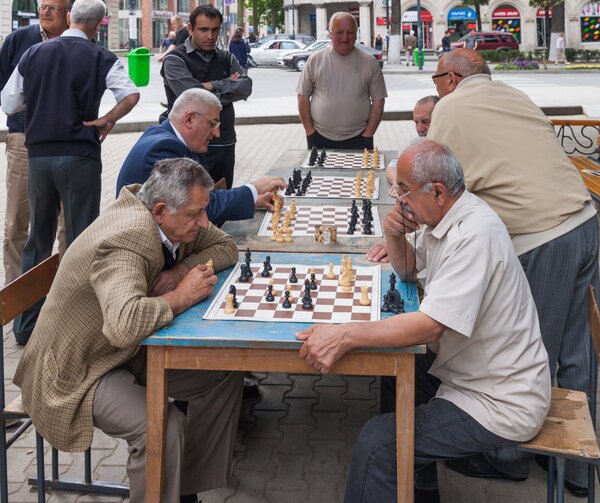
Meaning and pronunciation of the word ‘chess’
Pronunciation IPA: /tʃɛs/ (with stress on the first syllable, pronounced like “ches” in “chest”). Rhymes with: dress, guess, mess. Etymology The word “chess” comes from Middle English ches or chesse, borrowed from Old French eschés (plural of eschec), which derives from Medieval Latin scaccus. This traces back to Arabic šāh (“king” in chess), from Persian šāh (“king” or “shah”). It’s related to words like “check” and “shah,” reflecting its royal theme. Meaning Primary meaning (Noun): Chess is a strategic board game for two players, each starting with 16 pieces (like pawns, knights, and a king) on an 8×8 checkered board. The goal is to trap the opponent’s king in a position called “checkmate,” where it cannot escape capture. Secondary meanings: (Chiefly US) Any of several weedy grasses in the genus Bromus, possibly linked to the game’s row-like arrangement. (Military, plural) Planks forming temporary bridge flooring, akin to a framework like French châssis. Morphology and Grammar Notes “Chess” is usually uncountable as the game name (e.g., “I play chess”), but can be countable for variants (e.g., “different chesses”). No verb form; it’s a noun. Plural “chesses” is rare, used for the plant or military sense. Interesting Facts Chess originated in India around the 6th century as chaturanga, symbolizing ancient warfare. It’s one of the oldest known board games and promotes skills like strategy and foresight. The word entered English in the 13th century, influencing terms like “checkmate” (from Persian “shah mat,” meaning “the king is helpless”). Fun fact: Grandmasters can play blindfolded! Cultural and Contextual Features Chess is a global symbol of intellect, featured in literature (e.g., Lewis Carroll’s Through the Looking-Glass) and films like The Queen’s Gambit. It’s played professionally with world championships since 1886. In context, it’s often used metaphorically for life’s strategic decisions, as in “a chess match of politics.” Tips to Learn “Chess” Easier Associate it with the sound of a “check” in checkers to remember the etymology. Visualize the black-and-white board and king’s crown to link meaning. Practice by naming chess pieces (pawn, rook) to build vocabulary around it. Synonyms, Antonyms, and Common Combinations Synonyms: The game (informal); Western chess or international chess to distinguish from variants like Chinese chess. Antonyms: None direct, but opposites in context could be “chaos” (vs. strategy) or simple games like “tic-tac-toe.” Common combinations: Play chess, chessboard, chess piece, chess club, grandmaster, checkmate. Example Sentences Simple: I like to play chess. Medium: She learned the rules of chess from her grandfather. Complex: Although chess requires intense concentration and strategic planning over several hours, many people find it a rewarding way to challenge their minds against friends or opponents worldwide. Mini-Tasks for Practice Make a sentence: Write one using “chess” in a metaphorical sense, like business strategy. Find a synonym: List two words related to strategy games. Recall etymology: Explain how “chess” connects to “king” in one sentence. Vocabulary builder: Use “checkmate” in a sentence about winning a game.
Meaning and pronunciation of the word ‘scrabble’
Etymology The English word “scrabble” derives from Middle Dutch schrabbelen, a frequentative form of schrabben meaning “to scrape.” It is related to the verb “scrape,” emphasizing actions of scratching or gathering roughly. Pronunciation The standard pronunciation is /ˈskɹæb.əl/ (SKRAB-uhl), with primary stress on the first syllable. It rhymes with words like “cabbage” or “grabble.” Part of Speech and Morphology “Scrabble” functions primarily as a verb and noun. As a verb, it is regular: base form scrabble, third-person singular scrabbles, present participle scrabbling, past tense and past participle scrabbled. The noun form is uncountable or countable, often referring to a scrambling action. Grammar Notes It is mostly intransitive (no direct object needed) but can be transitive. Use it in present continuous for ongoing actions, like “The cat is scrabbling at the door.” Meanings Verb To scrape or scratch powerfully, often with hands or claws (intransitive): The prisoner scrabbled at the dirt with his fingers. To gather or collect hastily (transitive or intransitive): She scrabbled together some coins for the bus fare. To move awkwardly or with difficulty, using rapid hand or paw movements (intransitive): The climbers scrabbled up the steep rock face. To scribble or write messily (intransitive or transitive): He scrabbled a note on the scrap of paper. Noun A hasty scramble or struggle: There was a scrabble for the last ticket. Synonyms and Antonyms Synonyms: scramble, claw, scratch, grope (for verb); tussle, rush (for noun). Antonyms: glide, organize, smooth (opposing the chaotic motion). Common combinations: scrabble for (e.g., scrabble for food), hardscrabble (meaning arduous living, as in “hardscrabble farm”). Examples in Sentences Simple: The dog scrabbles at the door to get out. Medium: In the dark attic, she scrabbled through old boxes for her lost diary. Complex: While the storm raged outside, the children scrabbled desperately under the bed for their hidden treasures, their small hands trembling with excitement and fear. Interesting Facts “Scrabble” inspired the famous board game Scrabble, invented in 1938 by Alfred Butts, where players form words from letter tiles—ironically tying into the word’s “scribble” sense. It’s also used in literature, like in Mark Twain’s works to depict frantic actions. In French, scrabble refers to a “bingo” in the game, using all seven tiles. Cultural and Contextual Features Common in descriptions of animals or desperate situations, evoking rural or survival contexts (e.g., “scrabbling in the soil”). In modern slang, it can describe frantic typing or searching online. The game Scrabble is a global phenomenon, promoting vocabulary in over 30 languages. Tips to Learn “Scrabble” Easier Associate it with the board game: visualize scrambling letters to remember the “scramble” meaning. Practice by mimicking the action: pretend to scratch at a surface while saying the word. Mnemonics: “Scrabble = scrape + rabble” (a chaotic crowd scraping around). Mini-Tasks for Students Make a sentence: Write one using “scrabble” as a verb in a survival story. Find a synonym: List three synonyms and use one in a sentence. Explore: Research the board game Scrabble and note how the word relates to gameplay.