Pronunciation
IPA: /tʃɛs/ (with stress on the first syllable, pronounced like “ches” in “chest”). Rhymes with: dress, guess, mess.
Etymology
The word “chess” comes from Middle English ches or chesse, borrowed from Old French eschés (plural of eschec), which derives from Medieval Latin scaccus. This traces back to Arabic šāh (“king” in chess), from Persian šāh (“king” or “shah”). It’s related to words like “check” and “shah,” reflecting its royal theme.
Meaning
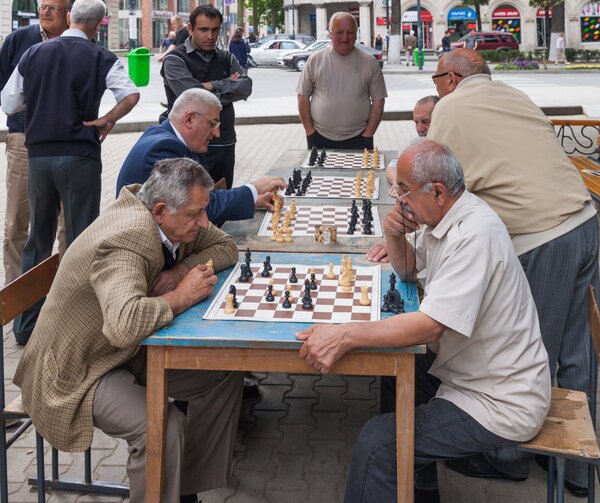
Primary meaning (Noun): Chess is a strategic board game for two players, each starting with 16 pieces (like pawns, knights, and a king) on an 8×8 checkered board. The goal is to trap the opponent’s king in a position called “checkmate,” where it cannot escape capture.
Secondary meanings:
- (Chiefly US) Any of several weedy grasses in the genus Bromus, possibly linked to the game’s row-like arrangement.
- (Military, plural) Planks forming temporary bridge flooring, akin to a framework like French châssis.
Morphology and Grammar Notes
“Chess” is usually uncountable as the game name (e.g., “I play chess”), but can be countable for variants (e.g., “different chesses”). No verb form; it’s a noun. Plural “chesses” is rare, used for the plant or military sense.
Interesting Facts
Chess originated in India around the 6th century as chaturanga, symbolizing ancient warfare. It’s one of the oldest known board games and promotes skills like strategy and foresight. The word entered English in the 13th century, influencing terms like “checkmate” (from Persian “shah mat,” meaning “the king is helpless”). Fun fact: Grandmasters can play blindfolded!
Cultural and Contextual Features
Chess is a global symbol of intellect, featured in literature (e.g., Lewis Carroll’s Through the Looking-Glass) and films like The Queen’s Gambit. It’s played professionally with world championships since 1886. In context, it’s often used metaphorically for life’s strategic decisions, as in “a chess match of politics.”
Tips to Learn “Chess” Easier
- Associate it with the sound of a “check” in checkers to remember the etymology.
- Visualize the black-and-white board and king’s crown to link meaning.
- Practice by naming chess pieces (pawn, rook) to build vocabulary around it.
Synonyms, Antonyms, and Common Combinations
Synonyms: The game (informal); Western chess or international chess to distinguish from variants like Chinese chess.
Antonyms: None direct, but opposites in context could be “chaos” (vs. strategy) or simple games like “tic-tac-toe.”
Common combinations: Play chess, chessboard, chess piece, chess club, grandmaster, checkmate.
Example Sentences
Simple: I like to play chess.
Medium: She learned the rules of chess from her grandfather.
Complex: Although chess requires intense concentration and strategic planning over several hours, many people find it a rewarding way to challenge their minds against friends or opponents worldwide.
Mini-Tasks for Practice
- Make a sentence: Write one using “chess” in a metaphorical sense, like business strategy.
- Find a synonym: List two words related to strategy games.
- Recall etymology: Explain how “chess” connects to “king” in one sentence.
- Vocabulary builder: Use “checkmate” in a sentence about winning a game.