Etymology
The word “ticket” comes from Middle English ticket, borrowed from Middle French etiquet or estiquet, meaning “a bill, note, or label.” This derives from Old French estechier (“to attach or stick”), from Frankish *stikkjan (“to stick or pierce”), ultimately from Proto-Indo-European *(s)teyg- (“to be sharp or stab”). It is a doublet of etiquette and related to the English verb stick.
Pronunciation
In British and American English, “ticket” is pronounced as /ˈtɪkɪt/, with primary stress on the first syllable (TICK-it). In varieties with the weak vowel merger, it may sound like /ˈtɪkət/. It rhymes with words like cricket or picket.
Meanings
As a noun, “ticket” refers to:
- A small document proving entitlement, such as admission to an event (e.g., concert ticket) or transportation (e.g., train ticket).
- A permit for operating equipment or a certificate for qualifications.
- A lottery entry or a figurative “solution” to a problem (e.g., “That’s the golden ticket!”).
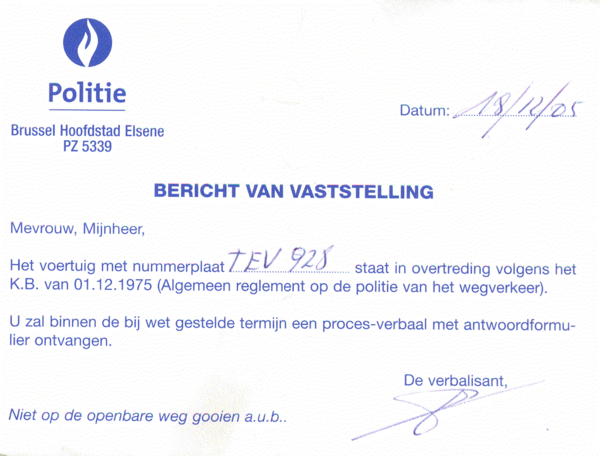
- A traffic violation citation or a service request in technical support.
- In politics, a list of election candidates.
- A price label or, dated, a tradesman’s bill or visiting card.
As a verb, it means to issue or mark with a ticket, such as fining for a parking violation or labeling goods in a store.
Morphology and Grammar Notes
“Ticket” is a countable noun, pluralized as tickets. It functions as a head noun in phrases like “one-way ticket.” As a verb, it follows regular conjugation: tickets, ticketing, ticketed. No irregular forms. It can be a direct object (e.g., “Buy a ticket”) or part of compounds like speeding ticket or ticket holder.
Interesting Facts
The term “golden ticket” originates from Roald Dahl’s Charlie and the Chocolate Factory, symbolizing a rare opportunity. Historically, “on ticket” meant “on credit,” evolving into “on tick.” “Ticket” has been borrowed into many languages, like French ticket (receipt) and Indonesian tiket (from Dutch via English).
Tips for Learning
Associate “ticket” with “stick” to remember its “attachment” origin—tickets stick to events or rules. Visualize scenarios: a movie ticket for fun, a parking ticket for trouble. Practice by categorizing: travel tickets vs. penalty tickets. Use mnemonics like “TICK-et: it ticks you off if expired!”
Cultural and Contextual Features
In English-speaking cultures, tickets are central to entertainment (e.g., scalping at sold-out shows) and bureaucracy (e.g., speeding tickets in the US). Online ticketing via apps like Ticketmaster has revolutionized access but sparked debates on fees. In politics, a “straight ticket” means voting for one party’s candidates.
Examples
Simple: I need a ticket to the zoo.
Medium: The police officer wrote her a ticket for running a red light.
Complex: After winning the lottery ticket that promised a lifetime supply of chocolate, Charlie realized it was the key to his dreams, just as Grandpa Joe had always hoped.
Synonyms, Antonyms, and Combinations
Synonyms: pass (admission), citation (violation), voucher (receipt), slate (politics).
Antonyms: None direct; opposites might be “ban” (for access) or “absolution” (for violations).
Common combinations: round-trip ticket, e-ticket, parking ticket, meal ticket (figurative: livelihood source), ticket to ride (Beatles song reference).
Mini-Tasks
- Make a sentence using “ticket” as a verb.
- Find a synonym for “ticket” in the context of travel.
- List three common phrases with “ticket” and explain one culturally.
- Translate “ticket” to your native language and note any differences in meaning.