Meaning
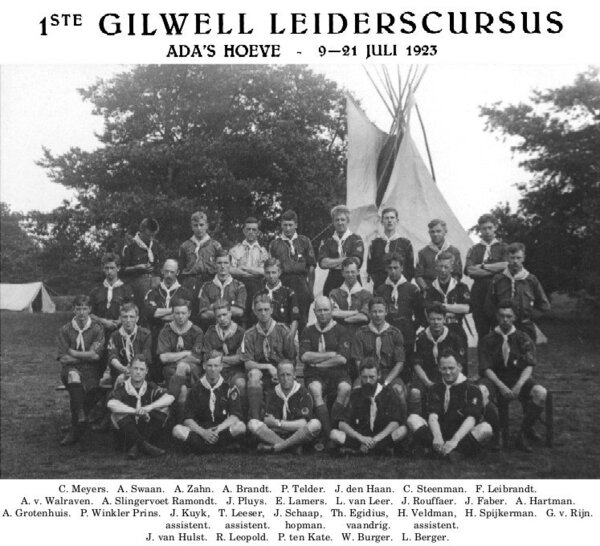
Scouting is a noun that refers to the act of exploring or investigating an area to gather information, often for military, sports, or adventurous purposes. It also specifically denotes the Scout Movement, an international youth organization focused on character development, outdoor activities, and community service. Additionally, it encompasses the general activities associated with boy scouts or girl scouts, such as camping, hiking, and skill-building.
Pronunciation
The word is pronounced as /ˈskaʊtɪŋ/ in both UK and US English. The primary stress falls on the first syllable: SKOW-ting. It rhymes with words like “shouting” or “doubting.”
Morphology
“Scouting” is the gerund or present participle form of the verb “scout,” which originates from the Old French word escouter meaning “to listen” or “to spy.” The suffix “-ing” transforms it into a noun, indicating an ongoing action or process. It can function as a verbal noun in sentences.
Grammar Notes
As a noun, “scouting” is both countable and uncountable. In its uncountable form, it describes the general activity (e.g., “Scouting is fun”). The plural “scoutings” is rare but can refer to specific instances of scouting missions. It often appears in gerund phrases, like “going scouting.”
Examples
- Simple: The boys enjoyed scouting in the woods.
- Medium: During the war, soldiers relied on scouting to find enemy positions.
- Complex: Although scouting requires careful planning and teamwork, participants in the Scout Movement often discover a profound sense of adventure and responsibility that shapes their lives long after their youth.
Synonyms, Antonyms, and Common Word Combinations
- Synonyms: Reconnaissance, exploration, surveying (for the investigative sense); youth organization, guiding (for the Scout Movement).
- Antonyms: Hiding, retreating (in a military context); idleness, inactivity (for activities).
- Common Word Combinations: Scouting report, advance scouting, local scouting troop, bird scouting (in nature observation), career scouting (in talent search).
Interesting Facts
The Scout Movement, which popularized “scouting” in modern usage, was founded in 1907 by Robert Baden-Powell in England. Inspired by his military experiences, it has grown to over 50 million members worldwide. Interestingly, the term “scout” originally meant a person sent out to spy, dating back to the 14th century, and even influenced terms like “Boy Scout” motto: “Be Prepared.”
Cultural or Contextual Features
In Western cultures, especially in the US and UK, scouting evokes images of uniformed youth learning survival skills, citizenship, and environmental awareness through badges and camps. It’s tied to patriotism and personal growth, with organizations like the Boy Scouts of America (BSA) facing modern debates on inclusivity. Globally, it’s adapted to local contexts, such as eco-scouting in Scandinavia or community service in developing countries.
Tips on How to Learn It Easier
Associate “scouting” with visual imagery: picture kids with backpacks exploring a forest or soldiers mapping terrain. Practice by linking it to the verb “scout” – think of it as “scout-ing” for action. Use mnemonics like “Scout around ting-ly adventures” to remember the pronunciation. Watch documentaries on the Boy Scouts or play games involving exploration to reinforce the word in context.
Mini-Tasks for the Student
- Make a sentence: Create one using “scouting” in the context of nature exploration.
- Find a synonym: List three synonyms for “scouting” as a military term.
- Word combination: Write a short paragraph including “advance scouting” and explain its meaning.
- Reflection: How might scouting activities benefit your daily life? Share an example.