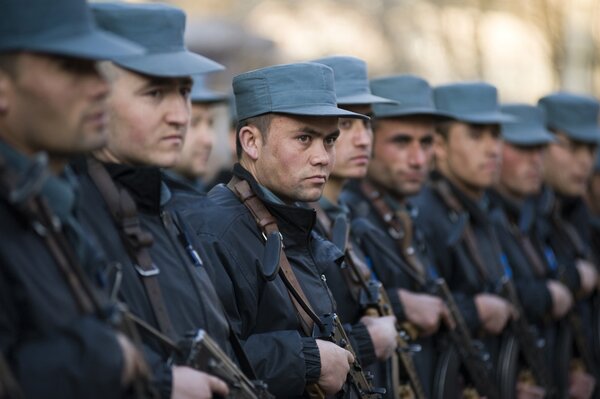
Police Officer
Meaning: A police officer is a public servant employed by a police force to maintain law and order, enforce laws, and protect citizens. This gender-neutral term refers to someone who acts as a peace officer within a community or jurisdiction.
Pronunciation
The word is pronounced as /pəˈliːs ˈɒfɪsər/ in British English (puh-LEES OFF-iss-er) and /pəˈliːs ˈɑːfɪsɚ/ in American English (puh-LEES AH-fiss-er). The primary stress falls on the first syllable of “police,” with secondary stress on “offi-.”
Morphology
“Police officer” is a compound noun formed by combining “police” (from Latin politia, meaning civil administration) and “officer” (from Old French oficier, denoting a holder of an office). It functions as a single noun phrase without inflections beyond pluralization.
Grammar Notes
This is a countable noun, pluralized as “police officers.” It is typically used with articles (a police officer or the police officer) and can serve as a subject, object, or complement in sentences. No special grammatical irregularities apply.
Usage Notes
As a gender-neutral alternative to “policeman” (male) or “policewoman” (female), it promotes inclusivity. In common usage, any sworn member of a police force qualifies as an officer, regardless of rank—unlike military hierarchies where “officer” implies higher status.
Interesting Facts
The term “police officer” gained prominence in the 20th century to replace gendered language amid civil rights movements. In the UK, the first modern police force was established in 1829 by Sir Robert Peel, leading to the nickname “bobbies” for officers. Fun fact: The abbreviation “PO” is sometimes used informally, but it’s less common than “cop” in slang.
Cultural and Contextual Features
Police officers symbolize authority and safety in many cultures, but their portrayal varies—heroic in Western media like films (e.g., Die Hard), yet viewed with caution in regions with histories of police misconduct. In the US, officers often carry firearms; in the UK, most are unarmed. Contextually, they handle traffic, crime, and emergencies, adapting to diverse urban or rural settings.
Tips for Learning
To memorize “police officer,” visualize a uniformed figure directing traffic or visualize real-life scenarios like crossing a street safely. Practice by describing police roles in your daily routine, or use flashcards linking the word to synonyms like “cop.” Break it down: associate “police” with protection and “officer” with duty.
Examples
- Simple: The police officer stopped the car.
- Medium: My uncle is a police officer in the local precinct.
- Complex: After years of rigorous training, the experienced police officer led the team in resolving the high-stakes hostage situation without any casualties.
Synonyms, Antonyms, and Word Combinations
Synonyms: cop (informal), constable, law enforcer, patrol officer.
Antonyms: criminal, suspect, lawbreaker (contextual opposites in role).
Common Combinations: traffic police officer, undercover police officer, police officer badge, sworn police officer.
Mini-Tasks
- Make a sentence: Write one describing a police officer’s daily job.
- Find a synonym: List two informal alternatives to “police officer.”
- Contextual use: Explain how a police officer’s role differs in your country from the US.