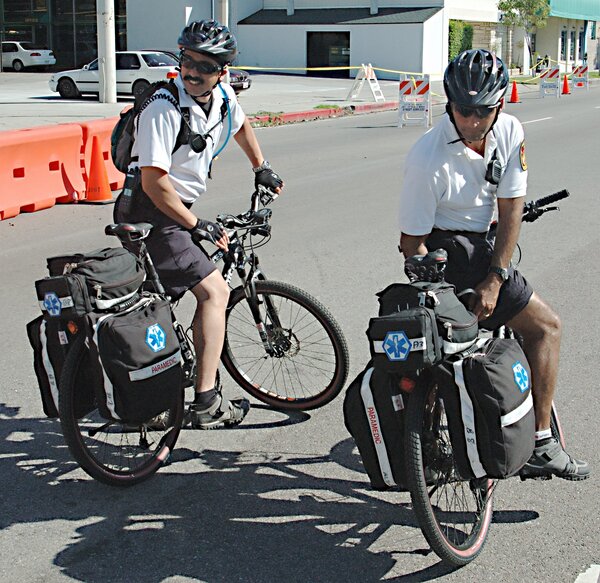
English: Paramedic
Etymology
The word “paramedic” is formed from the prefix para-, meaning “beside” or “beyond,” combined with medic, short for medical. It entered English in the mid-20th century, reflecting the role of these professionals who provide care alongside or in preparation for full medical treatment.
Pronunciation
IPA: /ˌpær.əˈmed.ɪk/ (British and American English). The primary stress falls on the third syllable: par-a-MED-ic. To practice, break it into syllables: par-a-med-ic, emphasizing the “med” part like in “medicine.”
Meaning
A paramedic is a healthcare professional trained to provide emergency medical care outside of hospitals. They stabilize patients during trauma, accidents, or medical emergencies, administering treatments like CPR, wound care, or medication before transporting them to a facility.
Morphology and Grammar Notes
“Paramedic” functions as a countable noun, with plural “paramedics.” It derives from Greek roots: para- (beside) and medicus (physician in Latin). No irregular forms; it’s a compound word. Use it with articles: “a paramedic” or “the paramedics.”
Short Interesting Facts
The term gained prominence during the Vietnam War, where medics provided battlefield care, evolving into modern EMS roles. Today, paramedics undergo rigorous training, often 1,200–1,800 hours, and can perform advanced procedures like intubation.
Tips to Learn It Easier
Associate “para-” with “parallel” support to doctors, not replacement. Mnemonics: “Para-medics rush to the scene with medical magic.” Practice spelling by noting it’s “paramedic,” not “paramedical” (which means related to paramedics but broader).
Cultural or Contextual Features
In English-speaking countries like the US and UK, paramedics are key in emergency services (EMS), often depicted in media like the TV show Paramedics or films showing high-stakes rescues. They symbolize quick response in crises, from urban ambulances to rural airlifts.
Examples
- Simple: The paramedic helped the injured man.
- Medium: After the car crash, paramedics arrived quickly to treat the victims.
- Complex: While navigating heavy traffic, the skilled paramedic stabilized the heart attack patient using advanced equipment before hospital arrival.
Synonyms, Antonyms, and Common Combinations
Synonyms: EMT (emergency medical technician), first responder (in emergency contexts).
Antonyms: None direct; contrast with “hospital doctor” for setting.
Common combinations: emergency paramedic, flight paramedic, paramedic training, on-site paramedic care.
Mini-Tasks for Students
- Make a sentence: Describe a scenario where a paramedic saves the day.
- Find a synonym: List two words similar to “paramedic” and use one in a sentence.
- Practice pronunciation: Record yourself saying “paramedic” three times, focusing on stress, and compare to an online audio.
- Explore context: Watch a short video on EMS and note three paramedic duties.