Etymology
The word paramedic comes from para- (meaning “beside” or “alongside”) + medic (short for medical or medicine). It entered English in the mid-20th century, reflecting the role of these professionals as medical helpers outside hospitals.
Pronunciation
IPA: /ˌpær.əˈmɛd.ɪk/
The primary stress is on the third syllable (“med”), with secondary stress on the first (“par”). It sounds like “PAR-uh-MED-ik.”
Meaning
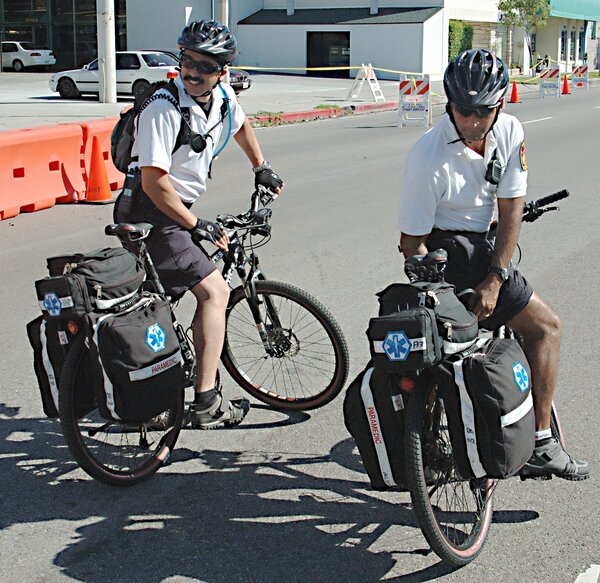
A paramedic is a healthcare professional trained to provide emergency medical care, stabilize patients during crises like accidents or heart attacks, and transport them to hospitals. In the US, paramedics are licensed at state or national levels to perform advanced interventions in prehospital settings.
Morphology and Grammar Notes
Paramedic is a compound noun derived from Greek and Latin roots: para- (from Greek, meaning “beside”) and medicus (Latin for “physician”). It functions as a countable noun, so use “a paramedic” or “paramedics” in plural form. No irregular forms; it follows standard English noun patterns. Related terms include paramedical (adjective for supportive medical roles) and paramedicine (the field).
Interesting Facts
Paramedics emerged prominently during the Vietnam War, where medics treated battlefield injuries, leading to modern EMS systems. Today, they handle over 30 million calls annually in the US alone. The term highlights their “para” role—working alongside doctors but independently in emergencies.
Cultural and Contextual Features
In English-speaking countries, paramedics are key to emergency medical services (EMS), often arriving first at scenes in ambulances. They’re celebrated in media like the TV show Emergency! (1970s), which popularized the profession. Culturally, they symbolize quick response and heroism, especially during disasters like 9/11 or pandemics.
Tips for Learning
Break it down: “Para” like parachute (beside normal), “medic” like doctor. Visualize an ambulance racing to help—associate the word with action scenes from movies. Practice saying it rhythmically: par-a-MED-ic. Use flashcards linking it to synonyms like “EMT” for reinforcement.
Examples
- Simple: The paramedic helped the injured man.
- Medium: After the car crash, paramedics arrived quickly to stabilize the victims.
- Complex: While working in a remote area during a hiking accident, the skilled paramedic administered CPR and pain relief before airlifting the patient to the nearest trauma center.
Synonyms, Antonyms, and Common Combinations
Synonyms: EMT (emergency medical technician), first responder, ambulance attendant.
Antonyms: (Limited direct ones) hospital physician, non-emergency nurse (as opposites in setting).
Common Combinations: paramedic team, certified paramedic, flight paramedic, paramedic training.
Mini-Tasks
- Make a sentence: Write one using paramedic in a disaster scenario.
- Find a synonym: List two words similar to paramedic and explain why they fit.
- Practice pronunciation: Record yourself saying the word three times, focusing on stress, and compare to an online audio.
- Context challenge: Describe a day in the life of a paramedic in 3-5 sentences.