Liberal Arts
Part of Speech: Noun (plural only)
Definition: The liberal arts refer to a traditional academic curriculum designed to provide broad general knowledge and develop critical thinking skills. It typically includes studies in the humanities (like literature and philosophy), arts (such as music and visual arts), natural sciences (e.g., biology and physics), and social sciences (including history and sociology). This contrasts with specialized professional or technical training, emphasizing well-rounded education over vocational skills.
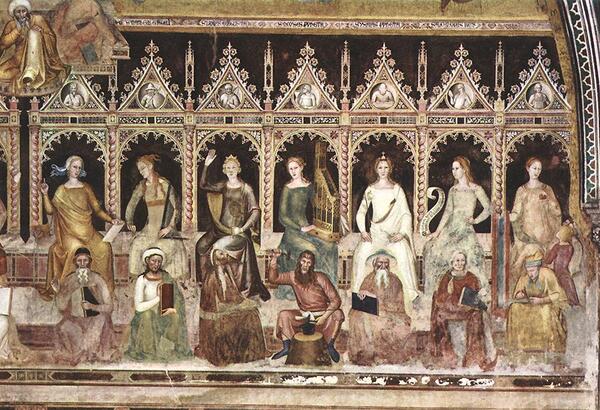
The term also historically denotes the ancient trivium (grammar, logic, rhetoric) and quadrivium (arithmetic, geometry, music, astronomy), forming the foundation of a classical education.
Pronunciation
The word is pronounced as /ˈlɪb.ər.əl ɑːrts/ in American English or /ˈlɪb.ər.əl ɑːts/ in British English. Stress falls on the first syllable of “liberal” (LIB-er-ul arts). To practice, break it down: “LIB” like in “liberty,” “er-ul” softly, and “arts” as in artistic pursuits.
Morphology
“Liberal” derives from Latin liberalis, meaning “free” or “befitting a free person,” rooted in liber (free). “Arts” comes from Latin ars (skill or craft). The compound “liberal arts” emerged in medieval Europe to describe studies suitable for free citizens, not slaves or tradespeople. It’s a hyphenated or open compound in modern use, always plural to denote the collective disciplines.
Grammar Notes
Used only in plural form: “the liberal arts,” not “a liberal art.” It functions as a mass noun, taking plural verbs (e.g., “The liberal arts have shaped modern universities”). No singular possessive; use “liberal arts'” for ownership (e.g., “the liberal arts’ influence”).
Interesting Facts
The concept traces back to ancient Greece and Rome, where it educated elites for civic life. In the 19th century, U.S. colleges like Harvard emphasized liberal arts to foster democratic citizens. Today, it’s central to many undergraduate degrees, promoting versatility in a changing job market.
Learning Tips
Associate “liberal” with freedom—imagine arts that “liberate” the mind from narrow thinking. Mnemonic: “Liberal arts free your brain like a bird from a cage.” Practice by listing one example from each category (humanities, sciences) daily to build connections.
Cultural or Contextual Features
In Western education, liberal arts colleges (e.g., Williams or Amherst) focus on small classes and interdisciplinary learning, valuing breadth over depth. Globally, similar ideas appear in China’s “general education” or Europe’s “humanities tracks.” It’s often critiqued as elitist but praised for nurturing adaptable thinkers in creative industries.
Examples
- Simple: She studies the liberal arts at college.
- Medium: The liberal arts program includes courses in history, biology, and philosophy to build well-rounded skills.
- Complex: While technical degrees prepare students for specific careers, the liberal arts, by fostering critical analysis and ethical reasoning, equip graduates to navigate an unpredictable world with intellectual agility.
Synonyms, Antonyms, and Common Combinations
Synonyms: General education, humanities and sciences, broad curriculum.
Antonyms: Vocational training, professional studies, technical education.
Common Combinations: Liberal arts degree, liberal arts college, core liberal arts curriculum, seven liberal arts (referring to trivium + quadrivium).
Mini-Tasks
- Make a sentence: Write one using “liberal arts” in a modern context, like career advice.
- Find a synonym: List two synonyms and explain why they fit (or don’t) in a university setting.
- Explore further: Name one famous liberal arts alumnus (e.g., Barack Obama from Occidental) and how their education influenced them.
- Quiz yourself: What does “trivium” mean? (Hint: Three foundational subjects.)
Related terms: Liberal science (broader intellectual pursuits). This educational cornerstone continues to evolve, blending tradition with contemporary needs.