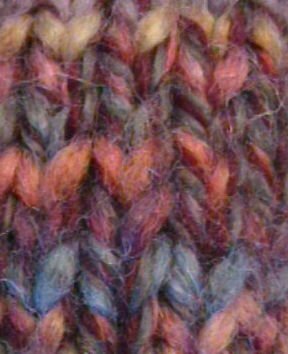
Knitting
Etymology
From Middle English knyttynge, equivalent to knit + -ing. The word originates from Old English cnyttan, related to tying or knotting, reflecting the intertwined loops in knitted fabric.
Pronunciation
IPA: /ˈnɪtɪŋ/ (stressed on the first syllable: KNIT-ting). It rhymes with words like “sitting” or “hitting.”
Parts of Speech and Morphology
Verb: Knitting is the present participle and gerund form of the verb knit, which means to form fabric by interlocking loops of yarn using needles or a machine. As a gerund, it functions as a noun (e.g., “Knitting is relaxing”).
Noun: Knitting (countable and uncountable; plural: knittings) is a non-countable noun in most uses, referring to the activity or the resulting fabric. In British English rail transport slang, it informally means overhead electrification wires (OHLE).
Grammar notes: As a gerund, it can take a direct object (e.g., “knitting a scarf”). It’s versatile in tenses: “She is knitting” (present continuous).
Meanings
- The process of creating knitted fabric by looping yarn with needles.
- The fabric or garment produced by knitting.
- (UK informal) Overhead wires for train electrification.
Synonyms and Antonyms
Synonyms: weaving (for fabric creation), crocheting (similar craft). Antonyms: unravelling, disentangling. Common combinations: knitting needles, knitting pattern, knitting wool/yarn, finger knitting (a simple technique).
Examples
- Simple: I like knitting.
- Medium: My grandmother taught me knitting last winter.
- Complex: Although she had never tried it before, Sarah spent the entire afternoon knitting a colorful scarf for her brother’s birthday, using a pattern from an old family book.
Short Interesting Facts
Knitting dates back to the 3rd century AD, with evidence from Egypt. During World War II, civilians knitted socks and scarves for soldiers, turning it into a symbol of patriotism. Interestingly, “knitting” shares roots with “knot,” highlighting the craft’s loop-based technique. In modern culture, it’s featured in shows like Stranger Things, where characters knit during tense scenes for calm.
Cultural or Contextual Features
Knitting is a global hobby, especially popular in Scandinavian countries for warm woolens and in the UK for community “knit and natter” groups. It’s therapeutic, reducing stress via repetitive motions, and has inspired movements like “yarn bombing,” where knitters decorate public spaces with colorful installations.
Tips to Learn It Easier
- Associate it with visuals: Imagine needles clicking together like tiny knots.
- Practice by saying: “Knit-ting” while mimicking the motion.
- Use mnemonics: “Knitting needs intricate twisting.”
- Listen to audio pronunciations on apps like Forvo or YouTube tutorials.
Mini-Tasks for Students
- Make a sentence: Write one using “knitting” as a noun.
- Find a synonym: List two words similar to “knitting” in the craft sense.
- Create a combination: Invent a phrase like “summer knitting project.”
- Reflect: Describe a cultural use of knitting from your experience or research.