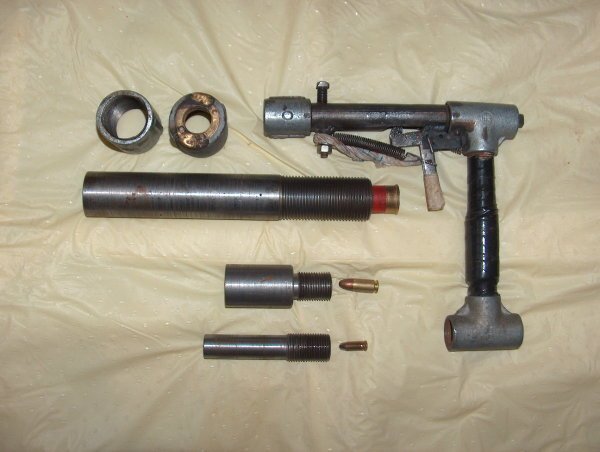
Improvisation
Meaning: Improvisation refers to the act or art of creating or performing something spontaneously without preparation, often in music, theater, poetry, or everyday problem-solving. It involves quick thinking and creativity to adapt to the moment.
Etymology
From French improvisation, derived from the Latin improvīsus (“unforeseen”), combining in- (“not”) and provisus (“provided”). In English, it’s formed morphologically as improvise + -ation, indicating the process or result of improvising.
Morphology and Grammar Notes
Basic morphology: Root improvise (verb) + suffix -ation (noun-forming, denoting action or result). It functions as a noun, both countable (specific instances, e.g., “a jazz improvisation”) and uncountable (the general concept). Plural: improvisations. No irregular forms; follows standard English noun patterns.
Pronunciation
Received Pronunciation (UK): /ˌɪm.prə.vaɪˈzeɪ.ʃən/ – stress on the third syllable (vai-).
General American (US): /ˌɪm.prə.vəˈzeɪ.ʃən/ or /ˌɪm.prɑː.vəˈzeɪ.ʃən/ – primary stress on the third syllable, with a rhotic ‘r’ sound.
Tip: Break it into syllables: im-pro-vi-za-tion. The “z” sounds like /z/, and the ending “-ation” rhymes with “nation.”
Short Interesting Facts
Improvisation has roots in ancient Roman theater, where actors like Plautus ad-libbed lines. In modern times, it’s central to jazz music, pioneered by artists like Louis Armstrong. Fun fact: The word entered English in the 18th century amid growing interest in spontaneous arts during the Romantic era.
Cultural or Contextual Features
In music, improvisation is key to genres like jazz and blues, where musicians riff on themes live. In theater, “improv” comedy troupes like Second City in Chicago popularized it for training actors. Culturally, it embodies creativity in diverse fields, from Indian classical music (raga-based) to business, where “improv skills” aid quick decision-making.
Examples of Sentences
- Simple: The musician’s improvisation amazed the crowd.
- Medium: During the play, the actors relied on improvisation when a prop broke.
- Complex: Although she had rehearsed extensively, the singer’s improvisation in the final chorus, drawing from her personal experiences, elevated the performance to something truly unforgettable.
Synonyms, Antonyms, and Common Word Combinations
Synonyms: Extemporization, ad-libbing, spontaneity, improvisation (artistic sense).
Antonyms: Rehearsal, planning, preparation, scripting.
Common combinations: Jazz improvisation, theatrical improvisation, musical improvisation, improv comedy, spur-of-the-moment improvisation.
Tips on How to Learn It Easier
- Associate with “improvise” (to make up on the spot) – think of improvising a story or meal.
- Practice pronunciation by listening to audio on sites like Forvo; repeat with a metronome for stress.
- Mnemonics: “Improvise a zany action” to remember the spelling and lively meaning.
- Use flashcards: Front – definition; back – an example sentence.
Mini-Tasks for Students
- Make a sentence: Create your own simple sentence using “improvisation” in a music context.
- Find a synonym: List two synonyms and use one in a sentence about daily life.
- Explore: Watch a short jazz improvisation video and describe what makes it spontaneous.
- Translate and compare: Look up “improvisation” in your native language and note similarities to the English form (e.g., French improvisation, Swedish improvisation).