Etymology
The word “fireworks” combines “fire” and “works,” referring to devices that produce spectacular effects through combustion. It likely entered English around 1575 from Dutch vuurwerk or German Feuerwerk, tracing back to Middle High German viurwerc meaning “firework” or “firewood.” This spread aligns with fireworks originating in Italy in the late 14th century, moving northward across Europe.
Pronunciation
In Received Pronunciation (British English), it’s pronounced /ˈfaɪəwɜːks/, with primary stress on the first syllable: FI-er-works. In General American English, it’s /ˈfaɪərwɝks/, similarly stressed as FI-er-works. The “r” sound is more prominent in American English.
Meaning
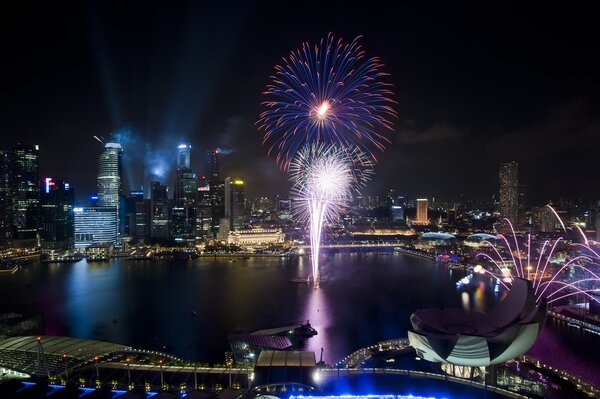
“Fireworks” primarily refers to explosive devices or pyrotechnic displays that create bursts of light, color, and sound, often used in celebrations. Figuratively, it describes a lively, explosive situation, like an argument or exciting performance.
Morphology and Grammar
“Fireworks” is a compound noun formed from “fire” (noun/adjective) + “works” (plural noun, from “work” meaning crafted items). It functions almost exclusively as a plural noun (fireworks), treated as singular or plural depending on context (e.g., “The fireworks were beautiful” vs. “Fireworks are illegal here”). No verb form exists; it’s uncountable in its display sense.
Interesting Facts
Fireworks date back to 9th-century China, invented using gunpowder for festivals and signals. The term’s European adoption reflects the Renaissance fascination with gunpowder arts. In English literature, “fireworks” often symbolizes fleeting beauty, as in Emily Dickinson’s poems.
Tips for Learning
Associate “fireworks” with New Year’s Eve displays to remember its celebratory meaning. Break it down: “fire” evokes explosions, “works” suggests artificial creations. Practice saying it rhythmically: “FIRE-works” to nail the stress. Visualize colorful bursts to link the literal and figurative senses.
Cultural and Contextual Features
Fireworks are central to holidays like the Fourth of July in the US (independence celebrations), Diwali in India (triumph of light), and Bonfire Night in the UK (Guy Fawkes remembrance). They symbolize joy but raise safety concerns due to fire risks and noise pollution. In media, “fireworks” metaphors appear in sports for dramatic plays or romance for sparks of attraction.
Examples
Simple: We watched fireworks on New Year’s Eve.
Medium: The city banned fireworks after last year’s fire incident.
Complex: Although the rain threatened to cancel the event, the organizers proceeded with the fireworks display, which lit up the night sky in a dazzling array of colors and sounds, delighting the crowd.
Synonyms, Antonyms, and Common Combinations
Synonyms: Pyrotechnics, sparklers (for smaller types), explosions (figurative).
Antonyms: Silence (for the explosive sense), dullness (figurative).
Common combinations: Display of fireworks, fireworks show, set off fireworks, political fireworks (for controversy), fireworks factory.
Mini-Tasks
- Make a sentence: Describe your favorite fireworks memory using “fireworks.”
- Find a synonym: List two words similar to “fireworks” in the figurative sense.
- Context practice: Rewrite “The argument was intense” using “fireworks” metaphorically.
- Pronunciation drill: Record yourself saying “The fireworks were spectacular” three times, focusing on stress.