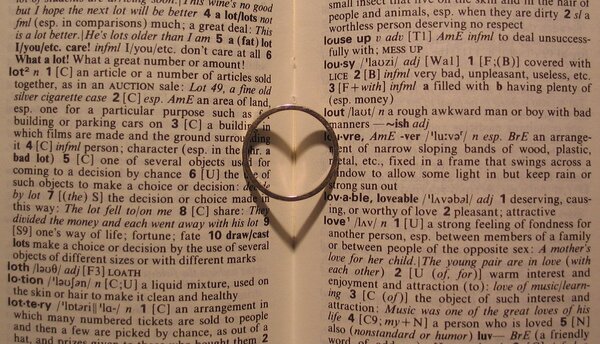
Etymology
The word dictionary comes from Middle English dixionare, borrowed from Medieval Latin dictiōnārium, derived from Latin dictiō (“a speaking”), from dictus, the past participle of dīcō (“to speak”), plus the suffix -ārium (“place”). It essentially means a “place for words” or a collection of spoken terms.
Pronunciation
In Received Pronunciation (British English), it’s pronounced /ˈdɪk.ʃən.ər.i/ with primary stress on the first syllable: DIK-shuh-nuh-ree. In General American English, it’s /ˈdɪk.ʃəˌnɛr.i/, stressed as DIK-shuh-ner-ee. The “ch” sound is like in “church,” and the ending vowel is schwa (ə), a relaxed “uh” sound.
Meaning
A dictionary is primarily a reference book or resource that lists words from one or more languages in alphabetical order, providing definitions, pronunciations, etymologies, and usage examples. It can also refer to an alphabetical guide on a specific subject, like a “dictionary of biology,” or figuratively to any collection of information. In computing, it’s an associative array where keys link to values, similar to words and definitions.
Morphology
Dictionary is formed from the root dict- (from Latin “to say” or “speak”) and the suffix -ary, which indicates a place or collection (as in “library” or “granary”). It’s a two-syllable stem with suffixes creating a noun form. No major irregular forms; plural is dictionaries.
Grammar Notes
As a countable noun, use “a dictionary” or “dictionaries.” It’s uncountable in phrases like “check the dictionary.” Rarely used as a verb: to “dictionary” means to look up or add a word to a dictionary.
Interesting Facts
The first English dictionary, A Table Alphabeticall by Robert Cawdrey, was published in 1604 with about 2,500 words—far fewer than today’s 170,000+ in the Oxford English Dictionary (OED). Samuel Johnson’s 1755 dictionary helped standardize English spelling. Interestingly, dictionary itself wasn’t in early English word lists!
Learning Tips
Break it down: Link “dict” to “dictate” or “predict” (both involve speaking or saying). Visualize a book as a “warehouse of words” to remember the “place” meaning. Practice by using a real dictionary app daily for one new word to build habit.
Cultural or Contextual Features
Dictionaries shape language by defining what’s “standard,” influencing education, law, and media. In the U.S., Noah Webster’s 1828 dictionary promoted American English spellings (e.g., “color” vs. British “colour”). Bilingual dictionaries aid global communication, while slang dictionaries capture evolving pop culture, like urban or internet terms.
Examples
- Simple: I need a dictionary for homework.
- Medium: She opened the dictionary to find the pronunciation of “quinoa.”
- Complex: While compiling his novel, the author relied on a comprehensive dictionary not only for definitions but also to explore the nuanced etymologies that enriched his characters’ dialogues.
Synonyms, Antonyms, and Common Combinations
Synonyms: lexicon, wordbook, glossary, thesaurus (for synonyms specifically).
Antonyms: None directly; opposites might be informal sources like “street slang” vs. formal dictionary.
Common Combinations: bilingual dictionary, dictionary definition, English-Spanish dictionary, pocket dictionary, online dictionary.
Mini-Tasks
- Make a sentence: Use dictionary in a sentence about learning a new language.
- Find a synonym: List two synonyms for dictionary and explain when you’d use one over the other.
- Explore: Look up “etymology” in a dictionary and note one interesting fact about its origin.