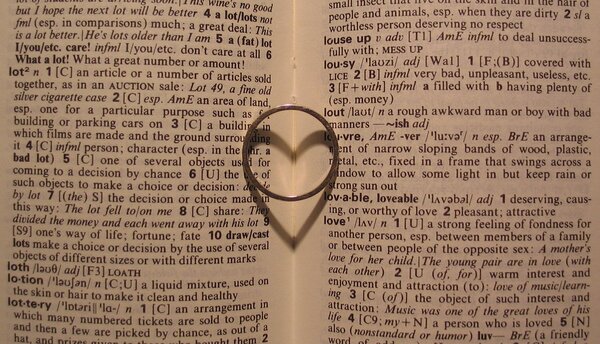
Definition
A dictionary is a reference book or digital resource that lists words from one or more languages, typically in alphabetical order. It provides definitions, pronunciations, etymologies, usage examples, and sometimes synonyms or translations. Extended uses include specialized references (e.g., a medical dictionary) or figurative senses, like a person’s vocabulary. In computing, it refers to an associative array where keys map to values, similar to words and their meanings.
Etymology
From Middle English dixionare, borrowed from Medieval Latin dictiōnārium, derived from Latin dictiō (“a saying” or “speech”), from dīcō (“to speak”). Essentially, it’s a “place for words,” from dict- (speak) + -ary (place or collection).
Pronunciation
In Received Pronunciation (British English): /ˈdɪk.ʃən.ər.i/ (stress on the first syllable: DIK-shuh-nuh-ree). In General American English: /ˈdɪk.ʃəˌner.i/ (stress on first: DIK-shuh-NAIR-ee). Rhymes with “victory” in some dialects. Audio tip: The “ch” sound is like in “church,” and the final syllable is soft.
Morphology
Root: dict- (from Latin “to say”). Suffix: -ary (indicating a collection or place). Plural: dictionaries. No irregular forms. Related: diction (word choice), dictionarying (rare verb form).
Grammar Notes
Primarily a countable noun (a dictionary, dictionaries). Uncountable in figurative senses (e.g., know the dictionary for vast vocabulary). As a verb (rare): transitive, like “dictionary a word” (to define it). Prepositions often pair with it: in the dictionary, look up in a dictionary.
Interesting Facts
The first English dictionary, A Table Alphabeticall by Robert Cawdrey, appeared in 1604 with just 2,500 words. Samuel Johnson’s 1755 Dictionary of the English Language took nine years to compile and included witty quotes. Today, Oxford English Dictionary has over 600,000 entries and adds words like “selfie” annually. Fun note: “Dictionary” itself was first recorded around 1523.
Tips to Learn It Easier
Associate with daily use: Keep a pocket dictionary app for quick lookups. Mnemonic: “Dick-shun-air-ee” – think of “Dick’s sayings in the air.” Practice by defining 5 new words daily from your readings. Visualize as a treasure map of words to remember its exploratory nature.
Cultural or Contextual Features
Dictionaries shape language standardization; e.g., Webster’s influenced American English spelling (favor vs. favour). In pop culture, they’re symbols of nerdiness (e.g., Hermione’s bookish vibe in Harry Potter) or irony (as in rap battles claiming “dictionary words”). Globally, bilingual dictionaries aid immigrants and travelers, bridging cultural gaps.
Examples
- Simple: I have a dictionary.
- Medium: She checked the dictionary for the word’s meaning.
- Complex: Although digital tools are popular, many linguists still prefer a traditional dictionary because it encourages deeper engagement with etymologies and nuances that apps often overlook.
Synonyms, Antonyms, and Common Combinations
Synonyms: lexicon, wordbook, glossary (for specialized). Antonyms: None direct, but opposites in concept include “confusion” or “nonsense” figuratively.
Common Combinations: Bilingual dictionary, online dictionary, desk dictionary; “look up in the dictionary”; “urban dictionary” (slang site); “build a dictionary” (computing).
Mini-Tasks
- Make a sentence: Write one using “dictionary” in a computing context.
- Find a synonym: List two synonyms and use one in a sentence.
- Explore: Look up “etymology” in a real dictionary and note one interesting fact about it.
- Quiz yourself: What’s the stress pattern in “dictionary”? Pronounce it aloud three times.