Pronunciation
IPA: /tʃɛs/ (with stress on the first syllable).
Rhymes: -ɛs
Etymology
The primary meaning of “chess” comes from Middle English ches, from Old French eschés, ultimately from Arabic šāh (“king” in chess), via Persian and Latin roots. This reflects the game’s royal heritage. Less common senses may link to arrangements like rows (Etymology 2) or frameworks (Etymology 3).
Meanings
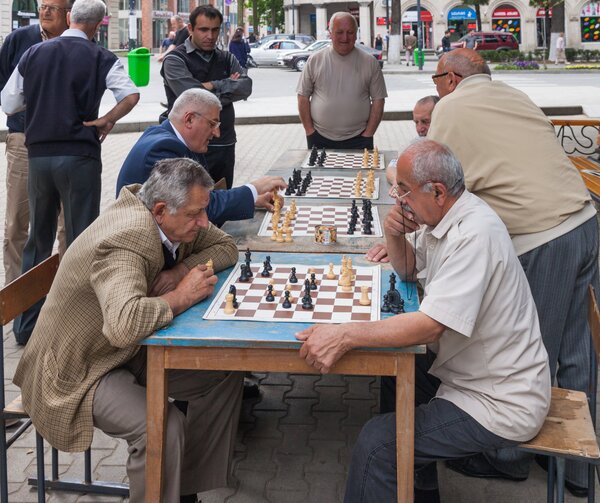
Primary (Noun): Chess is a strategic board game for two players, each starting with 16 pieces (king, queen, rooks, bishops, knights, and pawns) on an 8×8 checkered board. The goal is to checkmate the opponent’s king by trapping it so it cannot escape capture. It is usually uncountable but can be pluralized as “chesses” in rare contexts.
Secondary (Noun): In botany (chiefly US), “chess” refers to any of several weedy grasses in the genus Bromus, like cheatgrass.
Tertiary (Noun): In military use (often plural), a “chess” is a platform of planks used for temporary bridge flooring.
Morphology and Grammar Notes
“Chess” is a noun with no inflections in its primary sense; it doesn’t change for number or gender. As an uncountable noun for the game, avoid articles like “a chess” unless specifying a set (e.g., “a chess set”). Related forms include “chessboard,” “chess player,” and verbs like “to chess” (rare, meaning to play chess). It’s a mass noun, similar to “soccer” or “poker.”
Short Interesting Facts
- Chess originated in India around the 6th century as chaturanga, evolving through Persia and the Arab world before reaching Europe.
- The word “checkmate” derives from Persian shāh māt, meaning “the king is dead” or “helpless.”
- Chess is recognized by UNESCO as intangible cultural heritage and has over 600 million players worldwide.
- In botany, “chess” grass earned its name from resembling chessboard patterns when growing in fields.
Tips on How to Learn It Easier
- Associate “chess” with the sound of a “check” in banking or a king’s crown to remember its royal etymology.
- Practice by playing simple online games; visualize the board to link the word to strategy.
- Mnemonic: “Chess” sounds like “chest,” but it’s a battle of minds, not hearts—focus on the king’s defense.
- For secondary meanings, connect “chess” grass to “cheat” (a synonym for Bromus species) as sneaky weeds in fields.
Cultural or Contextual Features
Chess symbolizes intellect and strategy in many cultures, featured in literature (e.g., Lewis Carroll’s Through the Looking-Glass) and film (e.g., Searching for Bobby Fischer). In Russia and India, it’s a national passion; grandmasters like Magnus Carlsen are celebrities. Contextually, “play chess” implies deep thinking, as in business metaphors: “It’s like a game of chess.”
Examples of Sentences
- Simple: I play chess every weekend.
- Medium: She learned the rules of chess quickly and beat her brother in their first game.
- Complex: Although chess requires intense concentration and foresight, many people enjoy it as a way to sharpen their strategic skills while spending quality time with friends.
Synonyms, Antonyms, and Common Word Combinations
- Synonyms: (game) International chess, Western chess; (grass) bromus, cheatgrass.
- Antonyms: None direct for the game; for strategy, perhaps “impulsive play” in contrast.
- Common Combinations: Chess board, chess piece, chess match, chess club, grandmaster chess, play chess, checkmate in chess.
Mini-Tasks for the Student
- Make a sentence: Create one using “chess” in a metaphorical sense, like in everyday strategy.
- Find a synonym: List two synonyms for the game “chess” and explain why they fit.
- Practice pronunciation: Say “chess” five times fast, then in a full sentence like “Chess is fun.”
- Explore: Research one famous chess player and write a short note on how chess influenced their life.