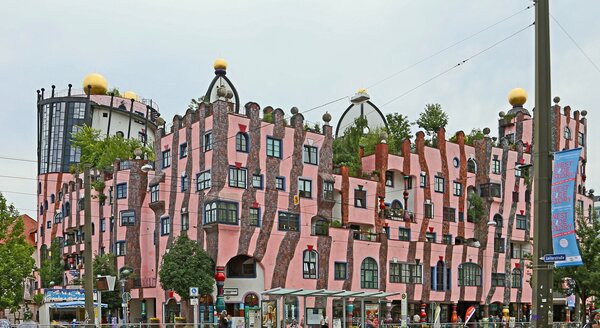
English: Architecture
Etymology
Borrowed from French architecture, from Latin architectūra, originally from architect, derived from Ancient Greek arkhitéktōn (“chief builder”).
Pronunciation
In Received Pronunciation: /ˈɑː.kɪˌtɛk.tʃə/ (stress on first syllable: AR-ki-tek-cher).
In General American: /ˈɑɹ.kɪˌtɛk.tʃɚ/ (stress similarly on AR-).
Hyphenation: ar-chi-tec-ture.
Morphology and Grammar Notes
Architecture is a noun (countable and uncountable; plural: architectures). It stems from the root arch- (from Greek arkhi-, meaning “chief” or “principal”) combined with -tect (from tekton, “builder”). No irregular forms; it functions as a mass noun in artistic contexts or countable for styles/systems. Use articles like “the architecture of…” for specifics.
Meanings
1. The art and science of designing and constructing buildings and structures, emphasizing proportion and decoration (synonym: first art).
2. The profession or style of an architect.
3. The structure or framework of something, e.g., in computing (a CPU family with shared instructions) or systems design.
4. Any unifying or intricate construction, literal or metaphorical.
Synonyms and Antonyms
Synonyms: design, structure, framework (in tech); building art (in aesthetics).
Antonyms: disarray, chaos (for structural sense); ugliness (colloquially for poor design).
Common combinations: architectural style, software architecture, Gothic architecture, neural architecture.
Examples
– Simple: The old house has beautiful architecture.
– Medium: Modern architecture often uses glass and steel for innovative designs.
– Complex: In Unix systems, the kernel architecture manages processes and files, ensuring efficient resource allocation like CPU and memory to support multitasking environments.
Interesting Facts
Ancient Greek architects like those behind the Parthenon influenced Western design, blending math and beauty—hence “architecture” as the “first art.” In computing, von Neumann architecture (1945) laid the foundation for most modern computers. Fun fact: The word ties to “tectonic,” meaning earth-shaking, from the same builder root!
Cultural and Contextual Features
Architecture reflects culture: Egyptian pyramids symbolize eternity, while Japanese minimalism emphasizes harmony with nature. In urban planning, it impacts well-being—ugly cityscapes can cause stress, as noted in studies on “beautiful environments.” Today, sustainable architecture addresses climate change with green buildings.
Tips to Learn Easier
Break it down: Archi- (chief) + -tecture (building) = chief building art. Associate with images: visualize the Eiffel Tower for French origins. Practice by describing local buildings: “This church’s architecture is Gothic.” Use apps like Duolingo for vocab or sketch simple structures to remember morphology.
Mini-Tasks
- Make a sentence: Describe your dream home’s architecture.
- Find a synonym: Replace “architecture” in “computer architecture” with another word.
- Explore: Research one famous architect (e.g., Frank Lloyd Wright) and note a building’s style.
- Quiz yourself: What’s the stress in /ˈɑː.kɪˌtɛk.tʃə/? (First syllable.)
French: Architecture (Brief Note)
Meaning: Same as English (feminine noun, plural architectures).
Pronunciation: /aʁ.ʃi.tɛk.tyʁ/.
Etymology: Directly from Latin architectūra. Descendants include Dutch architectuur and Indonesian arsitektur.