English Meaning: “Keyboards” is the plural form of “keyboard,” referring to input devices used for typing on computers, pianos, or other electronic instruments. It consists of keys arranged in a specific layout to enter text, commands, or play notes. Pronunciation: /ˈkiːbɔːrdz/ (KEE-bawrdz). The primary stress is on the first syllable, with a voiced ‘z’ sound at the end due to pluralization. Morphology and Grammar Notes: As a countable noun, “keyboards” is the regular plural of “keyboard” formed by adding “-s.” It functions as a subject, object, or in possessive forms (e.g., “keyboards’ keys”). No irregular forms; it’s straightforward Standard English morphology. Short Interesting Facts: The modern computer keyboard evolved from typewriter designs in the 19th century. The QWERTY layout, common on most keyboards, was invented in 1873 to prevent typewriter jams by spacing out frequent letter pairs. Today, mechanical keyboards are popular among gamers for their tactile feedback. Tips to Learn It Easier: Visualize a keyboard while saying the word—tap your fingers on an imaginary one to mimic typing. Break it down: “key” (like a door key) + “board” (like a plank), imagining keys on a board. Practice spelling by listing keyboard types: wireless, ergonomic. Cultural or Contextual Features: Keyboards are central to digital culture, from coding marathons to virtual piano concerts. In music, “keyboards” often means synthesizers or organs, bridging tech and art—think of artists like Herbie Hancock revolutionizing jazz fusion with electronic keyboards. Examples: Simple: I bought two keyboards for the office. Medium: The store sells various keyboards, from basic to gaming models. Complex: Although some prefer touchscreens, many professionals still rely on mechanical keyboards because they provide precise feedback during long typing sessions. Synonyms and Antonyms: Synonyms for “keyboards” include typing pads, input devices, or piano banks (in music contexts). Antonyms aren’t direct, but contrasts could be “mice” (as alternative inputs) or “voice controls.” Common combinations: wireless keyboards, QWERTY keyboards, on-screen keyboards. Dutch Noun: “Keyboards” is the plural of “keyboard,” meaning the same as in English—computer or musical input devices. Pronunciation: /ˈkiːbɔrts/ (approximate). Swedish Noun: “Keyboards” serves as the indefinite genitive singular, indefinite plural, and indefinite genitive plural of “keyboard.” It refers to typing or musical keyboards. Pronunciation: /ˈçiːbʉərds/ (CHEE-bords, with Swedish ‘k’ as ‘sh’). Mini-Tasks for Practice: Make a sentence: Create one using “keyboards” in a tech context. Find a synonym: List two alternatives to “keyboard” and use one in a sentence. Morphology drill: Change “keyboards” to singular and possessive plural, then explain why. Contextual use: Describe your ideal keyboard in three words—why does it appeal to you?
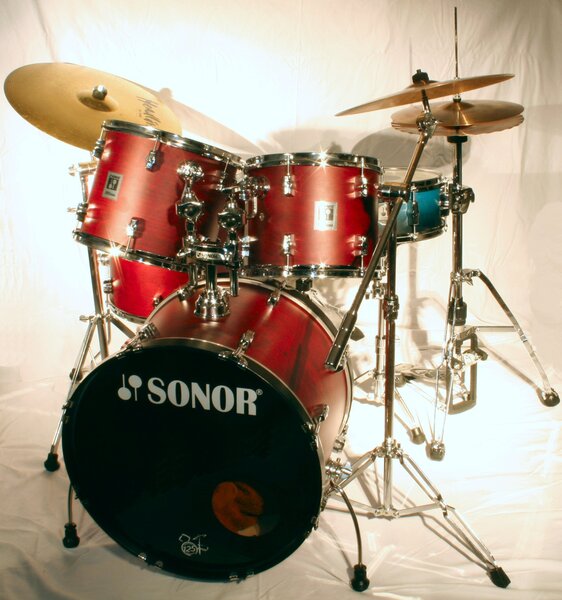
Meaning and pronunciation of the word ‘drums’
Word: Drums Meaning: “Drums” primarily refers to percussion instruments consisting of a hollow cylinder or frame covered with a stretched membrane that is beaten with sticks or hands to produce sound. As a verb, it means to play a drum or beat rhythmically, often metaphorically for beating or tapping something repeatedly. Pronunciation: IPA: /drʌmz/. The stress is on the first syllable: DRUMZ. It rhymes with words like “plums” or “gums,” ending in a buzzing /z/ sound. Morphology and Grammar Notes: “Drums” is the plural form of the noun “drum” (adding -s for plurality). As a verb, it’s the third-person singular present tense of “drum” (e.g., he/she/it drums), following regular English conjugation by adding -s. No irregular forms. It’s countable as a noun and can be used in both countable and uncountable senses in musical contexts (e.g., “a set of drums”). Short Interesting Facts: The word “drum” originates from Middle English “dromme,” likely borrowed from Middle Dutch “tromme,” and traces back to Proto-Germanic roots meaning “to thunder” or “roar,” evoking the instrument’s booming sound. Drums are among the oldest musical instruments, dating back over 7,000 years, used in rituals from ancient Africa to modern rock concerts. Cultural or Contextual Features: In Western culture, drums are central to genres like rock, jazz, and hip-hop, where the drummer drives the rhythm. Globally, they’re vital in traditional music, such as African djembe drums for ceremonies or Japanese taiko for festivals. Metaphorically, “beating the drums” means promoting something vigorously, like in politics. Examples of Sentences: Simple: The child plays the drums. Medium: She practices drums every evening to improve her rhythm. Complex: While the band performed energetically on stage, the drummer’s precise beats on the drums synchronized perfectly with the guitarist’s solos, captivating the entire audience. Synonyms, Antonyms, and Common Word Combinations: Synonyms (Noun): Percussion, timpani, bongos. Antonyms (Noun): Strings (as in string instruments), silence (metaphorical opposite). Synonyms (Verb): Beats, taps, pounds. Common Combinations: Drum kit, bass drums, play drums, beat drums for war. Tips on How to Learn It Easier: Associate “drums” with its sound—mimic drumming on a table while saying the word to remember the /drʌmz/ pronunciation. Visualize a rock concert to link it to music. Practice by listing drum-related items (e.g., snare drum, hi-hat) to build vocabulary around it. Use apps like Duolingo for audio repetition. Mini-Tasks for the Student: Make a sentence: Write a sentence using “drums” as a verb. Find a synonym: List two synonyms for “drums” in a musical context. Creative exercise: Describe your favorite song’s drum beat in three words. Grammar check: Change “The drums are loud” to past tense.
Meaning and pronunciation of the word ‘wind instrument’
Wind Instrument Part of Speech: Noun Meaning: A wind instrument is a musical device that produces sound primarily by directing a column of air through or around a specially shaped structure, such as a reed, lips, or edge. This category includes instruments like flutes, clarinets, and trumpets, distinguished from those that use strings or percussion. Pronunciation: /wɪnd ˈɪnstrəmənt/ (WIND in-struh-muhnt). The primary stress falls on the second syllable of “instrument.” To practice, say “wind” softly like the breeze, then emphasize “IN-struh-ment” as in “instrument panel.” Morphology: This is a compound noun formed by combining “wind” (referring to air movement) and “instrument” (a tool or device). It dates back to the 16th century in English, evolving from earlier terms like “wind-music” in musical contexts. No irregular forms; plural is “wind instruments.” Grammar Notes: Countable noun. Use “a wind instrument” for singular and “wind instruments” for plural. It often appears in attributive phrases, like “wind instrument player.” Short Interesting Facts: The classification of wind instruments was formalized by 19th-century organologist Victor Mahillon, dividing them into woodwinds (single/double reeds or flutes) and brass (lip-vibrated). Ancient civilizations, such as the Egyptians with their aulos (similar to oboe), used wind instruments in rituals over 5,000 years ago. Tips to Learn It Easier: Visualize blowing into a straw to make a sound—this mimics how wind instruments work. Break it down: “Wind” evokes air, “instrument” means tool. Associate with everyday items like harmonicas or party blowers to remember the airy essence. Cultural or Contextual Features: Wind instruments are central to orchestras, jazz bands, and folk traditions worldwide. In Western classical music, they form the “woodwind and brass sections.” Culturally, the didgeridoo in Australian Aboriginal ceremonies or the shakuhachi in Japanese Zen practices highlight their role in spiritual and storytelling contexts. Examples: Simple: The flute is a wind instrument. Medium: He learned to play a wind instrument for the school concert. Complex: In a full symphony orchestra, the wind instruments, ranging from delicate oboes to powerful French horns, provide dynamic contrast and harmonic depth to the overall ensemble. Synonyms: Aerophone (technical term in musicology), blown instrument. Antonyms: String instrument (e.g., violin), percussion instrument (e.g., drum). Common Word Combinations: Wind instrument section, play a wind instrument, wind instrument maker, brass wind instrument. Mini-Tasks for Practice: Make a sentence: Create your own using “wind instrument” in a musical context. Find a synonym: List two words similar to “wind instrument” and explain why they fit. Explore hyponyms: Name three types of wind instruments (e.g., from woodwind or brass) and describe one briefly. Contextual use: Write a short paragraph about your favorite wind instrument and why it’s culturally significant. This term enriches vocabulary for music lovers, helping distinguish instrument families in conversations or lessons.
Meaning and pronunciation of the word ‘string instrument’
String Instrument A string instrument is a type of musical instrument that produces sound primarily through the vibration of one or more taut strings. These vibrations are typically amplified by a resonating body, such as a hollow wooden chamber or an electronic pickup. This category includes a wide variety of instruments used in classical, folk, and popular music traditions worldwide. Pronunciation The word is pronounced as /strɪŋ ˈɪnstrəmənt/ in IPA. The primary stress falls on the second syllable of “instrument” (/ˈɪnstrəmənt/), making it sound like “STRING IN-struh-ment.” To practice, emphasize the “in” syllable while saying the word slowly. Morphology “String instrument” is a compound noun formed by combining “string” (a noun referring to a thin cord or fiber) and “instrument” (a noun meaning a tool or device). It functions as an open compound, written with a space, though sometimes hyphenated as “string-instrument” in technical contexts. No irregular forms; it pluralizes as “string instruments.” Grammar Notes As a countable noun, it takes an article (“a string instrument” or “the string instrument”) and can be pluralized. It often appears in attributive phrases, like “string instrument player.” No special gender or case requirements in English. Synonyms and Related Terms Synonyms: chordophone, stringed instrument Antonyms: wind instrument, percussion instrument Common Word Combinations: bowed string instrument, plucked string instrument, orchestral string instrument, electric string instrument Examples in Sentences Simple: The guitar is a string instrument. Medium: She plays several string instruments, including the violin and cello, in the school orchestra. Complex: Although modern bands often incorporate electronic effects, traditional string instruments like the lute continue to captivate audiences with their rich, resonant tones derived from centuries-old craftsmanship. Interesting Facts String instruments date back over 3,500 years, with evidence from ancient Mesopotamia showing lyre-like devices. The violin family, developed in 16th-century Italy, revolutionized Western classical music and remains iconic today. Fun fact: A single violin string can produce different pitches based on tension, length, and mass—physics in action! Cultural and Contextual Features In Western culture, string instruments dominate symphony orchestras, as seen in Beethoven’s symphonies. In Indian classical music, the sitar exemplifies plucked strings with sympathetic resonances for meditative sounds. Globally, they bridge cultures, from the African kora in griot storytelling to the Japanese koto in traditional ensembles. Tips for Learning To remember “string instrument,” associate it with familiar examples like the guitar or harp—visualize plucking strings to produce music. Break it down: “string” evokes the vibrating part, “instrument” the tool. Practice by listing five examples daily, or hum a tune while saying the word to link sound and meaning. Use flashcards with images of instruments for visual reinforcement. Mini-Tasks for Practice Make a sentence: Create your own simple sentence using “string instrument” and share it with a study partner. Find a synonym: List two synonyms for “string instrument” and explain why one might be used in a formal music class. Explore hyponyms: Name three specific string instruments (e.g., violin, banjo, harp) and describe one briefly. Word combo challenge: Invent a phrase like “acoustic string instrument” and use it in a sentence about a concert.
Meaning and pronunciation of the word ‘lyrics’
English Pronunciation IPA: /ˈlɪɹ.ɪks/ (stress on the first syllable, with a clear ‘ih’ sound in the second syllable) Hyphenation: lyr‧ics Noun Lyrics (plural only) The words or text of a song, poem, or other vocal music composition. It refers to the written content that conveys the message, story, or emotions through words set to music. Morphology “Lyrics” is the plural form of “lyric,” which originally meant words intended to be sung to the accompaniment of a lyre (an ancient stringed instrument). It functions as a mass noun in modern English, typically used in the plural without a singular counterpart like “lyric” for song words. Grammar Notes As a plural-only noun, it takes plural verbs (e.g., “The lyrics are inspiring”). It is uncountable in the sense of referring to the collective words of a song, but can be modified by quantifiers like “some lyrics” or “these lyrics.” Short Interesting Facts The term “lyrics” derives from the Greek word “lyrikos,” meaning “pertaining to the lyre,” an instrument used in ancient poetry. In the 19th century, it evolved to describe song words in popular music. Famous lyricists like Bob Dylan have won Nobel Prizes for their work, highlighting lyrics’ literary value. Tips to Learn It Easier Associate “lyrics” with your favorite songs—listen to one track, read the lyrics online, and sing along. Break it down: “lyric” sounds like “lyre” (the instrument), and adding “s” makes it plural for song words. Practice by jotting down lyrics from daily playlists to reinforce spelling and usage. Cultural or Contextual Features In music culture, lyrics are central to genres like hip-hop, where they often tell personal stories, or rock, where they express rebellion. They appear in contexts like concert sing-alongs or legal disputes over copyright. In theater, lyrics form part of musicals, blending with music to create librettos. Examples Simple: I love the lyrics to this pop song. Medium: The band’s new album has thoughtful lyrics about love and loss. Complex: While the melody draws listeners in, it is the cleverly crafted lyrics that provoke deep reflection on societal issues long after the song ends. Synonyms and Antonyms Synonyms: words (song words), verses, libretto (for operas or musicals) Antonyms: melody, tune (opposing the musical aspect to the textual one) Common Word Combinations: song lyrics, write lyrics, analyze lyrics, rap lyrics, love lyrics Mini-Tasks for Practice Make a sentence: Create your own sentence using “lyrics” to describe a song you know. Find a synonym: List two synonyms for “lyrics” and use one in a new sentence. Explore context: Listen to a song, write down three lines of its lyrics, and explain what they mean to you. Derived Terms: lyricist (a person who writes lyrics) Related Terms: lyric, libretto
Meaning and pronunciation of the word ‘tone-deaf’
Definition Tone-deaf is primarily an adjective with both literal and figurative meanings. Literally, it describes someone unable to distinguish differences in musical pitch. Figuratively and more commonly in modern usage, it refers to being out of touch with social sensitivities, insensitive to current contexts, or oblivious to how one’s words or actions affect others. This figurative sense often implies a lack of awareness that leads to offense or poor judgment. Pronunciation The word is pronounced as /ˈtoʊn ˌdɛf/ in IPA. Stress falls primarily on the first syllable (“tone”), with secondary stress on “deaf.” It sounds like “TOHN def,” with a hyphen indicating it’s a compound word spoken as two clear parts. Morphology Tone-deaf is a hyphenated compound adjective formed from “tone” (referring to musical pitch or quality) and “deaf” (meaning unable to hear). Alternative spelling: tone deaf without the hyphen. It functions as a modifier before nouns (e.g., tone-deaf comment) and can intensify with “more” or “most” (e.g., most tone-deaf decision). Grammar Notes As an adjective, it agrees in form but not number with the noun it modifies. Use it predicatively (e.g., “She seems tone-deaf”) or attributively (e.g., “A tone-deaf approach”). Avoid using it as a noun; instead, say “tone-deafness” for the condition. Examples Simple sentence: The singer is tone-deaf and avoids karaoke. Medium sentence: His tone-deaf joke about the recession upset the audience. Complex sentence: Although the CEO intended to motivate employees, her tone-deaf email praising profits while announcing layoffs only deepened the staff’s resentment toward management. Synonyms, Antonyms, and Common Combinations Synonyms: Literal: amusic, pitch-deaf. Figurative: insensitive, oblivious, clueless, tactless. Antonyms: Literal: musically gifted, pitch-perfect. Figurative: empathetic, socially aware, sensitive. Common combinations: Tone-deaf to (e.g., tone-deaf to criticism); tone-deaf decision; tone-deaf remark; tone-deaf policy. Interesting Facts The literal sense dates to the 19th century, linked to amusia—a neurological condition affecting music perception, affecting about 4% of people. Figuratively, it surged in popularity during the 2010s in media and politics to critique insensitive public figures, like politicians ignoring cultural nuances. Derived terms include tone-deafly (adverb) and tone-deafness (noun). Cultural and Contextual Features In American English, “tone-deaf” often appears in news commentary on social media blunders or corporate missteps, highlighting a disconnect from public sentiment. For instance, during elections, it’s used to describe candidates who seem unaware of voters’ struggles. In British English, similar usage exists but may lean toward “tin-eared” as a synonym. Culturally, it underscores the importance of emotional intelligence in communication. Tips on How to Learn It Easier Associate the word with “deaf to tones”—think of someone missing musical notes or social “vibes.” Practice by listening to music and imagining pitch blindness, then apply to real-life insensitivities like awkward party comments. Use mnemonics: “Tone-deaf = no ear for tone in music or moods.” Review examples in news articles to see figurative use. Mini-Tasks for the Student Make a sentence using tone-deaf in its figurative sense about a celebrity. Find a synonym for tone-deaf and use it in a similar sentence. Listen to a short music clip and describe if you’d call yourself tone-deaf; then, rewrite it figuratively for a social situation.
Meaning and pronunciation of the word ‘play by ear’
English Idiom: Play by Ear Pronunciation: /pleɪ baɪ ɪr/ (play by ear). The primary stress is on the first syllable of “play,” with a secondary emphasis on “ear.” This idiom is spoken fluidly in natural English, often without pausing between words. Meaning The idiom “play by ear” primarily means to perform music without reading from a written score, relying instead on one’s hearing, memory, and intuition. More broadly, in idiomatic use, it refers to handling situations by improvising or making decisions on the spot, without a fixed plan, often involving intuition or trial and error. It can be transitive (e.g., “play a song by ear”) or intransitive (e.g., “We’ll play it by ear”). Morphology and Grammar Notes This is a phrasal verb idiom derived from musical terminology. “Play” is the base verb (infinitive form), combined with the preposition “by” and noun “ear.” It conjugates regularly: third-person singular “plays by ear,” present participle “playing by ear,” past “played by ear.” No irregular forms. It’s versatile in tense but most common in present or future contexts for improvisation. Use it in informal speech; avoid in highly formal writing unless quoting casually. Short Interesting Facts The phrase originates from 19th-century music practices, where skilled musicians like jazz pioneers (e.g., Louis Armstrong) “played by ear” to create spontaneous performances. It’s a testament to auditory learning, contrasting with visual sheet music. Fun fact: Many famous composers, including Mozart as a child, could play complex pieces by ear, showcasing innate talent over rote training. Tips on How to Learn It Easier Associate it with everyday improvisation, like cooking without a recipe or navigating a new city spontaneously. Listen to jazz or blues music to hear the literal sense—try humming a tune from memory. Practice by using it in journals: “Today, I played the meeting by ear.” Mnemonics: Picture ears “playing” music like invisible headphones guiding your actions. Cultural or Contextual Features In English-speaking cultures, especially the US and UK, “play by ear” embodies a flexible, adaptive mindset valued in creative fields like music, business, and travel. It’s common in entrepreneurial contexts (e.g., startups pivoting without rigid plans) or casual social plans (e.g., weekend getaways). However, it carries a slight risk connotation—great for innovation, but not ideal for high-stakes scenarios like surgery. Examples Simple: She can play the guitar by ear. Medium: We didn’t book tickets in advance; we’ll just play it by ear at the airport. Complex: Although the team had prepared extensively, when unexpected challenges arose during the presentation, they decided to play it by ear, drawing on their collective expertise to improvise solutions that ultimately impressed the clients. Synonyms, Antonyms, and Common Word Combinations Synonyms: Wing it, improvise, fly by the seat of one’s pants, make it up as you go along. Antonyms: Follow a script, plan meticulously, stick to the blueprint. Common Combinations: Play it by ear (most frequent variant, meaning to handle a situation intuitively); play music/songs/piano by ear (literal musical sense). Mini-Tasks for Practice Make a sentence: Create one using “play by ear” in a travel scenario. Find a synonym: List two synonyms and use one in your own sentence. Antonym challenge: Describe a situation where you would NOT “play by ear” and why. Context quiz: Is “play by ear” more appropriate for a wedding speech or a surgery? Explain briefly.
Meaning and pronunciation of the word ‘sheet music’
Sheet Music Part of Speech: Noun (uncountable) Pronunciation: /ʃiːt ˈmjuːzɪk/ (SHEET MYOO-zik). The primary stress falls on the first syllable of “music.” Meaning: Sheet music refers to the handwritten or printed pages containing musical notation, including notes, rhythms, lyrics, and instructions for performers. It allows musicians to read and play music without memorization or oral transmission. Morphology: This is a compound noun formed by combining “sheet” (referring to a piece of paper) and “music” (the art form). It’s typically written as two words and treated as a single uncountable concept in English. Grammar Notes: As an uncountable noun, it does not take an indefinite article (“a” or “an”) and uses singular verbs. For example, “Sheet music is essential for beginners.” Quantifiers like “some” or “a lot of” are common: “I need some sheet music for piano.” Short Interesting Facts: The concept of sheet music dates back to the 9th century in Europe, with early notations on parchment. It was revolutionized in the 11th century by Guido d’Arezzo, who developed the staff system still used today. Famous composers like Beethoven published their works as sheet music, making symphonies accessible to amateur musicians. Tips on How to Learn It Easier: Visualize sheet music as a “map” for sounds—associate the black notes with piano keys you’ve seen in videos. Practice by humming simple melodies while following free online sheet music PDFs. Apps like MuseScore can help you interact with notations digitally, turning abstract symbols into familiar tunes. Cultural or Contextual Features: Sheet music is central to Western classical music, jazz bands, and pop performances. In the U.S., it boomed during the Tin Pan Alley era (late 19th-early 20th century), producing hits like “Happy Birthday.” Today, it’s digitized for global sharing, but physical copies evoke nostalgia in cozy living rooms or bustling orchestras. Examples: Simple: She plays the violin from sheet music. Medium: The band ordered sheet music for their new album covers. Complex: As the conductor raised her baton, the orchestra members eagerly scanned the fresh sheet music, their fingers poised over instruments to bring the composer’s vision to life in a symphony of harmony and rhythm. Synonyms: Musical score, notation, score sheet. Antonyms: Oral tradition (as opposed to written), improvisation (versus structured notation). Common Word Combinations: Read sheet music, buy sheet music, compose sheet music, piano sheet music, free sheet music. Mini-Tasks for the Student: Make a sentence: Write one using “sheet music” in a context about your favorite song. Find a synonym: List two synonyms and use one in a new sentence. Explore further: Search for “sheet music” on Wikipedia and note one historical fact you didn’t know. For more, see sheet music on Wikipedia.
Meaning and pronunciation of the word ‘season’
Season Pronunciation: In Received Pronunciation (RP), it’s /ˈsiːzən/ with stress on the first syllable. In General American English, /ˈsiːzən/ or /ˈsɪzən/. The ‘ea’ sounds like ‘ee’ in ‘see’, followed by a soft ‘z’ and ‘ən’ like in ‘open’. Rhymes with words like “reason”. Etymology The word “season” comes from Middle English “sesoun”, from Old French “seson” meaning “time of sowing”. It traces back to Latin “satiō” (sowing or planting), from the verb “serō” (to sow). It’s related to Proto-Indo-European *seh₁- (to sow). Cognates include “sow” (as in planting seeds). It displaced older English words like “tide” for periods of time. Meanings as a Noun One of the four divisions of the year: spring, summer, autumn (or fall), and winter. Synonym: yeartide. A specific period when something occurs, like harvest season. A busy time for a place, e.g., tourist season. In sports like cricket, a series of matches. In TV/radio (North America), a group of episodes aired together; in British English, called a “series”. Synonym: series (US/Canada/Australia). An undefined period of time (archaic). In video games, downloadable content or a themed update period. Meanings as a Verb To add flavor to food with salt, herbs, or spices (from French “assaisonner”). Example: Season the soup with pepper. To accustom or habituate someone to something. Example: Seasoned travelers adapt quickly. To mature or become fit for use, like wood drying. Example: The wood needs to season before building. To mix or temper something. Synonyms: mingle, alloy. Morphology and Grammar Notes “Season” is a countable noun (e.g., two seasons) and can be uncountable in contexts like “in season” (available now, like fruits). As a verb, it’s regular: seasons, seasoning, seasoned. Plural: seasons. No irregular forms. Use prepositions like “in season” (during) or “for the season” (for that period). Synonyms, Antonyms, and Common Combinations Synonyms (noun): period, time, spell; for TV: series. Antonyms (noun): off-season; for verb (flavor): blandify (rare). Common combinations: Season’s greetings, dry season, hurricane season, open season (hunting or figurative for criticism), all-season (tires), seasoned professional. Examples Simple: Winter is my favorite season. Medium: The rainy season brings lush greenery to the fields. Complex: Although the tourist season peaks in summer, many visitors prefer the quieter autumn months when the leaves change color and the crowds thin out. Interesting Facts and Cultural Notes Seasons vary by hemisphere: Southern summers align with Northern winters due to Earth’s tilt. Culturally, seasons inspire festivals like Halloween (autumn) or Christmas (winter). In Japan, “shīzun” (from “season”) refers to TV series. Fun fact: “Season” originally tied to agriculture, reflecting its Latin roots in sowing—reminding us of nature’s cycles. In English idioms, “seasoned” means experienced, like a well-aged steak. Tips to Learn Easier Associate with seasons: Visualize spring planting to remember the sowing etymology. Mnemonic: “See zone” – see the time zone of the year. Practice: Watch a TV show and note its “season” number. Mini-Tasks Make a sentence: Use “season” as a verb in a cooking context. Find a synonym: List two synonyms for “season” as a noun. Contextual use: Describe your favorite season and why, in three sentences.
Meaning and pronunciation of the word ‘Netflix’
Netflix Pronunciation: /ˈnɛt.flɪks/ (NET-fliks), with primary stress on the first syllable. The word is pronounced like the company name, blending “net” (short e sound) and “flicks” (rhyming with “licks”). Etymology From the company name Netflix, founded in 1997 by Reed Hastings and Marc Randolph. It likely combines Net (“the Internet”) + flicks (“films, movies,” slang for motion pictures originating in the early 20th century). The term entered verb form in the 2000s as streaming became popular. Meaning Netflix (verb) means to watch a film, TV series, or other content using the Netflix streaming service. It’s informal and specific to internet-based viewing, often implying casual, on-demand entertainment at home. Morphology and Grammar Notes As a verb, netflix is transitive (requires an object, like “netflix a show”). It conjugates regularly: third-person singular netflixes, present participle netflixing, past netflixed. It’s lowercase when used as a verb, per style guides like AP, to avoid trademark issues. No irregular forms; it’s a modern neologism treated like a standard English verb. Primarily American English, but globally recognized due to the service’s reach. Short Interesting Facts Netflix revolutionized entertainment by pioneering DVD rentals by mail in 1997 before shifting to streaming in 2007, amassing over 270 million subscribers worldwide by 2023. The verb “netflix” exemplifies “verbification,” where brand names become actions (like “google” or “hoover”). A fun cultural tie-in is the phrase “Netflix and chill,” a slang euphemism for casual dating or intimate activities while watching TV, which surged in popularity around 2014. Cultural or Contextual Features In modern pop culture, “netflixing” reflects the shift from traditional TV to binge-watching, where users marathon entire seasons. It’s tied to digital laziness and comfort—think cozy nights in versus going out. Globally, it highlights streaming’s dominance, but in non-English contexts, equivalents like “ver series en Netflix” in Spanish adapt the concept. Examples of Sentences Simple: I netflix movies every weekend. Medium: After dinner, we netflixed the new sci-fi series on the couch. Complex: Although she had a busy schedule, my sister decided to netflix her favorite thriller last night, ignoring the stack of books on her nightstand. Synonyms, Antonyms, and Common Word Combinations Synonyms: Stream, binge-watch, watch online. Antonyms: Rent a DVD (traditional), attend a theater (opposite of home streaming). Common Combinations: Netflix and chill (relax with media); binge-netflix (watch multiple episodes); netflix original (content exclusive to the platform). Tips on How to Learn It Easier Associate “netflix” with your own habits—recall a show you’ve binged to make it memorable. Practice by journaling: “Today, I netflixed…” Use mnemonics like “Net of flicks” for etymology. Watch Netflix content with subtitles to hear related slang in context, reinforcing the verb naturally. Mini-Tasks for the Student Make a sentence: Create your own simple sentence using “netflix” as a verb. Find a synonym: List two synonyms for “netflix” and use one in a sentence. Explore culture: Search for “Netflix and chill” origin and explain it in one paragraph. Practice pronunciation: Record yourself saying “I netflixed a documentary” three times, focusing on stress.