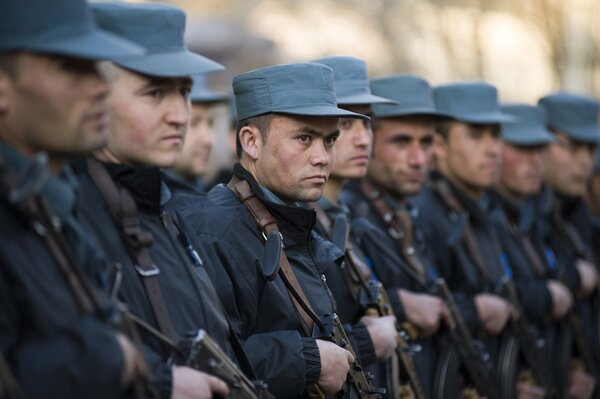
Police Officer
A police officer is a person employed by a police force to enforce laws, maintain public order, and protect citizens. This gender-neutral term serves as an inclusive alternative to “policeman” (for males) or “policewoman” (for females). It refers to any qualified, oath-sworn member of a law enforcement agency, regardless of military-style rank distinctions.
Pronunciation
The word is pronounced as /pəˈliːs ˈɒfɪsər/ in British English or /pəˈlis ˈɑːfɪsər/ in American English. Stress falls on the first syllable of “police” (pə-LEES) and the first syllable of “officer” (OFF-uh-ser). Practice by breaking it into parts: “po-lice” + “off-i-cer” to mimic the natural flow.
Morphology
“Police officer” is a compound noun formed by combining “police” (from Latin politia, meaning “administration” or “government”) and “officer” (from Old French officier, denoting an agent in authority). The hyphenated form “police-officer” is sometimes used for emphasis, but the open form “police officer” is standard in modern English. It functions as a single lexical unit without inflectional changes beyond pluralization to “police officers.”
Grammar Notes
This is a countable noun, typically used with articles (“a police officer,” “the police officer”) or in plural (“police officers”). It does not take a definite article when referring generally to the profession (“Police officers patrol the streets”). Avoid possessive forms like “policeman’s” by opting for “police officer’s” for inclusivity.
Usage Examples
- Simple: The police officer stopped the car.
- Medium: A dedicated police officer resolved the neighborhood dispute peacefully.
- Complex: While patrolling late at night, the vigilant police officer noticed suspicious activity and alerted backup, preventing a potential burglary.
Synonyms, Antonyms, and Common Word Combinations
Synonyms: cop (informal), law enforcement officer, constable, patrolman.
Antonyms: Criminal (functional opposite), suspect.
Common combinations: Traffic police officer, undercover police officer, police officer badge, sworn police officer, community police officer. These highlight roles like “undercover police officer” in investigations or “traffic police officer” for road safety.
Interesting Facts
The term “police officer” gained prominence in the 20th century to promote gender equality in law enforcement. In the UK, the first female police officers were appointed in 1919. Historically, “bobby” (from Sir Robert Peel, founder of London’s police in 1829) is a British synonym, while “cop” derives from “constable on patrol.” Fun fact: In some countries, police officers undergo rigorous training, including physical fitness and legal studies, lasting up to two years.
Tips for Learning
To memorize “police officer,” associate it with visuals like a badge or patrol car. Practice by watching police procedural shows (e.g., Blue Bloods) to hear it in context. Use flashcards: front side image of an officer, back side pronunciation and definition. Repeat sentences aloud to build fluency, focusing on the compound stress pattern.
Cultural or Contextual Features
Police officers’ roles vary culturally: in the US, they often carry firearms and focus on community policing; in the UK, most are unarmed to emphasize de-escalation. In multicultural settings, officers may need language skills for diverse communities. Media portrayals, from heroic in films to controversial in news, influence public perception, emphasizing trust and accountability.
Mini-Tasks
- Make a sentence: Describe a situation where you might interact with a police officer.
- Find a synonym: List three informal alternatives to “police officer” and use one in a sentence.
- Explore: Research a famous police officer from history (e.g., Allan Pinkerton) and note one fact about their career.
- Practice pronunciation: Record yourself saying “The police officer helped the lost child” three times, checking against an online audio source.