Word: Agriculture
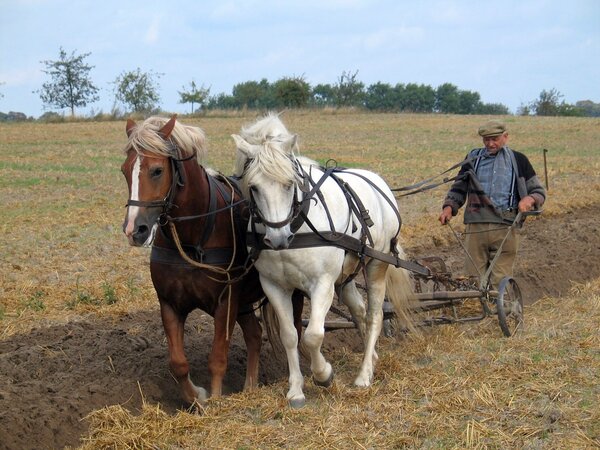
Meaning: Agriculture refers to the science, art, and practice of cultivating soil, growing crops, and raising livestock for food, fiber, and other products. It encompasses farming, horticulture, and animal husbandry, forming the backbone of human sustenance.
Etymology
From Middle English agriculture, partly borrowed from Middle French agriculture and directly from Latin agricultūra, a compound of ager (“field”) + cultūra (“cultivation”). This reflects its roots in land management and growth, linking to words like “acre” and “culture.”
Pronunciation
In American and British English: /ˈæɡ.rɪˌkʌl.tʃɚ/ (AG-ri-KUL-cher), with primary stress on the first syllable and secondary on the third. In Canadian English, it may be /ˈeɪɡ.rɪˌkʌl.tʃɚ/. The “ch” sounds like in “church,” and the “u” is a short “uh.”
Morphology and Grammar Notes
Agriculture is a noun, both countable and uncountable (e.g., “modern agriculture” as uncountable; “agricultures of the world” as countable). It derives from Latin roots but has no common prefixes or suffixes in modern use beyond “agri-” (meaning field-related). No irregular forms; it’s non-declinable in English.
Short Interesting Facts
- The term “agriculture” entered English in the 15th century, coinciding with the Agricultural Revolution that boosted European farming efficiency.
- Globally, agriculture employs about 27% of the workforce, yet it’s vital for 100% of food production—highlighting its universal importance.
- In French, agriculture shares the same Latin origin and is pronounced /a.ɡʁi.kyl.tyʁ/, showing cross-linguistic ties.
Tips to Learn It Easier
- Break it down: “Agri” like “agro” in agriculture, plus “culture” as in growing things—think “field culture.”
- Associate with visuals: Picture a farm to recall the meaning.
- Practice by discussing daily food: “My meal comes from agriculture.”
Cultural and Contextual Features
Agriculture shapes cultures worldwide—from ancient Egyptian Nile farming to modern U.S. agribusiness. In developing countries, subsistence agriculture sustains families, while industrialized nations focus on sustainable practices amid climate change. It’s central to holidays like harvest festivals and debates on GMOs.
Examples
- Simple: Agriculture feeds the world.
- Medium: Sustainable agriculture helps protect the environment from soil erosion.
- Complex: Although modern agriculture relies on machinery and chemicals, many communities still practice traditional methods that preserve biodiversity and cultural heritage.
Synonyms, Antonyms, and Common Combinations
- Synonyms: Farming, husbandry, agronomy.
- Antonyms: Industry (as in manufacturing), hunting (pre-agricultural subsistence).
- Common Combinations: Precision agriculture (tech-driven farming), organic agriculture (chemical-free), agricultural revolution (historical shift).
Mini-Tasks for Students
- Make a sentence: Describe how agriculture impacts your daily life.
- Find a synonym: List two words similar to “agriculture” and use one in a sentence.
- Explore: Research one fact about agriculture in your country and share it.
- Pronounce and record: Say “agriculture” three times, noting the stress, and compare to an online audio.