Etymology
The word agriculture comes from Middle English agriculture, borrowed partly from Middle French agriculture and partly from Latin agricultūra. It breaks down to ager (“field”) + cultūra (“cultivation”). This reflects its roots in farming practices from ancient Rome.
Pronunciation
In American and British English, it’s pronounced as /ˈæɡ.rɪˌkʌl.tʃɚ/, with primary stress on the first syllable (AG-ri-cul-ture). In Canadian English, it’s similar: /ˈeɪɡ.rɪˌkʌl.tʃɚ/. For learners, emphasize the “ag” like in “egg” and “cul” like “cult” in “culture.” Audio resources like Forvo can help mimic native speakers.
Meaning
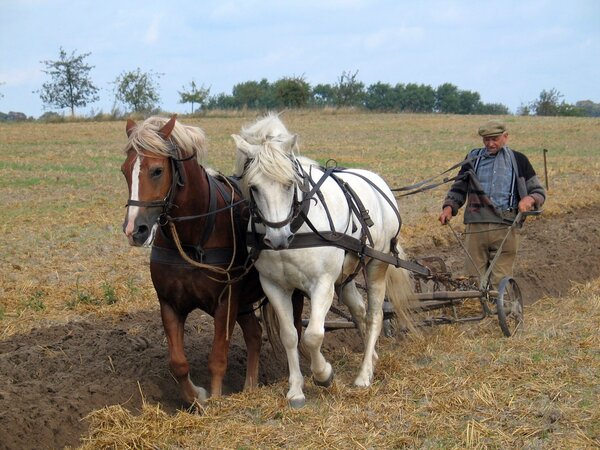
Agriculture refers to the science, art, and practice of cultivating soil, growing crops, and raising livestock. It encompasses everything from planting seeds to harvesting produce and managing farms. As an uncountable noun, it describes the broad field; countable uses (plural: agricultures) might refer to specific systems, like “modern agricultures.”
Morphology and Grammar Notes
Morphologically, it’s a compound from agri- (relating to fields or crops, from Latin ager) and -culture (from Latin cultura, meaning growing or tilling). It’s primarily an uncountable noun, so no article changes like “the agriculture” in general senses—use “agriculture in general.” In plural, it can denote diverse farming methods worldwide. No verb forms; related verbs include cultivate or farm.
Interesting Facts
Agriculture revolutionized human society around 10,000 BCE, shifting hunter-gatherers to settled communities and enabling civilizations like Mesopotamia. The term entered English in the 1500s during the Renaissance, coinciding with agricultural advancements. Fun fact: The Latin root ager also gives us “acre,” tying land measurement to farming heritage.
Tips to Learn It Easier
Break it into parts: “Agri” sounds like “agry” (angry farmer?) and “culture” links to growing things, like plant culture. Visualize a farm scene—tractors tilling fields—to associate the word. Practice saying it rhythmically: AG-ri-CUL-ture. Use mnemonics: “A Grizzly Culture” for a bear farming image. Apps like Duolingo or Quizlet flashcards with images of crops reinforce memory.
Cultural and Contextual Features
Globally, agriculture is vital, employing over 25% of the world’s workforce and feeding billions. In the U.S., it’s tied to the Midwest’s “breadbasket” regions; in France (where agriculture is pronounced /a.ɡʁi.kyl.tyʁ/), it’s celebrated in rural traditions like wine-making. Contextually, it appears in discussions on sustainability, GMOs, or food security—e.g., “precision agriculture” uses tech for efficient farming.
Examples in Sentences
- Simple: Agriculture provides our food.
- Medium: Many countries rely on agriculture for their economy.
- Complex: While modern agriculture has increased yields through machinery and fertilizers, it also faces challenges like climate change and soil depletion that require innovative solutions.
Synonyms, Antonyms, and Common Combinations
Synonyms: Farming, husbandry, agronomy.
Antonyms: Industry, manufacturing (as opposites in economic sectors).
Common combinations: Sustainable agriculture, organic agriculture, agricultural revolution, crop agriculture (vs. livestock).
Mini-Tasks for Practice
- Make a sentence using agriculture in a modern context, like technology in farming.
- Find a synonym for agriculture and use it in a sentence about your country.
- List three common crops and explain how they relate to agriculture.
- Pronounce the word aloud three times, then write a short paragraph on why agriculture matters today.