English Word: Dictionary
Etymology
From Middle English dixionare, borrowed from Medieval Latin dictiōnārium, derived from Latin dictiō (“a speaking”), from dictus, the perfect past participle of dīcō (“to speak”), plus -ārium (“room, place”). By surface analysis, it’s diction + -ary.
Pronunciation
In Received Pronunciation (UK): /ˈdɪk.ʃən.əɹ.i/ or /ˈdɪk.ʃən.ɹi/, with stress on the first syllable.
In General American (US): /ˈdɪk.ʃəˌnɛɹ.i/, also stressed on the first syllable.
Hyphenation: dic-tion-a-ry. The word rhymes with words like “victory” in sound.
Meaning
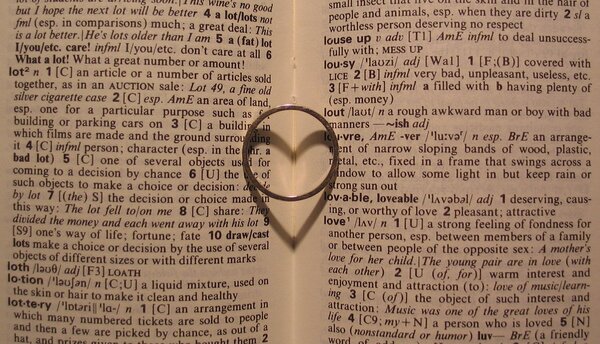
A dictionary is primarily a reference book that lists words from one or more languages, usually in alphabetical order. It explains meanings, pronunciations, etymologies, usages, and translations. By extension, it can refer to any alphabetical reference on a subject, like a “law dictionary.” Figuratively, it describes a person or thing full of information, or someone’s vocabulary. In computing, it’s an associative array where keys link to values, like words to definitions.
Morphology and Grammar Notes
As a noun, it pluralizes to “dictionaries.” It’s a countable noun. The suffix -ary indicates a place or thing related to something, here a collection of dictional elements. Rarely used as a verb: to “dictionary” means to look up or add to a dictionary (e.g., “She dictionaried the word quickly”). No irregular forms; follows standard English morphology.
Short Interesting Facts
The first known English dictionary, “A Table Alphabeticall,” was published in 1604 by Robert Cawdrey. Samuel Johnson’s 1755 dictionary standardized English spelling and usage, influencing literature profoundly. In computing, Python’s “dict” data type draws directly from this metaphor.
Tips to Learn It Easier
- Associate it with “diction” (word choice) + “-ary” (like a library of words).
- Practice by using a real dictionary daily for new words.
- Mnemonic: “Dick’s shabby nation needs a dictionary” for pronunciation /ˈdɪk.ʃən.əɹ.i/.
- Flashcards: One side “book of words,” reverse with IPA and an example.
Cultural or Contextual Features
Dictionaries shape language standardization; the Oxford English Dictionary (OED) is a cultural icon in English-speaking countries, updated quarterly. In education, they’re tools for literacy. In pop culture, phrases like “dictionary definition” imply precision, while “urban dictionary” reflects slang evolution online.
Examples in Sentences
- Simple: I need a dictionary to check this word.
- Medium: The old dictionary on the shelf contains rare etymologies from the 18th century.
- Complex: Although digital tools have popularized online dictionaries, many scholars still prefer the tactile experience of flipping through a printed volume to fully appreciate the nuances of word histories and usages.
Synonyms, Antonyms, and Common Word Combinations
Synonyms: lexicon, wordbook, glossary, thesaurus (for related meanings).
Antonyms: None direct; opposites might be “ignorance” in figurative use for vocabulary.
Common Combinations: bilingual dictionary, pocket dictionary, English-Spanish dictionary, dictionary entry, look up in the dictionary, urban dictionary.
Mini-Tasks for Practice
- Make a sentence: Create one using “dictionary” in a computing context.
- Find a synonym: List two synonyms and use one in a sentence.
- Explore: Look up “etymology” in a dictionary and note its origin.
- Pronounce it: Record yourself saying the IPA version and compare to an online audio.